
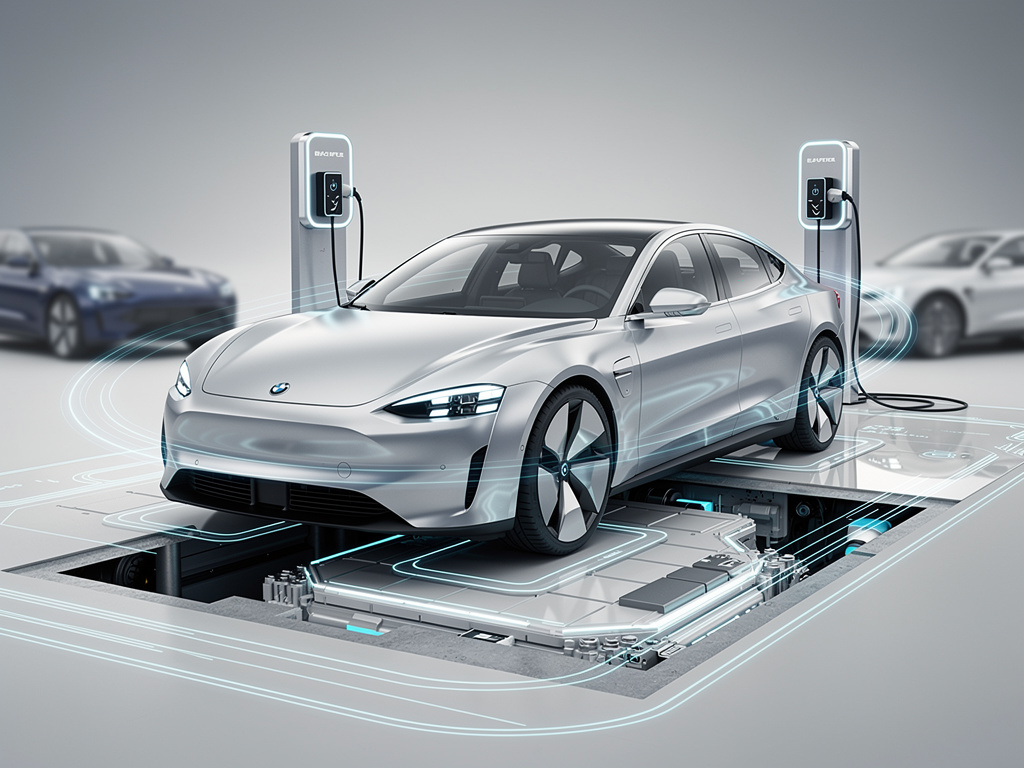
The BMW i3 is back. But if you’re picturing that quirky, tall-riding city car with recycled interior materials and a cult following among urban EV enthusiasts, forget it. The name is the same. Everything else has changed.
BMW has officially unveiled the new i3, a low-slung, sport-sedan that shares virtually nothing with its predecessor beyond the badge on its trunk. Built on the German automaker’s Neue Klasse platform — the architecture BMW is betting its electric future on — the reborn i3 is a direct shot at Tesla’s Model 3 and an unmistakable signal that BMW intends to fight for the heart of the mainstream EV sedan market, not just its premium edges.
According to Engadget, the new i3 will deliver up to 440 miles of range on Europe’s WLTP testing cycle, powered by BMW’s sixth-generation eDrive electric powertrain. That figure will almost certainly shrink under the EPA’s more conservative methodology used in the United States, but even a 15-20% reduction would place the car comfortably above 350 miles — territory that removes range anxiety from any serious purchase conversation.
The car arrives in two initial variants. The i3 35L, a rear-wheel-drive model, produces 281 horsepower from a single motor mounted on the rear axle. Step up to the i3 xDrive40L, and you get all-wheel drive with dual motors generating a combined 389 horsepower. BMW says the xDrive variant hits 62 mph in 5.3 seconds. Not blistering by modern EV standards, but more than adequate for a sedan positioned as a daily driver rather than a drag strip weapon.
Both versions ride on an 83-kWh battery pack, and BMW claims 800-volt architecture enables DC fast charging at up to 270 kW. That translates to a 10-to-80% charge in roughly 30 minutes — a benchmark that’s become table stakes for any serious EV contender in 2025.
The Neue Klasse Bet Gets Real
The i3 is the second vehicle to emerge from BMW’s Neue Klasse platform, following the iX3 SUV that debuted earlier this year. But the sedan may be the more consequential launch. SUVs dominate global sales, yes. But sedans remain the proving ground for a brand’s identity — the silhouette that defines what a carmaker stands for. And BMW, more than most, has built its reputation on the promise that its sedans are the driver’s choice.
The Neue Klasse architecture represents BMW’s most significant engineering overhaul in decades. It’s a ground-up EV platform, not an adaptation of an internal combustion vehicle’s bones. The round, cylindrical battery cells are new. The motors are new. The electronics are new. BMW has said it invested billions of euros into the platform, with production facilities in Hungary, Mexico, and China standing up to build Neue Klasse vehicles at scale.
For BMW, the stakes couldn’t be higher. The original i3, launched in 2013, was a pioneer — one of the first premium EVs on the market. It earned devotees for its nimble handling and unconventional design, but it never sold in large numbers. BMW discontinued it in 2022 after roughly 250,000 units over its lifetime. A respectable figure for a niche product, but a rounding error compared to what Tesla has achieved with the Model 3.
Recycling the i3 name is a deliberate choice. BMW is trying to reclaim the narrative that it was early to electrification, even if the intervening years saw it lose ground to Tesla, BYD, and a swarm of Chinese competitors. The message: we were here first, and now we’re back with something that can actually compete at volume.
Design-wise, the new i3 looks like a proper BMW sedan — long hood, short overhangs, a fastback roofline that gives it a sportier profile than the Model 3’s more anonymous shape. The interior features BMW’s latest iDrive system with a panoramic display stretching across the dashboard, a head-up display that BMW says is the largest in any production car, and a minimalist center console that reflects the industry’s ongoing migration away from physical buttons. Whether that last trend is a feature or a regression depends on who you ask.
Pricing, Competition, and the China Question
BMW hasn’t released official U.S. pricing, but the car is expected to start in the mid-$40,000 range in Europe, which would likely translate to a starting price near $45,000-$50,000 in the American market after accounting for import duties and market positioning. That puts it squarely against the Tesla Model 3 Long Range, which starts at around $42,490 in the U.S., and the upcoming Model 3 Performance variants.
But Tesla isn’t BMW’s only concern. Not anymore.
BYD’s Seal sedan, already a strong seller in China and Europe, offers comparable range and performance at a significantly lower price point. Xiaomi’s SU7 has generated enormous buzz in China. And legacy rivals aren’t standing still — Mercedes-Benz is preparing its own Neue Klasse equivalent with the upcoming CLA-class EV, while Audi’s PPE platform underpins the A6 e-tron.
The Chinese market deserves particular attention here. BMW plans to manufacture the i3 at its plant in Shenyang, China, through its joint venture with Brilliance Automotive. This is a strategic necessity. China is the world’s largest EV market, and local production avoids the tariffs that have made imported EVs increasingly uncompetitive there. But it also means BMW is going head-to-head with domestic Chinese brands on their home turf — brands that have demonstrated an ability to iterate on features, software, and pricing at a pace that traditional German automakers have struggled to match.
The i3’s 440-mile WLTP range claim is clearly calibrated with the Chinese market in mind. Range figures carry enormous psychological weight among Chinese EV buyers, and several domestic competitors already advertise numbers in the 400-mile-plus range on the CLTC cycle (China’s own testing standard, which tends to produce even more generous numbers than WLTP). BMW needs a big number to stay in the conversation.
So what does the i3 actually need to prove? Three things.
First, that BMW can build an EV that matches or exceeds Tesla on the fundamentals — range, charging speed, software — while delivering the driving dynamics and interior quality that justify a premium price. Second, that the Neue Klasse platform can scale efficiently enough to hit competitive price points without destroying margins. And third, that BMW’s brand still carries enough weight with younger buyers, particularly in China, to command consideration against tech-forward competitors like Xiaomi and NIO.
None of these are guaranteed. BMW’s current EV lineup, including the i4 and iX, has earned mixed reviews — praised for driving feel but criticized for software glitches, inconsistent charging experiences, and a design language that some critics find too conservative. The Neue Klasse platform is supposed to address all of this. The i3 will be the test.
What the Original i3 Got Right — and What It Didn’t
There’s an irony in BMW’s decision to revive the i3 name. The original was, in many ways, ahead of its time. It used a carbon fiber reinforced plastic passenger cell — an exotic material choice that kept weight down but drove manufacturing costs up. Its interior featured sustainably sourced materials like eucalyptus wood and recycled plastics. It was designed as a purpose-built urban EV before most automakers took electrification seriously.
But it was also compromised. Early versions offered barely 80 miles of range. Even the final 2022 models topped out around 153 miles on the EPA cycle. BMW offered a range-extender version with a small gasoline engine — a hedge that undercut the car’s pure-EV credibility. And the tall, narrow design, while practical for city driving, looked nothing like the sporty sedans BMW was known for. Enthusiasts respected it. Few lusted after it.
The new i3 is the opposite bet. It’s conventional in shape, aggressive in specification, and aimed squarely at the mass-market premium buyer who might otherwise default to a Tesla. Whether it succeeds will depend not just on the car itself but on BMW’s ability to deliver a software and charging experience that meets the expectations of buyers who’ve grown accustomed to Tesla’s integrated approach — or who are being wooed by Chinese brands offering more features per dollar than any European automaker can comfortably match.
BMW expects the i3 to reach European and Chinese customers first, with U.S. deliveries likely following in 2026. The company has said Neue Klasse vehicles will eventually account for the majority of its sales by the end of the decade. That’s a bold projection, and the i3 is where it starts to either prove out or fall apart.
The EV sedan segment is about to get very crowded. BMW just declared it wants to be in the middle of the fight. Now it has to win it.


 WebProNews is an iEntry Publication