
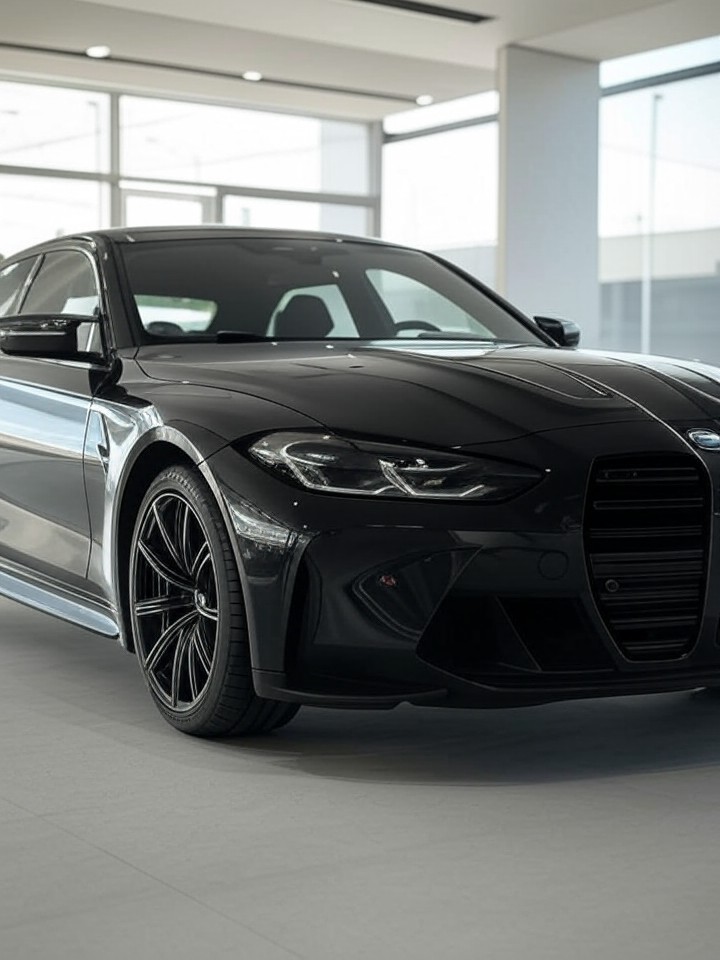
BMW’s Quad-Motor Leap: Redefining Performance in the Electric Era
In the realm of high-performance automobiles, BMW’s M division has long stood as a beacon of engineering prowess, blending raw power with precision handling. Now, as the automotive world shifts toward electrification, BMW is poised to launch its first fully electric M car in 2027, a vehicle that promises to shatter conventions with a groundbreaking quad-motor setup—one electric motor per wheel. This innovation isn’t just about ditching the combustion engine; it’s a fundamental rethinking of how torque is distributed and controlled, potentially setting new benchmarks for agility and performance. Drawing from recent announcements, this development marks a pivotal moment for the brand, as detailed in a report from Ars Technica, which highlights the car’s departure from traditional mechanical differentials in favor of software-driven torque vectoring.
The quad-motor configuration allows for unprecedented control over each wheel independently, enabling feats like instant torque adjustments that mimic or surpass the capabilities of mechanical systems. According to insights shared in a workshop setting, as reported by BMW Blog, this setup eliminates the need for physical differentials, relying instead on advanced algorithms to manage power distribution. This isn’t merely a technical gimmick; it’s designed to enhance track performance, where split-second decisions can mean the difference between victory and defeat. BMW engineers have emphasized that this technology will allow the car to simulate gear shifts, preserving the visceral feel of driving an M model while embracing electric efficiency.
Beyond the motors, the 2027 electric M car—rumored to be an evolution of the M3 lineage—incorporates BMW’s Neue Klasse platform, which integrates cutting-edge battery technology. Sources indicate that the vehicle will feature a high-voltage system capable of rapid charging and sustained high-output performance. Publications like InsideEVs have noted that this model will include simulated gear shifts to maintain driver engagement, a nod to enthusiasts who might miss the auditory and tactile feedback of internal combustion engines. The overall powertrain is expected to deliver over 1,000 horsepower, positioning it as a direct competitor to electric hypercars from rivals like Tesla and Rimac.
Innovations in Torque Vectoring and Handling
Delving deeper into the engineering, the one-motor-per-wheel approach facilitates active torque vectoring, where power can be shuffled between wheels in milliseconds to optimize traction and cornering. This system, as explored in an article from The Globe and Mail, unlocks enhanced capabilities on both road and track by providing individual wheel control. Imagine navigating a tight corner: the outer wheels receive more torque to push the car through, while the inner ones are modulated to prevent understeer. This level of precision could redefine what drivers expect from an electric vehicle, traditionally criticized for lacking the soul of gasoline-powered sports cars.
BMW’s M division isn’t stopping at hardware; software plays a starring role. The car’s control systems will use data from sensors to predict and adjust for road conditions, much like adaptive suspension but extended to propulsion. Reports from Driving suggest this electric M model promises to “redefine performance,” with the quad motors enabling modes that simulate everything from drift assists to maximum efficiency runs. For industry insiders, this represents a shift toward software-defined vehicles, where over-the-air updates could continually evolve the driving experience without hardware changes.
The battery technology underpinning this beast is equally impressive. BMW’s Design to Power initiative, as mentioned in various sources, focuses on cylindrical cells that offer higher energy density and faster charging times. This could mean the electric M car achieves ranges competitive with luxury EVs while delivering M-level acceleration—potentially zero to 60 mph in under three seconds. Comparisons to existing models like the i4 M50, which already hints at electric M potential, show how far BMW has come since its early forays into electrification.
Market Implications and Competitive Positioning
As BMW prepares this quad-motor marvel for 2027, the broader market dynamics come into focus. The push toward electric vehicles is driven by regulatory pressures and consumer demand for sustainable performance. BMW’s move aligns with global trends, but it also positions the M brand to lead in the high-performance EV segment. An analysis in CarExpert details how this model serves as an M3 alternative, blending sedan practicality with supercar thrills. For insiders, this signals BMW’s commitment to maintaining its “Ultimate Driving Machine” ethos in an electric future.
Competitors aren’t idle. Porsche’s Taycan and Audi’s e-tron GT already offer multi-motor setups, but BMW’s one-per-wheel strategy could provide a edge in handling finesse. Tesla’s Plaid models boast tri-motor configurations with blistering straight-line speed, yet lack the nuanced chassis tuning that M cars are known for. BMW aims to bridge this gap, offering not just speed but a holistic performance package. Recent posts on X from automotive enthusiasts reflect excitement, with many speculating on how this tech will influence future models across the lineup.
Moreover, the integration of simulated sounds and haptics ensures the driving experience remains engaging. As per details from The Independent, the electric iM3 will launch this initiative, potentially expanding to other M variants. This approach addresses a key concern: preserving brand identity amid electrification. For engineers and executives, it’s a balancing act between innovation and heritage.
Engineering Challenges and Future Prospects
Developing a quad-motor system isn’t without hurdles. Thermal management becomes critical, as each motor generates significant heat under load. BMW’s solutions likely involve advanced cooling systems integrated into the chassis, ensuring sustained performance during prolonged track sessions. Insights from EV Central, in their coverage at EV Central, confirm the quad e-motor powertrain for the first generation of electric M models, with the M3 leading in 2027. This setup demands robust electrical architecture to handle power demands without compromising safety or reliability.
Battery life and degradation are other focal points. High-performance driving can accelerate wear, so BMW’s Neue Klasse batteries are engineered for durability, possibly incorporating solid-state elements in future iterations. Car and Driver’s report at Car and Driver reveals that the electric M3 will utilize four motors for “huge performance,” emphasizing the sedan’s role in this transition. Insiders note that testing prototypes have already demonstrated superior lap times compared to current M3 models.
Looking ahead, this electric M car could influence BMW’s entire portfolio. The technology might trickle down to more affordable models, democratizing advanced torque vectoring. Environmental considerations also play a role; by going electric, BMW reduces emissions while appealing to a new generation of eco-conscious enthusiasts. The quad-motor design could even enable unique features like tank turns or enhanced off-road capabilities in SUV variants, though the focus remains on-road prowess.
Industry Reactions and Broader Impact
Reactions from the automotive sector have been overwhelmingly positive, with experts praising BMW’s bold step. On platforms like X, discussions highlight the potential for this tech to elevate electric vehicles beyond mere transportation. One common sentiment is that BMW is not just adapting to electrification but innovating to lead it. This echoes the brand’s history, from the M1 supercar to modern hybrids, always pushing boundaries.
For suppliers and partners, this shift means new opportunities in electric components. Companies providing motors, batteries, and software will see increased demand as BMW scales production. Economically, the 2027 launch could boost BMW’s market share in the premium EV space, especially in regions like Europe and North America where EV adoption is accelerating.
The electric M car’s debut also raises questions about pricing and accessibility. Expected to command a premium, it might start around $100,000 or more, targeting affluent buyers. Yet, as production ramps up, costs could decrease, making similar tech available in lower trims. Ars Technica’s coverage underscores this as the first BMW EV with a “proper M badge,” signaling authenticity to purists.
Strategic Vision and Long-Term Evolution
Strategically, BMW’s investment in quad-motor technology reflects a broader vision for mobility. By 2030, the company aims for a significant portion of sales to be electric, with M models playing a key role in image-building. This car isn’t an isolated project; it’s part of a lineup that includes electric SUVs and coupes, all benefiting from shared innovations.
Challenges remain, such as infrastructure for fast charging and global supply chain issues for rare earth materials in motors. BMW is addressing these through partnerships and in-house development, ensuring resilience. BMW Blog’s workshop revelations point to specs that include advanced regenerative braking, further enhancing efficiency.
Ultimately, the 2027 electric M car with one motor per wheel stands as a testament to BMW’s engineering heritage evolving for the future. It promises to deliver thrills that rival or exceed combustion counterparts, potentially attracting a new cohort of drivers. As the industry watches, this quad-motor monster could very well set the standard for what’s possible in electric performance vehicles, blending speed, control, and sustainability in ways previously unimagined.


 WebProNews is an iEntry Publication