
Reviving the Tape Deck: How Bluetooth-Cassette Hybrids Are Blending Digital Streams with Analog Nostalgia
In an era dominated by crystal-clear digital audio, a curious invention is capturing the imagination of audiophiles and tech enthusiasts alike. A YouTuber named Julius Makes has engineered a device that streams Bluetooth audio directly onto a cassette tape in real time, playing it back immediately through a built-in tape deck. This gadget, detailed in a recent article from TechRadar, transforms modern streaming services into a lo-fi, analog experience, complete with the warm hiss and mechanical whir of magnetic tape. It’s not just a novelty; it represents a broader resurgence in blending vintage formats with cutting-edge wireless technology, appealing to those weary of the sterile perfection of high-resolution audio.
The converter works by receiving Bluetooth signals from a smartphone or other device, encoding the audio onto a cassette tape as it’s being written, and then instantly rewinding and playing it back. This live process introduces the characteristic imperfections of analog media—subtle distortions, tape saturation, and a sense of tactile engagement—that many listeners find missing in lossless digital files. As reported in the same TechRadar piece, Julius Makes’ creation draws inspiration from the DIY ethos of makerspaces, using off-the-shelf components like microcontrollers and magnetic heads to bridge the gap between eras. Industry insiders see this as part of a larger trend where consumers seek authenticity in an increasingly virtual world, much like the vinyl revival of the past decade.
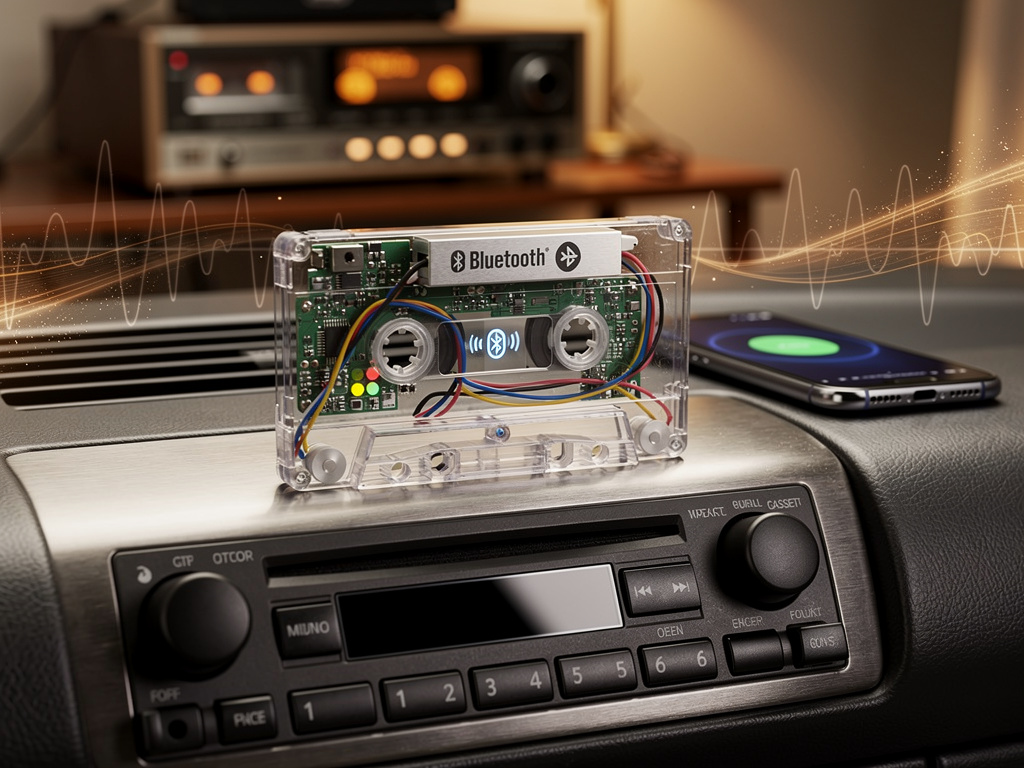
Beyond the charm, this innovation highlights practical applications. For owners of classic cars or vintage stereos equipped with cassette players, such devices offer a seamless way to integrate modern streaming without invasive modifications. Products like the Universal Bluetooth Audio Cassette Receiver from Aluratek have been on the market for years, allowing users to stream music wirelessly up to 33 feet, effectively turning obsolete hardware into Bluetooth-enabled systems. These adapters emulate a cassette tape’s magnetic output, fooling the player into reading digital audio as if it were analog, a clever workaround that preserves the original equipment’s integrity.
Engineering the Analog-Digital Fusion
Delving deeper into the technology, Bluetooth-to-cassette converters rely on sophisticated signal processing to mimic tape playback. As explained in an in-depth guide from Avantree, the adapter inserts into the cassette deck like a standard tape, with a built-in Bluetooth receiver converting wireless signals into magnetic impulses that the deck’s heads can interpret. This isn’t mere emulation; it involves real-time digital-to-analog conversion, ensuring compatibility with older systems while supporting modern codecs like AAC or aptX for better sound quality.
Recent developments have pushed these devices further. A post on Hackaday explores a project where enthusiasts stream music directly to cassette for archival purposes, emphasizing how analog media can add a layer of “character” to digital perfection. This aligns with broader advancements in Bluetooth technology, such as the upcoming Auracast broadcast audio standard, which promises to expand shared listening experiences. According to a blog from the Bluetooth Technology Website, Auracast could enable multiple devices to tune into a single stream, potentially integrating with cassette converters for public or home setups where analog warmth enhances immersion.
For industry professionals, the appeal lies in the engineering challenges. Building such a converter requires precise control over tape speed and head alignment to avoid artifacts like wow and flutter—issues that digital audio sidesteps entirely. Julius Makes’ prototype, as showcased on YouTube and covered by TechRadar, incorporates custom circuitry to handle live encoding, a feat that demands low-latency Bluetooth chips and efficient power management. This DIY approach has inspired commercial iterations, with companies experimenting with features like built-in equalizers to emulate specific tape types, from chrome to metal bias.
Market Trends and Consumer Sentiments
The market for these hybrid devices is niche but growing, driven by nostalgia and practicality. Older discussions on platforms like Reddit, such as a thread from r/cars, reveal user experiences with adapters in vintage vehicles, where reliability varies based on deck condition and Bluetooth range. Positive feedback often highlights the adapters’ ability to deliver decent audio without the hum of traditional wired cassettes, though some note interference in noisy environments.
Current sentiments on social media, particularly posts found on X (formerly Twitter), underscore a wave of enthusiasm for retro tech revivals. Users are buzzing about innovations like Bluetooth-enabled cassette players that allow mixtape creation via smartphones, echoing posts from makers like Mammoth BLD, which announced wireless cassette systems back in 2021. More recently, tech accounts have shared excitement over gadgets that blend cassette aesthetics with modern DACs, such as the Retro Nano Bluetooth DAC from FiiO, praised for its nostalgic design and high-fidelity outputs.
From a business perspective, this trend taps into the booming retro audio sector. Sales of cassette tapes have surged in recent years, with artists releasing limited-edition tapes alongside digital drops. Companies like We Are Rewind are capitalizing on this with products like their GB-001 boombox, which supports Bluetooth recording onto cassettes, as reviewed in a piece from What Hi-Fi?. This device not only plays tapes but also evokes memories of splicing mixtapes, blending portability with wireless convenience.
Innovations on the Horizon
Looking ahead, advancements in Bluetooth standards are set to elevate these converters. The Bluetooth 5.0 market, as analyzed in a report from Newstrail, is accelerating with IoT integration, offering faster data rates and longer ranges that could enhance cassette streaming reliability. Imagine a future where Auracast enables broadcasting to multiple cassette-equipped devices in a room, creating a shared analog listening party.
Challenges remain, however. Audio purists debate the value of introducing analog degradation to pristine digital streams. As one Hackaday commenter noted, while lossless files outperform tape in fidelity, the subjective “warmth” of analog can make music feel more alive. This tension drives innovation, with engineers developing hybrid systems that allow toggling between pure digital and tape-emulated modes.
For car enthusiasts, the practicality is undeniable. An article from Inverse rounds up top adapters, emphasizing their role in preserving classic car interiors. Devices like those from ION Audio, mentioned in older Gizmodo posts on X, have evolved to include noise-cancellation features, addressing common complaints about road noise interfering with playback.
Cultural Impact and Future Directions
The cultural resonance of these devices extends beyond tech circles. In a world of endless streaming subscriptions and algorithm-driven playlists, the act of engaging with a physical tape—winding, rewinding, and even recording—offers a mindful alternative. A recent Tom’s Guide review of the Cambridge Audio Evo 150 amplifier highlights how all-in-one streaming units are inspiring similar integrations, potentially leading to cassette modules in high-end systems.
Industry insiders are watching how this intersects with broader audio trends. The resurgence of portable cassette players, as experienced by writers at What Hi-Fi?, reminds users of vinyl’s tactile joys, fostering a market for accessories like USB-to-cassette converters for digitizing old tapes while streaming new content.
Moreover, environmental considerations play a role. Reusing existing cassette hardware reduces e-waste, aligning with sustainable tech movements. Posts on X from audio brands like Periodic Audio promote Bluetooth receivers that upgrade wired setups without discarding vintage gear, emphasizing longevity in design.
Pushing Boundaries in Audio Hybridization
As we explore further, experimental projects are emerging. The Hackaday streaming-to-cassette build demonstrates how open-source hardware can democratize these tools, inviting tinkerers to customize converters for specific needs, like low-bitrate lo-fi effects popular in vaporwave music scenes.
Commercial players are responding. Aluratek’s receiver, for instance, now supports voice assistants in some models, blending analog playback with smart home integration. This evolution could see cassette converters in professional settings, such as recording studios using them for creative effects processing.
Ultimately, devices like Julius Makes’ invention symbolize a harmonious merger of past and present. By crediting the TechRadar coverage that brought it to light, we see how media amplifies these innovations, sparking discussions that propel the industry forward.
The Road Ahead for Retro Tech
Envisioning the next phase, integrations with emerging tech like AI-driven audio enhancement could refine the analog experience, automatically adjusting for tape wear. Bluetooth’s expansion via Auracast, as detailed on the Bluetooth site, might enable venue-wide cassette broadcasts, transforming public spaces into immersive sound environments.
Consumer demand, evident in X posts praising nostalgic DACs, suggests sustained growth. Brands like Sony, with their history of Bluetooth audio systems as noted in Obsolete Sony’s archival tweets, could revisit cassette formats with modern twists.
In closing, this fusion of Bluetooth and cassette isn’t just about sound—it’s about reclaiming a piece of audio history in a digital age, offering insiders a playground for innovation that honors tradition while embracing progress.


 WebProNews is an iEntry Publication