
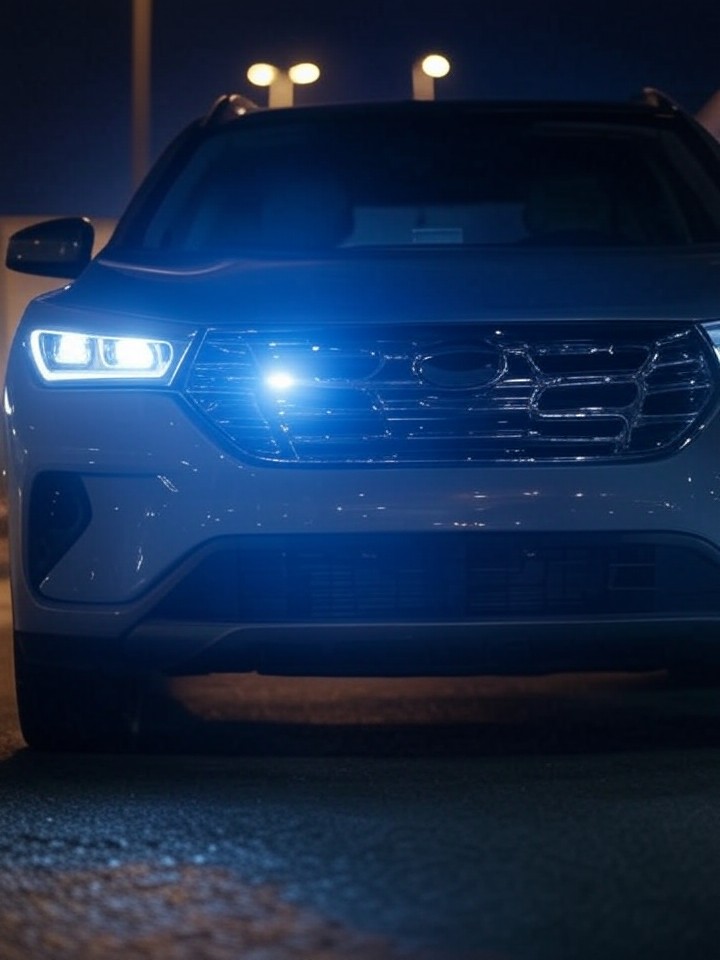
Blinding Beams: The Unregulated Rise of Super-Bright Headlights and the Road Ahead
In the dim glow of twilight on America’s highways, a growing chorus of drivers is raising alarms about an unexpected hazard: headlights that shine with the intensity of stadium floodlights. What was once a beacon of safety has morphed into a source of widespread frustration and potential danger. Recent reports highlight how modern LED and high-intensity discharge lamps, designed to enhance visibility, are instead blinding oncoming motorists, prompting debates over regulatory failures and technological overreach.
The issue stems from a confluence of automotive innovation and lax oversight. Automakers have embraced brighter lights to improve nighttime driving, but without corresponding rules to mitigate glare, the result is a nightly onslaught that affects millions. According to a detailed examination by Autoblog, this problem has escalated because federal regulators have dragged their feet on updating standards that date back decades, allowing brighter beams to proliferate unchecked.
Industry insiders point to the National Highway Traffic Safety Administration (NHTSA) as a key player in this saga. The agency’s guidelines, rooted in the era of halogen bulbs, fail to account for the exponential brightness of LEDs. Drivers report temporary vision impairment, increased accident risks, and even reluctance to drive after dark, yet enforcement remains sporadic at best.
The Evolution of Automotive Illumination
The shift to brighter headlights began in earnest with the advent of LED technology in the early 2010s. These lights offer longer life, energy efficiency, and superior illumination, promising safer roads by extending a driver’s field of view. However, as vehicles like SUVs and trucks with higher-mounted lights became ubiquitous, the glare problem intensified. Oncoming drivers in lower sedans find themselves staring directly into beams that can exceed 100,000 candelas—far beyond what older regulations anticipated.
A report from RAC Drive underscores this global concern, noting that similar complaints are surging in the UK, where drivers are curtailing nighttime travel due to dazzling lights. The piece details how improper aiming and aftermarket modifications exacerbate the issue, turning standard commutes into hazardous ordeals.
In the U.S., state-level variations add complexity. For instance, an inquiry by The Columbus Dispatch explores Ohio’s laws, revealing that while excessive brightness isn’t explicitly illegal, misuse like failing to dim high beams can lead to citations. Yet, enforcement is inconsistent, leaving many violators unpunished.
Data Versus Driver Complaints
Crash statistics paint a nuanced picture. A study referenced in The Atlanta Journal-Constitution indicates that glare-related accidents haven’t spiked dramatically despite brighter lights, with rates holding steady over the past decade. This suggests that while complaints are vocal, empirical evidence of increased crashes is limited, possibly because brighter lights also reduce other types of collisions by improving overall visibility.
However, this data doesn’t capture the subtler impacts, such as driver discomfort or avoidance behaviors. Posts on social platforms like X reflect widespread sentiment, with users frequently lamenting being “temporarily blinded” by oncoming vehicles, echoing a 2022 post from a media outlet that highlighted public frustration with high beams. Such anecdotes, while not conclusive, illustrate a disconnect between raw numbers and real-world experiences.
Further analysis from 11Alive reinforces that brighter headlights correlate with lower overall crash rates in some categories, attributing this to better road illumination. Yet, the article cautions that glare complaints are at an all-time high, pressuring regulators to reconsider standards.
Regulatory Gaps and Historical Context
The roots of today’s headlight woes trace back to federal standards established in the 1960s, when automotive lighting was far less advanced. NHTSA’s Federal Motor Vehicle Safety Standard No. 108 sets limits on beam intensity and patterns, but it hasn’t kept pace with LED advancements. A Slashdot discussion, drawing from the aforementioned Autoblog piece, criticizes how lobbying from automakers has stalled reforms, allowing brighter lights to escape stringent controls (source: Slashdot).
Internationally, contrasts are stark. Europe has long permitted adaptive driving beam (ADB) systems that automatically adjust brightness to avoid glaring others, leading to fewer complaints. A post on X from a user in 2025 noted that the U.S. only recently legalized such technology, but adoption lags due to slow regulatory updates, with full implementation still pending in 2026.
In Canada, similar issues prompt calls for reform. A CBC News feature details how Alberta’s regulations, designed for halogen eras, need overhauls to address LED brightness, as explained by engineering experts who argue for modernized standards (source: CBC News).
Technological Solutions on the Horizon
Innovation offers potential remedies. Adaptive headlights, which use sensors to dim sections of the beam when detecting oncoming traffic, are gaining traction. Tesla’s matrix LED systems, approved by NHTSA in 2022, exemplify this, focusing light precisely to minimize glare while maximizing visibility. An X post from that year celebrated this approval, predicting updates for compatible vehicles.
However, rollout is uneven. A Hawkglow blog post outlines legal considerations for LED upgrades in 2025, emphasizing the need for certified products to comply with varying U.S., UK, and EU laws (source: Hawkglow). It advises against illegal modifications that could void warranties or invite fines.
Industry voices, including a 2025 X post praising Europe’s adaptive tech, urge the U.S. to accelerate adoption. Such systems have shown “very good outcomes” in reducing glare without sacrificing brightness, potentially resolving the core conflict.
Industry Pushback and Consumer Advocacy
Automakers defend brighter lights as a safety boon, citing data showing reduced pedestrian accidents in well-lit conditions. Yet, consumer advocacy groups like the RAC argue that without glare mitigation, these benefits are one-sided. Their reporting highlights how older drivers, with reduced night vision, are particularly affected, leading to self-imposed driving curfews.
Public discourse on platforms like X amplifies these concerns, with recent 2026 posts linking to articles decrying regulatory inaction and labeling the situation a “blinding menace.” One such post from early January echoed the sentiment that drivers are “dangerously blinded,” reflecting broader frustration.
Regulatory bodies face mounting pressure. A WBUR On Point segment explores why headlights have intensified, featuring experts who call for NHTSA to prioritize glare complaints, which outnumber all other consumer issues (source: WBUR).
Pathways to Reform
Efforts to address the problem include petitions for stricter aiming requirements and mandatory adaptive features in new vehicles. A Carlight Vision blog discusses 2025 headlight laws, differentiating between OEM and aftermarket options to ensure compliance (source: Carlight Vision).
State initiatives vary; Ohio’s legal framework, as per The Columbus Dispatch, allows bright lights if properly adjusted, but experts advocate for federal uniformity. Meanwhile, crash data from The Atlanta Journal-Constitution suggests that while glare incidents are stable, integrating adaptive tech could further lower risks.
Looking ahead, patents like Tesla’s 2025 filing for advanced glare reduction in full self-driving systems signal a future where AI manages lighting dynamically. An X post from late 2025 hyped this development, promising flawless performance in extreme conditions.
Balancing Innovation and Safety
The debate underscores a broader tension in automotive evolution: harnessing technology without unintended consequences. As LEDs dominate, regulators must bridge the gap between innovation and oversight. Insights from RAC Drive reveal that many drivers have stopped nighttime travel altogether, a trend that could impact mobility and economies.
Advocates push for evidence-based reforms, drawing on studies like those in 11Alive that show brighter lights’ dual nature—beneficial yet problematic. International models, such as Europe’s adaptive systems mentioned in X discussions, offer blueprints for U.S. adoption.
Ultimately, resolving this requires collaboration among regulators, automakers, and consumers. With complaints flooding NHTSA and public sentiment boiling over on social media, the push for updated standards gains urgency. As one X user noted in a 2025 post about rural Britain’s “de facto driving curfew,” the issue disproportionately affects certain areas, yet solutions like ADB could illuminate a safer path forward for all.
In the meantime, drivers adapt with tinted visors or reduced speeds, but systemic change is essential to dim the blinding beams without darkening the roads.


 WebProNews is an iEntry Publication