
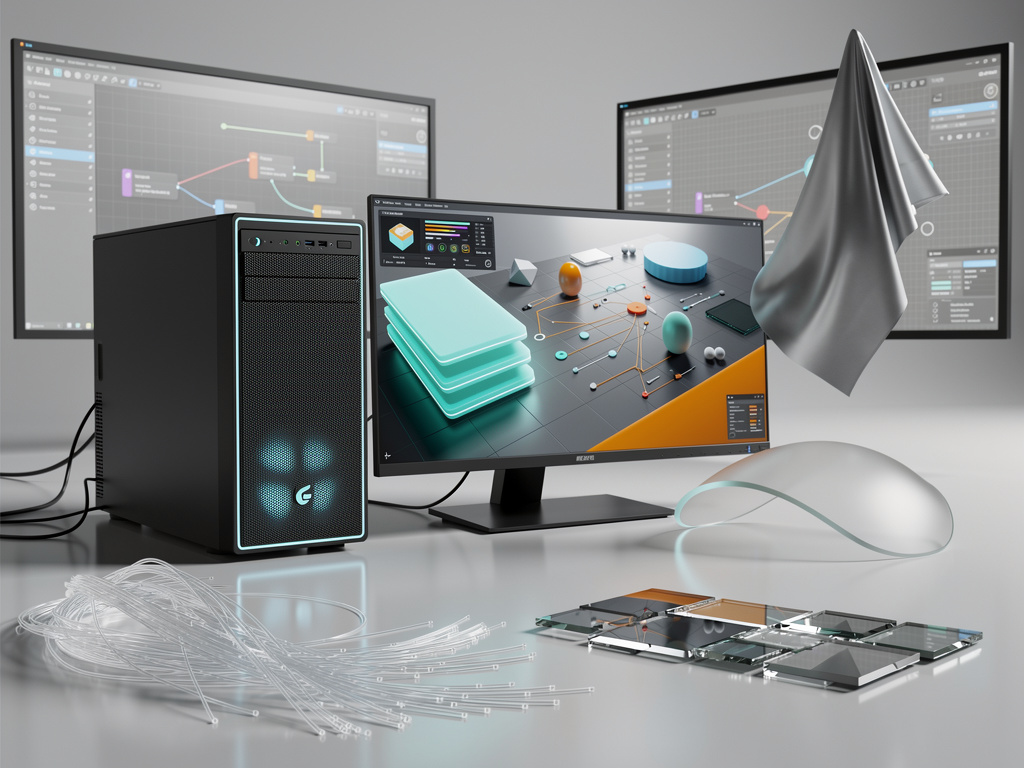
Blender 5.2 has entered beta. The open-source 3D creation tool now stands on the verge of its first long-term support release in the 5.x line. Studios and individual artists can download experimental builds today from the official builder. They will find a collection of targeted improvements rather than flashy overhauls.
The timing matters. Blender 5.2 LTS beta launched on June 3, 2026, according to the Blender Developer Forum announcement. Development now shifts strictly to bug fixes in the dedicated release branch. The final version ships in mid-July. Support will extend through 2028. That stability appeals to production houses wary of frequent breakage.
One of the most talked-about additions touches material creation. A new Thin Wall mode arrives for the Principled BSDF shader. It allows artists to model thin surfaces like leaves, paper or fabric with accurate light transmission without doubling geometry. Early testers report cleaner renders and simpler setups. The change reduces manual work that once required custom node networks.
Physics receives attention too. An experimental new system focuses first on hair and cloth. It promises better simulation quality and faster calculation times. Details remain limited while the code matures. Yet the direction signals renewed investment in reliable dynamics. Many users still rely on external tools for complex cloth work. This could pull more of that work inside Blender.
Modeling tools gain a new Fill operation. It streamlines certain patch creation tasks. Sculpting sees incremental gains in brush behavior and performance. The user interface receives polish across panels and editors. These tweaks accumulate. They make daily work feel less frustrating without demanding new skills.
Rendering improvements appear in both Cycles and Eevee. Cycles adds better handling of certain light paths and GPU acceleration refinements. Eevee benefits from updated shadowing and material previews. Exact numbers vary by scene. But reports from Phoronix highlight measurable speedups on modern hardware. One developer noted the beta builds already outperform previous releases in several benchmark scenes.
Geometry Nodes continues its steady expansion. New nodes for volumes and signed distance fields expand procedural possibilities. Animation and rigging modules bring small but welcome changes to the dope sheet and keyframe management. Asset browser integration sees further refinement. The goal remains tighter connection between individual files and larger projects.
Compositing gains new filters and performance optimizations. Video sequence editor receives bug fixes and minor workflow enhancements. Grease Pencil, still valued by 2D animators working in 3D space, gets stability updates. Nothing here rewrites the rulebook. Everything makes the existing toolset more dependable.
The LTS label carries weight. Previous long-term releases served as anchors for film and game pipelines. Blender 4.2 LTS still powers many productions. The 5.2 version follows the same philosophy. It freezes major feature additions after alpha. The beta phase stresses testing and polish. Contributors focus on high-severity bugs first.
And the community has responded. Forum posts show developers reviewing patches with extra care. One announcement reminded everyone that high-severity reports must clear before any 5.3 work begins. That discipline protects the stability users expect from an LTS build.
Recent coverage adds context. A 9to5Linux report from today highlights the Fill tool and Thin Wall mode as standout items for artists working on organic shapes. It notes the beta availability across major platforms. Windows, Linux and macOS builds appear on the builder site with fresh commits dated June 4.
Hardware support evolves quietly. Library updates in the 5.2 branch modernize dependencies. OptiX and other GPU backends receive maintenance. ARM builds continue to improve. These changes matter for studios running mixed fleets or newer Apple silicon machines.
Yet challenges remain. Some addons need updates. The FLIP Fluids developer confirmed no major compatibility blocks for 5.2 but advised testing. Larger productions often maintain internal forks or wait for the first point release. Caution makes sense when render farms and pipelines lock in versions.
Blender’s development model shows its strength here. Features arrive through community projects and paid contributors funded by the Blender Foundation and corporate sponsors. The 2026 roadmap outlined earlier this year already pointed toward these incremental gains. ACES color management improvements and better HDR handling appear on the horizon too. Some may land in 5.2 point releases. Others wait for 5.3.
Artists who test the beta now shape the final product. Bug reports filed in the next weeks carry extra importance. The freeze on new features means feedback must target existing code. That focus typically yields tighter software.
Downloads sit ready. The beta carries build hash db7b9f9b3679. Users should expect rough edges. Experimental physics in particular carries clear disclaimers. Still, the overall quality already impresses early reviewers. Daily builds have stabilized quickly after the alpha phase.
Look past the headline features. The real story lies in accumulated refinement. Better shaders. Faster simulations. Smoother interfaces. These elements compound. They reduce the friction that once sent professionals to commercial alternatives. Blender has grown into a production staple. Version 5.2 reinforces that position with patience rather than spectacle.
Expect the release candidate in early July. Final bits of polish will land then. By mid-month the LTS build should reach studios. Many will adopt it quickly. The extended support window gives confidence that assets created today will open cleanly years from now.
That continuity matters in an industry where software updates can break pipelines overnight. Blender’s approach offers a counterweight. It delivers steady progress wrapped in long-term reliability. The 5.2 beta marks another step along that path.


 WebProNews is an iEntry Publication