
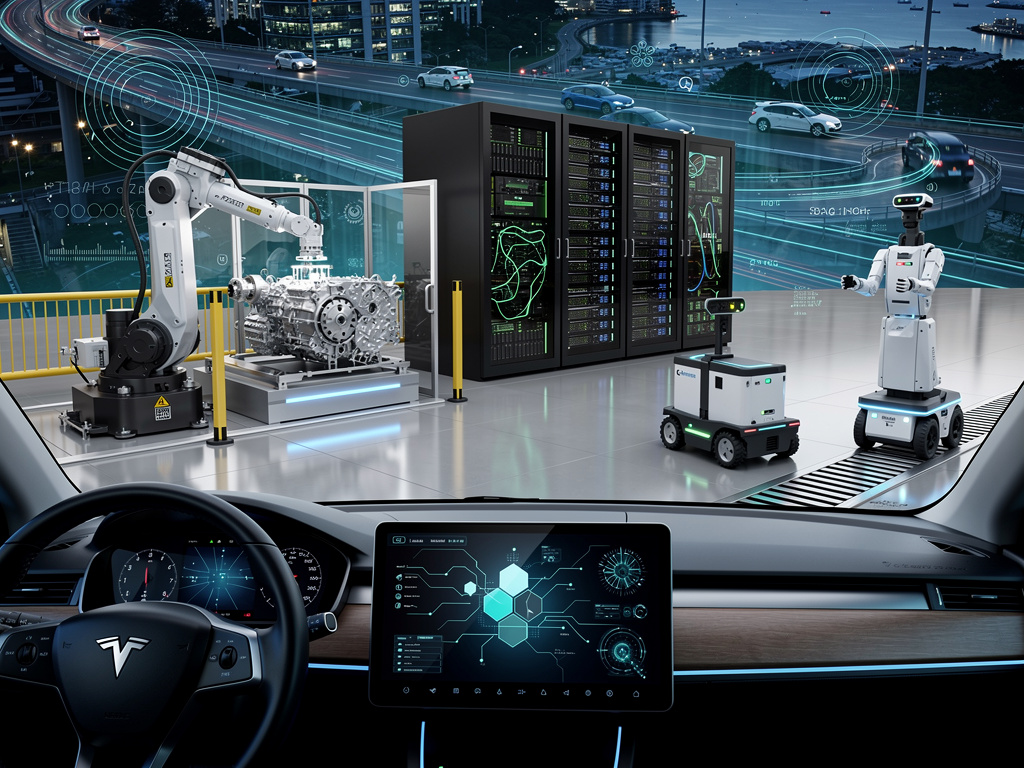
BlackBerry once defined the smartphone era. Now its QNX software runs in millions of vehicles and industrial machines. The company has pivoted hard toward embedded systems. And fresh data shows demand for its real-time operating system is accelerating as developers race to build the next wave of intelligent robots.
Physical AI. The term describes machines that combine advanced perception with reliable action in the real world. Think humanoid workers in factories or autonomous vehicles that never miss a safety command. Success here demands split-second responses. Zero tolerance for failure. QNX delivers exactly that. Its deterministic behavior ensures commands execute on time. Every time.
QNX Gains Momentum Amid Software Crisis in Robotics
A new survey from BlackBerry’s QNX unit reveals the pressure. Yahoo Finance reported on the findings released May 27, 2026. Nearly nine in ten robotics developers — 89% — say physical AI forms a critical part of their future strategy. Yet software has become the primary bottleneck holding back progress.
The research, drawn from 1,000 developers, highlights a clear gap. Teams can train sophisticated AI models for perception. They struggle to make those models act safely and predictably in hardware. Traditional approaches fall short. Deterministic, real-time behavior proves essential. QNX was built for precisely this challenge.
Results from the past year back the optimism. QNX sales rose 14% for the full fiscal year and jumped 20% in the fourth quarter. A design-win backlog now sits at $950 million. Seeking Alpha highlighted these metrics in an analysis published May 28, 2026. The growth signals a successful shift from BlackBerry’s earlier struggles. Revenue stability has improved. So has investor confidence.
But the story runs deeper than numbers. Cars were the original proving ground. QNX powers safety systems in vehicles from Mercedes, Toyota and others. Autos, as one executive put it, are simply robots on wheels. The same software foundation transfers directly to factory arms, medical devices and defense platforms. John Wall, president of BlackBerry QNX, noted rising demand across these categories during a presentation at the CIBC Technology & Innovation Conference in May 2026. Yahoo Finance covered his remarks.
Executives point to a massive development barrier. One internal estimate suggested rebuilding QNX from scratch would cost $12 billion and take a decade. That moat matters. Competitors chasing Linux-based alternatives often discover they cannot match the safety certifications or real-time guarantees without years of work.
Partnerships extend the reach. BlackBerry integrated QNX directly into Nvidia’s IGX Thor platform in April 2026. The combination pairs high-performance computing with proven real-time control. Demonstrations at industry events have grown bolder. At Embedded World in February 2026, QNX showed a humanoid robot performing object picking, arm control and camera-based tasks. Newswire detailed the showcase.
Carsten Hurasky, senior vice president and chief marketing officer at QNX, captured the requirement. “Physical AI demands platforms that deliver deterministic behavior in the real world.” He explained why the next generation of intelligent robots need QNX at their core. The message lands. Developers attending the Robotics Summit & Expo in 2026 will see live robotic arms that stop instantly when a person steps into their path. No latency. No debate.
BlackBerry’s balance sheet supports the bet. Net cash stands at $232 million. Share buybacks continue. The company has moved from burning cash to consistent profitability in its software business. Tim Foote, chief financial officer, described the transformation during recent investor discussions.
Analysts see upside. The Seeking Alpha piece assigned a buy rating with a $11.50 price target by fiscal 2027. That implies roughly 35% potential gain from recent levels. The case rests on continued expansion beyond automotive into general embedded markets. Robotics and industrial automation represent the largest incremental opportunity.
Challenges remain. Competition exists from open-source efforts and specialized real-time kernels. Certification processes for safety-critical systems move slowly. Yet the survey data suggests most developers recognize the gap. They need foundations they can trust before they can scale AI models into production.
BlackBerry no longer sells phones. It sells certainty. In an age when robots will share workspaces with humans, that certainty carries growing value. QNX does not replace the AI models. It makes sure the models can act without causing harm. The distinction matters. Perception improves rapidly. Reliable action still depends on decades of engineering in operating systems and hypervisors.
Recent demonstrations underscore the point. A high-fidelity robotic arm running QNX detects objects and avoids collisions in real time. The system responds immediately and predictably. Such behavior cannot be an afterthought. It must sit at the core. QNX occupies that position in thousands of deployed systems already. The installed base provides data, credibility and a path to further adoption.
Investors have taken notice. The stock climbed more than 50% in recent weeks on the physical AI narrative. Trading volume rose. Sentiment on platforms such as X turned sharply positive. Yet the company still trades at a discount to many pure-play software names. If QNX captures even a modest share of the expanding robotics market, the financial impact could compound quickly.
The transition is not complete. BlackBerry must execute on the backlog. It must deepen relationships with chipmakers and robot integrators. Most of all, it must keep proving that its software turns AI ambition into safe, productive machines. Early evidence suggests it is succeeding.
Physical AI will not arrive overnight. The machines will roll out first in controlled industrial settings, then expand into logistics, healthcare and eventually consumer environments. At each stage, the requirement for deterministic software stays constant. BlackBerry’s QNX has spent 40 years perfecting exactly that capability. The market may finally be ready to reward it.


 WebProNews is an iEntry Publication