
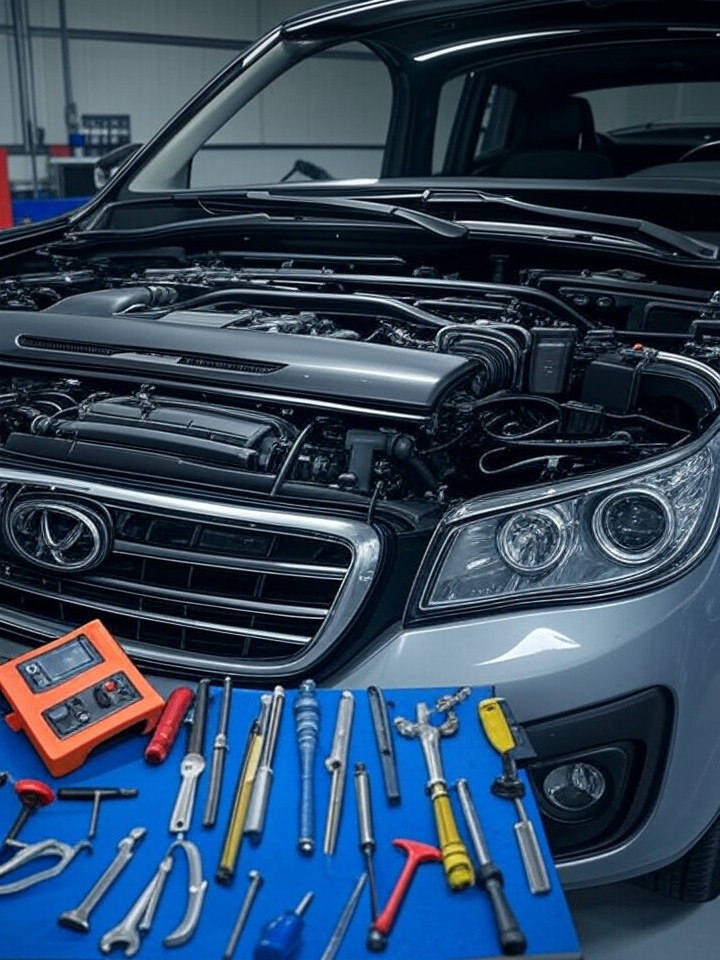
Unlocking the Hood: Congress’s Push to Democratize Car Repairs
In the heart of America’s automotive industry, a quiet revolution is brewing on Capitol Hill. As cars evolve into rolling computers packed with sophisticated software and sensors, the simple act of fixing your own vehicle—or taking it to an independent mechanic—has become increasingly complicated. Enter the REPAIR Act, a bipartisan bill making waves in the U.S. House of Representatives, aimed at breaking down barriers erected by automakers. This legislation seeks to ensure that car owners and independent repair shops have access to the diagnostic tools, parts, and data necessary for repairs, challenging the dominance of manufacturer-controlled service networks.
The push comes at a time when vehicle repair costs are skyrocketing, driven by the integration of advanced technologies like telematics and proprietary software. Consumers are often funneled toward dealerships, where repairs can be exorbitantly priced due to exclusive access to essential information. The REPAIR Act, formally known as H.R. 1566 in the 119th Congress, was reintroduced in 2025 with support from both sides of the aisle, highlighting a rare consensus on consumer rights in an era of polarized politics. Proponents argue that without such measures, the aftermarket repair sector could wither, leaving drivers with fewer choices and higher bills.
Recent developments have thrust the bill into the spotlight. On January 13, 2026, the House Energy and Commerce Subcommittee on Commerce, Manufacturing, and Trade held a hearing titled “Examining Legislative Options to Strengthen Motor Vehicle Safety, Ensure Consumer Choice and Affordability, and Cement U.S. Automotive Leadership.” This session reviewed 16 automotive-related bills, including the REPAIR Act, focusing on safety, data access, and competition in the repair market. Witnesses from industry groups, consumer advocates, and manufacturers debated the merits, underscoring the tension between innovation and accessibility.
The Evolution of Vehicle Complexity and Repair Challenges
The modern automobile is a far cry from the mechanical beasts of decades past. Today’s vehicles are equipped with dozens of electronic control units that manage everything from engine performance to infotainment systems. This complexity has led to what critics call “repair monopolies,” where automakers restrict access to repair data and tools, effectively locking out independent shops. According to a report from WIRED, as vehicles become more software-dependent, repairing them has grown harder, with the REPAIR Act proposing to ease these restrictions albeit with certain caveats.
Historical context reveals a pattern of incremental progress in right-to-repair efforts. Back in 2014, Massachusetts passed a pioneering law requiring automakers to provide diagnostic information to independent repairers, a move that inspired similar initiatives nationwide. By early 2026, as noted in updates from PIRG, more than one-quarter of Americans live in states with some form of right-to-repair protections, with six new laws taking effect at the start of the year. These state-level victories have built momentum for federal action, as inconsistencies across borders create a patchwork of regulations that confuse consumers and businesses alike.
The REPAIR Act builds on these foundations by mandating that manufacturers share vehicle data, tools, and parts with owners and independent repairers on fair terms. Introduced by Rep. Neal Dunn (R-Fla.) and co-sponsored by Democrats like Rep. Darren Soto (D-Fla.), the bill addresses concerns from the auto care industry, which represents thousands of small businesses. A summary from Congress.gov outlines how the act would require automakers to provide access to telematics data, crucial for diagnosing issues in connected cars, without compromising vehicle security.
Industry Voices and Economic Implications
Stakeholders in the automotive sector are divided. Automakers, represented by groups like the Alliance for Automotive Innovation, warn that unrestricted data access could pose cybersecurity risks, potentially allowing hackers to exploit vehicle systems. They argue for safeguards to protect proprietary technology and ensure safety. On the other side, organizations such as the Auto Care Association applaud the bill, emphasizing its role in fostering competition and reducing costs for consumers. In a statement from Auto Care, the legislation is described as essential for safeguarding consumer vehicle repair rights and maintaining a competitive market.
Economic analyses paint a stark picture of the stakes involved. Repair costs have surged, with the average American spending thousands annually on maintenance. Justin Rzepka, executive director of the Auto Care Association, highlighted in an interview with Federal News Network that vehicles are often the second-most expensive purchase after homes, making affordable repairs a critical issue. Independent shops, which handle a significant portion of repairs, stand to gain from equal access, potentially saving consumers billions by avoiding dealership markups.
The hearing on January 13 brought these arguments to the fore. As reported by aftermarketNews, lawmakers scrutinized the bill’s impact on manufacturers and the aftermarket, with discussions extending to data privacy and national security. Testimonies revealed that while some automakers have voluntarily improved data sharing, many still impose restrictions, such as requiring expensive subscriptions for diagnostic software.
Broader Right-to-Repair Movement and State Precedents
The REPAIR Act is part of a larger right-to-repair movement that extends beyond automobiles to electronics and farm equipment. Wikipedia’s entry on right to repair defines it as the legal right for owners to maintain or modify their products without manufacturer-imposed barriers, combating aftermarket monopolies that force consumers back to official services. This philosophy has gained traction, with successes in states like Oregon, which in 2024 passed a robust law banning “parts pairing” and ensuring fair access to tools.
Social media platforms like X (formerly Twitter) reflect growing public sentiment. Posts from users and organizations, including those from iFixit and More Perfect Union, celebrate state wins and call for federal standards. For instance, discussions highlight Maine’s 2023 voter-approved measure granting local mechanics access to dealership-level diagnostics, mirroring the REPAIR Act’s goals. These online conversations underscore a grassroots push, with advocates sharing stories of frustration over denied repairs due to proprietary locks.
Critics, however, point to potential downsides. Automakers contend that the bill could inadvertently weaken vehicle safety by allowing unqualified repairs. The REPAIR Act includes provisions for data security, but debates persist on implementation. A previous iteration, H.R. 906 from the 118th Congress, as detailed on Congress.gov, laid groundwork but stalled, illustrating the challenges in passing comprehensive reform.
Legislative Hurdles and Path Forward
Navigating the legislative process remains a formidable task. The January 13 hearing, as covered by Democrats on the Energy and Commerce Committee, featured expert panels dissecting the bill’s nuances. Subcommittee members questioned how the act balances consumer choice with manufacturer rights, with some proposing amendments to address cybersecurity concerns.
Industry insiders anticipate that if the REPAIR Act advances from subcommittee, it could face amendments in the full committee or on the House floor. Bipartisan support offers hope, but opposition from powerful lobbying groups could delay progress. Meanwhile, state actions continue to pressure federal lawmakers; Colorado and New York have implemented their own right-to-repair laws, creating a mosaic of regulations that the REPAIR Act aims to unify.
Looking ahead, the bill’s success could reshape the automotive repair ecosystem. By mandating open access, it promises to empower consumers and small businesses, potentially lowering costs and spurring innovation in aftermarket solutions. Advocates like those from the Spokesman-Review, in a 2023 piece, note the backing from former auto shop owners who see it as a boon for entrepreneurship.
Global Perspectives and Future Innovations
Internationally, similar debates are unfolding. In Europe, regulations under the EU’s Digital Markets Act push for greater repairability in consumer goods, influencing U.S. discussions. American automakers, competing globally, must adapt to these trends to remain viable. The REPAIR Act could position the U.S. as a leader in consumer-friendly policies, encouraging sustainable practices by extending vehicle lifespans through easier repairs.
Technological advancements add layers to the conversation. With the rise of electric vehicles (EVs) and autonomous features, repair needs are shifting toward software updates and battery diagnostics. The bill’s emphasis on telematics data access is particularly relevant here, ensuring that independent shops can service EVs without being sidelined.
As the debate evolves, consumer advocacy groups urge swift action. Posts on X from figures like Joseph Cox highlight past victories, such as the federal government’s 2023 decision not to block Massachusetts’ repair law, signaling a shift toward openness. This momentum could propel the REPAIR Act toward passage, fundamentally altering how Americans maintain their vehicles.
Stakeholder Strategies and Consumer Impact
Automakers are ramping up lobbying efforts, emphasizing the need for controlled data sharing to prevent misuse. Yet, evidence from states with right-to-repair laws suggests minimal security incidents, bolstering the case for expansion. Independent repairers, through campaigns like those from CarRepairChoice on X, share testimonials illustrating how restrictions hinder their work and inflate costs.
For consumers, the implications are profound. Affordable repairs could reduce the financial burden of car ownership, especially amid economic pressures. The bill also promotes environmental benefits by discouraging premature vehicle scrappage, aligning with sustainability goals.
Ultimately, the REPAIR Act represents a pivotal moment in the intersection of technology, policy, and consumer rights. As hearings continue and amendments are debated, the outcome will determine whether the garage door opens wider for all or remains guarded by industry giants. With bipartisan backing and public support evident in online discourse, the path to democratizing car repairs appears promising, if not without its roadblocks.


 WebProNews is an iEntry Publication