
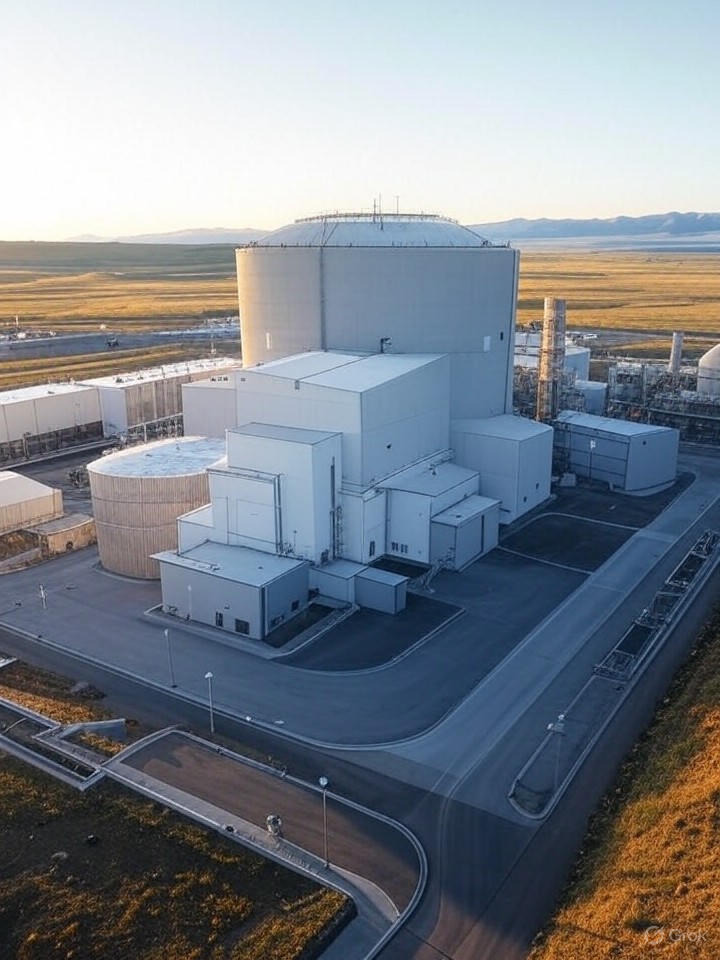
In a significant milestone for advanced nuclear technology, TerraPower, the nuclear innovation company backed by Microsoft co-founder Bill Gates, has secured a crucial environmental approval from the U.S. Nuclear Regulatory Commission for its Natrium reactor project in Wyoming. This development clears a major regulatory hurdle, paving the way for construction of what could become the nation’s first commercial advanced nuclear plant.
The Natrium reactor, designed to generate 345 megawatts of electricity, features a sodium-cooled fast reactor paired with molten salt energy storage, promising enhanced safety and efficiency over traditional nuclear designs. According to reports from Interesting Engineering, the project’s environmental review concluded without identifying significant impacts, marking a step closer to operational deployment by the early 2030s.
Regulatory Breakthrough and Project Timeline
TerraPower’s journey began in 2006 when Gates founded the company to address climate change through reliable, carbon-free energy. The Wyoming site, a former coal plant in Kemmerer, symbolizes a shift from fossil fuels to nuclear power, with construction on non-nuclear components already underway since June 2024. Gates himself broke ground, emphasizing the reactor’s role in complementing renewables like solar and wind.
Industry experts note that this approval is vital amid surging energy demands from data centers and electrification. As detailed in a New York Times profile, Gates views the project as essential for emissions-free electricity, with the reactor’s storage system allowing it to store excess energy for grid stability.
Technological Innovations and Safety Features
At the heart of Natrium is its use of liquid sodium as a coolant, which operates at lower pressures than water-cooled reactors, reducing meltdown risks. The integrated storage could provide up to 500 megawatts during peak demand, making it a flexible baseload option. TerraPower claims this design cuts construction costs by half compared to conventional plants, potentially revolutionizing nuclear economics.
Funding has been robust, with Gates committing over $1 billion personally and attracting investments from entities like Nvidia, as reported by The Express Tribune. A recent $650 million round underscores confidence in scaling small modular reactors for global deployment.
Economic and Environmental Implications
The project promises economic revitalization for Kemmerer, creating hundreds of jobs and repurposing coal infrastructure. On the environmental front, it aligns with U.S. goals to triple nuclear capacity by 2050, combating climate change without the intermittency issues of renewables.
However, challenges remain, including full NRC construction permits expected next year and supply chain hurdles for advanced fuels. Critics, cited in Utility Dive, question timelines and costs, given historical overruns in nuclear builds.
Broader Industry Context and Future Outlook
TerraPower’s progress reflects a renaissance in nuclear energy, with similar ventures exploring fusion and modular designs. Gates’ advocacy, as seen in his 2019 congressional testimony promising $1 billion for reactors via Slashdot, highlights the urgency of innovation amid rising global energy needs.
Looking ahead, success in Wyoming could inspire deployments elsewhere, including Japan by the 2040s, per Slashdot reports on related fusion efforts. For industry insiders, this approval signals that advanced nuclear is no longer theoretical but on the cusp of commercial reality, potentially reshaping energy production for decades.


 WebProNews is an iEntry Publication