
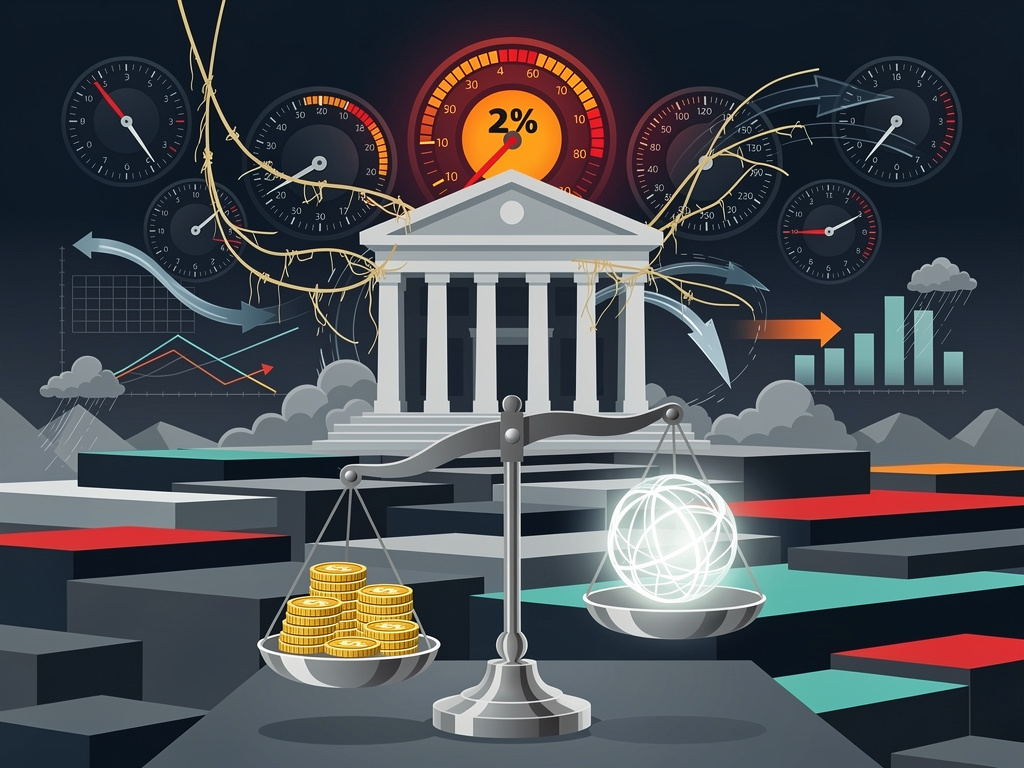
Bill Dudley knows the Federal Reserve from the inside. As president of the New York Fed from 2009 to 2018, he sat at the center of crisis response and policy debates. Now, years removed from that role, he delivers a blunt assessment. The central bank stands in danger of losing credibility as an inflation fighter.
“We have been above the Fed’s inflation target for more than five years,” Dudley said Tuesday on Bloomberg Television’s Surveillance. “And there is a risk that inflation expectations do finally become unanchored.” The words carry weight. They come at a moment when the Fed has a new chairman, fresh political pressures and inflation that refuses to settle at 2 percent. Investing.com reported the remarks shortly after they aired.
The numbers tell a stubborn story. Consumer prices have run hotter than the Fed’s goal since at least late 2020. Recent data showed the largest monthly jump in the consumer price index since 2023. Long-term inflation expectations, tracked by the University of Michigan’s preliminary survey, have started to tick higher. Fed Governor Christopher Waller has highlighted similar concerns in the two-year outlook. These signals matter. Once expectations slip their anchor, they prove difficult to recapture.
Dudley did not stop at diagnosis. He questioned the entire stance of monetary policy. Has it truly been restrictive? The economy has kept growing near full employment even with the federal funds rate held at or above current levels since November 2022. Something does not add up. The neutral rate of interest, that elusive level where policy neither stimulates nor restrains, may sit structurally higher than policymakers assume. An investment boom fueled by artificial intelligence and swelling government debt that crowds out private savings help explain why.
So the case for rate cuts looks thin. “The case for cutting rates now is actually very, very weak,” Dudley said. Short sentence. Clear implication. Yet markets and politicians keep pushing for easing. President Donald Trump has criticized previous Chair Jerome Powell for resisting lower rates. That political noise only compounds the problem.
Kevin Warsh, sworn in as the new Fed chair in recent weeks, now faces his first FOMC meeting next month. The timing could hardly be more delicate. Warsh inherits an institution already under scrutiny. Reuters reported on his confirmation and the immediate policy dilemma he confronts, noting surging gasoline prices tied to geopolitical tensions and consumer sentiment sliding. Inflation sits more than a percentage point above target. The new chairman must decide whether to raise rates to demonstrate resolve or risk eroding trust from the start. Reuters captured the tension.
This moment echoes earlier warnings. In January, Dudley outlined six big challenges for the Fed in 2026. Top of the list was independence. If Trump’s appointees undermine public trust in the central bank’s commitment to containing inflation, the consequences could prove severe. A Bloomberg Opinion column Dudley wrote at the time laid out the risks with precision. Political interference might unhinge expectations faster than any economic shock. Recent coverage in the Australian Financial Review revisited those points as Warsh took the helm.
Credibility, once lost, does not return easily. Loretta Mester, former president of the Cleveland Fed, put it starkly in recent remarks. Polls show the Fed has already lost ground with the public. Gallup surveys reflect the decline that typically follows big inflation outbreaks. “The Fed has lost credibility,” she said. Kathleen Hays reported those comments on her Substack, underscoring how sustained price pressures erode institutional standing.
The 2020 monetary policy framework bears some responsibility. Designed for a low-inflation world, it proved ill-suited when demand roared back after the pandemic. Dudley has criticized that framework in multiple forums, including a G-30 report and discussions at Princeton. A return to a symmetric 2 percent target offers some correction, yet the damage from years of overshooting lingers. Markets now watch every word from officials for signs of wavering.
And the challenges keep mounting. Geopolitical shocks, from conflicts affecting oil markets to broader trade tensions, add volatility. Minutes from recent FOMC meetings reveal officials warning that persistent inflation above target might require rate hikes, not cuts. A YouTube summary of those minutes highlighted the shift in tone. The Fed can talk about tools to fight inflation. Demonstrating the will to use them matters more.
Dudley’s intervention arrives as Powell’s term ends and a new era begins. Powell will be remembered for battling both inflation and political pressure. Whether that battle ends in victory or a slippery slope remains uncertain. Morningstar’s MarketWatch analysis noted the high stakes for his legacy. If inflation stays elevated, historians may mark this period as the start of diminished Fed authority.
Yet Dudley sees a path forward. Preserve independence. Communicate clearly. Avoid the temptation to ease prematurely. Higher neutral rates mean policy must stay tighter for longer than many expect. The AI-driven productivity gains and fiscal deficits change the math. Ignoring those shifts invites policy error.
Watch the surveys. Monitor wage growth. Track whether businesses continue to pass on costs without pushback. These metrics will reveal if expectations are truly drifting. The Fed cannot afford complacency. Five years of missing the target already tests patience. A sixth or seventh would test something deeper: the belief that the central bank can deliver price stability.
So far, long-term expectations have held relatively steady. That resilience is not guaranteed. Dudley’s warning serves as both diagnosis and caution. The institution he once helped lead now stands at a crossroads. Its response in the months ahead will determine whether credibility erodes further or begins the slow process of repair. The stakes extend beyond markets. They touch household budgets, business planning and the public’s faith in economic stewardship.


 WebProNews is an iEntry Publication