
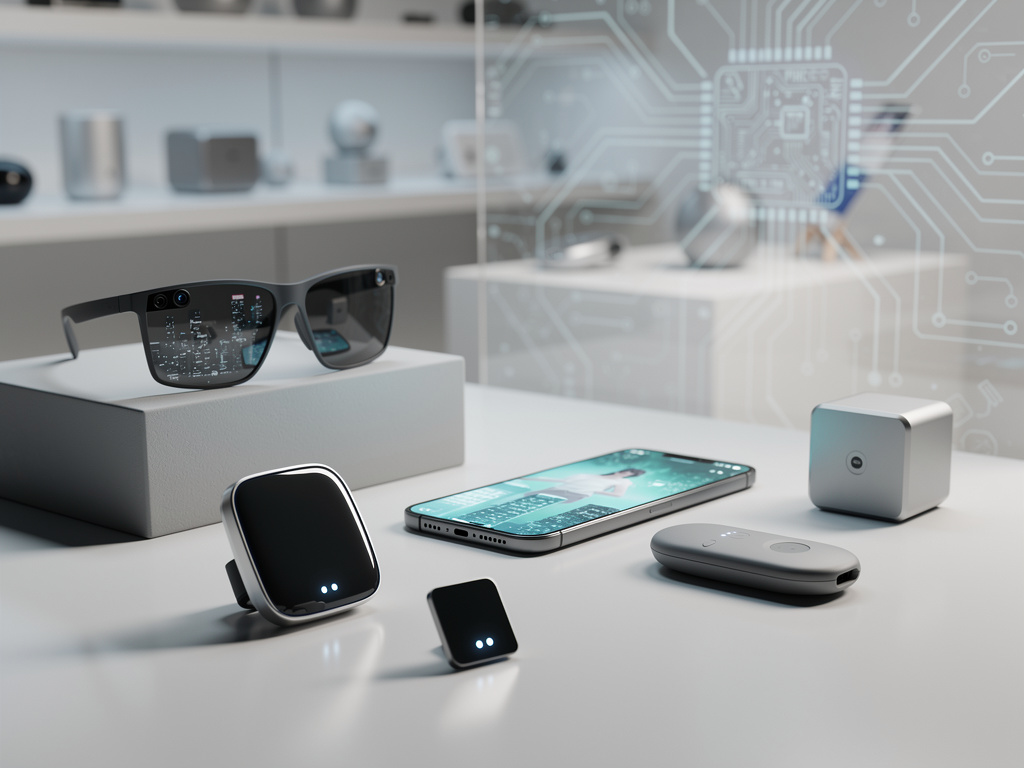
Big tech companies poured billions into artificial intelligence. They built chatbots that dazzle in demos. Yet when it comes to physical gadgets that bring those capabilities into daily life, the results look messy. Failures pile up. Sales disappoint. And executives keep searching for the next form factor that might finally click with consumers.
The pattern repeats. Startups and giants alike launch devices loaded with cameras, microphones and the latest language models. Then reality sets in. Battery life drains fast. Accuracy falters in noisy environments. And users discover they still reach for their phones anyway. A Gizmodo report captured the frustration perfectly last week. It highlighted how even Microsoft, with all its resources, unveiled a concept AI badge at its Build conference that left observers wondering about real-world value.
That badge carries a side-facing camera, touchscreen, fingerprint reader, microphone and cellular connectivity. Microsoft technical fellow Steven Bathiche demonstrated it by asking Copilot to capture images from the audience, clean them up and send them for review. The demo stopped short of showing results. Convenient. The company positions the device for enterprise settings. Nurses could record patient interactions. Retail workers might gain context about their surroundings. But specifics remain thin. So do answers to basic questions about privacy and accuracy.
This latest effort follows a string of high-profile disappointments. Humane’s AI Pin promised to replace smartphones with a screenless wearable. It drew mockery for slow performance, overheating and limited usefulness. The company eventually sold to HP for a fraction of its valuation. Rabbit’s R1 handheld aimed to control other apps through a large action model. Early reviews slammed its unreliability. Users largely abandoned it.
Even Friend’s pendant, designed as an always-available AI companion, drew criticism for feeling intrusive rather than helpful. These devices shared a common flaw. They tried to carve out new behaviors without solving clear problems better than existing tools. And they arrived before the underlying models could deliver consistent performance in uncontrolled environments.
But not every AI wearable has flopped. Meta’s Ray-Ban smart glasses stand as a notable exception. They blend familiar fashion with useful features like live translation, photo capture and audio playback. Recent reports show strong sales momentum. EssilorLuxottica confirmed booming demand in the first quarter of 2026, according to posts tracking Meta’s hardware push. The glasses succeed partly because they enhance an existing product category instead of inventing a new one from scratch.
Other players push forward despite the headwinds. OpenAI explores hardware aggressively. The company reportedly collaborates with Jony Ive on a family of devices, though timelines slipped into 2027. Compute demands create headaches. Voice interfaces struggle with when to speak and when to stay silent. A TechCrunch article from January detailed Apple’s parallel interest in an AI wearable pin equipped with cameras and microphones. The Information first reported those plans. OpenAI also invested in Opal, a former webcam maker now pivoting to AI audio products. Sam Altman has tested early versions himself.
Google and Amazon experiment too. Their efforts often fold AI into familiar hardware. Smart displays gain better context awareness. Voice assistants handle more complex requests. Yet dedicated AI gadgets from these giants remain rare. Amazon’s Astro robot, once touted as a home companion, never achieved mass adoption. It highlighted the gap between demo videos and practical deployment.
Recent developments show the category evolving. On-device processing gains traction to address privacy concerns and reduce latency. A Wall Street Journal story from March examined growing pushback against always-listening, always-watching wearables. Courts and regulators take notice when Meta employees wear AI glasses into sensitive meetings. The article noted efforts to shift more computation locally rather than rely on cloud servers.
Qualcomm introduced the Snapdragon Wear Elite chip in March specifically for AI wearables. It targets pendants, pins and even display-free glasses. The Verge covered the announcement, quoting company executives who see demand from gadget makers seeking efficient edge AI. Such components could help future devices last longer between charges while handling basic inference without constant connectivity.
Consumer interest splits sharply. Some enthusiasts buy multiple devices, hoping one will stick. Others dismiss the entire category as solution in search of a problem. YouTube channels overflow with lists of 2026’s best AI gadgets. Many highlight smart glasses from Rokid, emotional companions and home robots like Samsung’s Ballie. Yet hands-on reviews often temper excitement with practical caveats about battery life, cost and actual daily utility.
Wall Street watches closely. Hedge funds rode AI hardware stocks to strong gains earlier this year. A May Wall Street Journal report detailed how semiconductor and equipment makers delivered blockbuster returns for stock-pickers. Foxconn posted solid results driven by AI server demand. Memory suppliers like Micron, SK Hynix and Samsung benefited from surging prices for high-bandwidth memory used in training systems. But consumer gadget success looks less certain than data-center infrastructure wins.
Analysts point to several barriers. First, the models still hallucinate too often for devices that act autonomously in the physical world. Second, power consumption limits what batteries can support in small form factors. Third, consumers hesitate to buy expensive hardware that might become obsolete quickly as software improves. And privacy fears run deep when cameras and microphones operate continuously.
Microsoft’s Project Solara represents one attempt to solve the software side. The operating system targets agentic AI. It aims to let devices take meaningful actions rather than just answer questions. Yet linking that software to hardware like the badge concept feels preliminary. The company describes potential uses without showing polished end-to-end experiences.
Apple’s rumored pin and OpenAI’s audio experiments suggest the next wave may focus on smaller, less intrusive form factors. Earbuds, pendants and pins avoid the social awkwardness of glasses in some settings. They also face fewer expectations than a supposed phone replacement. But they must deliver immediate value or risk joining the pile of forgotten experiments.
Meta appears furthest along in finding product-market fit. Its glasses benefit from an established brand in eyewear. The AI features feel additive rather than revolutionary. Live translation helps travelers. Camera access lets users share moments hands-free. Audio playback works without earbuds. These practical applications explain the sales momentum reported this year.
Still, even Meta faces questions about data practices and always-on sensing. The backlash article in the Journal described courtroom moments where Zuckerberg’s team wore the glasses, raising eyebrows among observers. Such incidents underscore the trust issues that any camera-equipped wearable must overcome.
The industry finds itself in a strange spot. Cloud-based AI advances rapidly. Model capabilities expand monthly. Hardware, by contrast, moves slower and costs more to iterate. Companies can update software over the air. They cannot easily revise millions of shipped devices with better chips or longer battery life.
So the experiments continue. Badges. Pins. Pendants. Glasses. Robots. Each tries to answer the same question. Where does AI belong in physical space? The early answers disappointed. But the financial incentives remain enormous. Whoever cracks the code for useful, reliable, affordable AI hardware could capture billions in new revenue streams.
That prize keeps teams at Microsoft, OpenAI, Apple, Google and Meta iterating despite the stumbles. They study what worked with Ray-Ban Meta glasses. They analyze why Humane and Rabbit struggled. And they bet that incremental improvements in models, chips and batteries will eventually produce devices people cannot live without. For now, though, most AI gadgets remain novelties. Useful in narrow cases. Forgotten in drawers the rest of the time.
The coming months will bring more launches. Qualcomm’s new chips will power some of them. On-device AI will handle more tasks locally. Privacy controls may improve. Yet the fundamental challenge persists. Creating hardware that feels essential rather than experimental. Until that happens, big tech will keep searching. And consumers will keep waiting for the gadget that finally delivers on the promise.


 WebProNews is an iEntry Publication