
Jeff Bezos once lost billions of dollars on failed Amazon experiments. He wears those mistakes as badges now. “I’ve made billions of dollars of failures at Amazon.com,” he told an audience recently. “Literally, billions of dollars in failures.” The message lands with force. Risk fuels progress. And right now, that risk centers on artificial intelligence applied to the tangible economy.
The Amazon founder has thrown himself back into daily operations. This time as co-chief executive of Project Prometheus, an artificial intelligence startup that emerged in late 2025 with $6.2 billion in initial funding. The New York Times first detailed the venture, noting its ambitious scope and Bezos’s personal involvement. By June 2026 the company had raised another $12 billion. Its valuation climbed to roughly $41 billion. Bloomberg reported the details. Few early-stage efforts have commanded such capital so quickly.
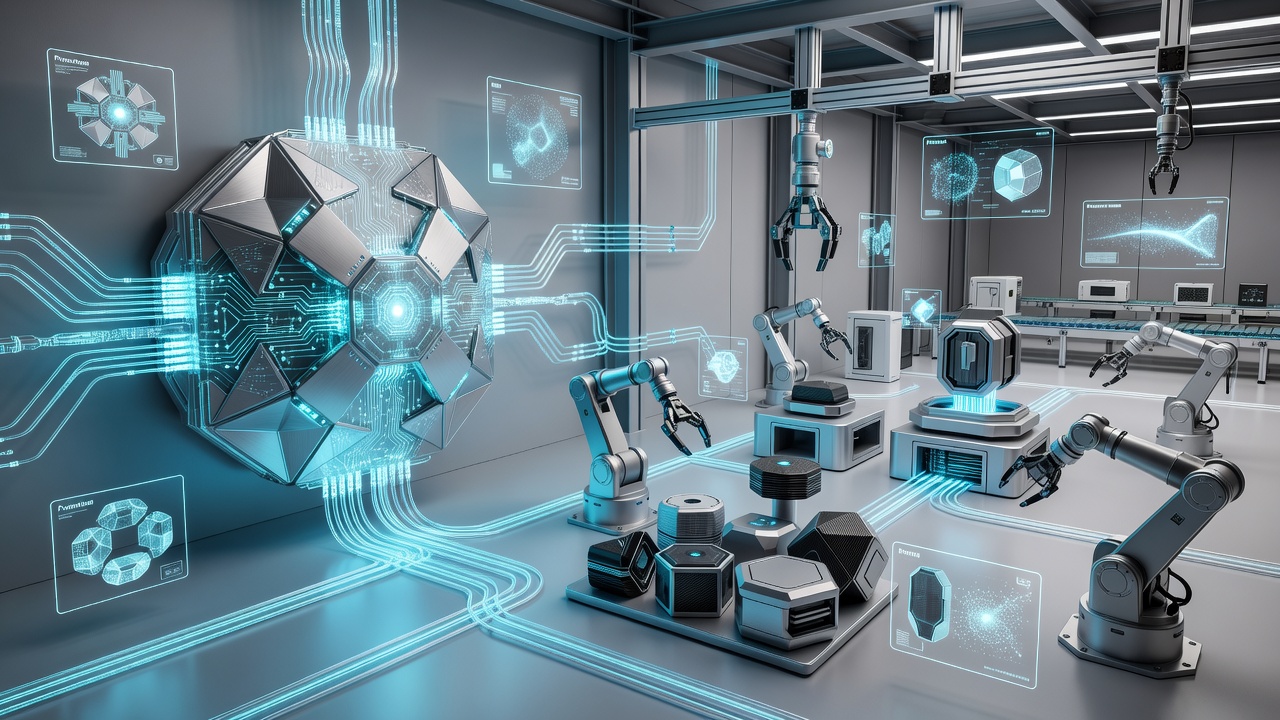
Prometheus does not chase chatbots or consumer apps. It targets engineering and manufacturing. The company builds tools that function like an “artificial general engineer.” They model, predict and optimize physical objects from jet engines to new pharmaceuticals. Bezos described it during a CNBC interview as “a very, very modern version of CAD.” He corrected one questioner sharply. “We have nothing to do with robotics,” he said. The focus sits upstream. Before the factory floor. In the design phase where most value and cost get locked in.
This direction flows from a deeper conviction. AI will not eliminate jobs on net. It will spark a labor shortage. Demand for human talent will outstrip supply as productivity surges and new possibilities open. Bezos made the case at VivaTech in Paris in June 2026. BBC News captured his remarks. He pointed to Amazon’s own history. Technology lifted output so dramatically that the company kept hiring even while automating warehouses. Smaller teams achieved more. New categories emerged. The same pattern, he argues, will repeat at industrial scale.
But first comes the bubble. Bezos has acknowledged classic signs of excess. Overexcitement. Soaring valuations detached from current profits. He drew parallels to the internet bubble of the early 2000s at Italian Tech Week in 2025. Fortune traced the thread across his appearances. The bubble will burst, he predicted. Yet the underlying technology remains real. Its eventual impact will prove “gigantic.” Society will gain higher productivity, lower prices and better quality across industries. Deflationary forces could follow. That prospect excites him more than it alarms.
Entrepreneurs stand to benefit most. “This is the best time ever to be alive and start a company,” Bezos declared at VivaTech. The YouTube channel DRM News posted the full session. Possibilities abound because AI, space exploration and biotechnology converge at once. Such alignment happens rarely. Barriers that once blocked ideas from becoming products now crumble. Capital intensity drops. Speed increases. A founder with a strong concept no longer needs armies of specialists or massive budgets to test it.
Small businesses gain particular leverage here. Many owners already experiment with AI for marketing, customer service or basic automation. The next wave reaches deeper. Into product design, supply chain optimization and materials discovery. A one-person operation could soon prototype complex hardware that once required corporate labs. Bezos sees this expansion creating more work than it displaces. New services. New markets. New categories of demand that humans must fulfill.
Critics push back. Surveys of chief financial officers point to rising AI-related layoffs in 2026. Some forecasts suggest nine times as many as the prior year. Bezos counters with his bulldozer-and-shovel metaphor. AI acts as the bulldozer. It clears obstacles. Workers with shovels become far more productive. Radiologists. Software engineers. Factory planners. All stand to gain tools that amplify their judgment rather than replace it.
His own track record at Amazon informs the view. The company invested heavily in robotics and machine learning inside fulfillment centers. Headcount grew alongside the technology. So did revenue per employee. Bezos believes the physical economy will follow a similar path. Manufacturing. Aerospace. Automotive. Drug development. Each sector contains stubborn inefficiencies that better design tools can attack.
Project Prometheus operates with striking leanness. About 150 employees across San Francisco, London and Zurich support its $41 billion valuation. That ratio signals intent. The company plans to acquire existing industrial businesses and retrofit them with its AI rather than build everything internally. CNBC covered the latest funding and strategy. Co-CEO Vik Bajaj, a former Google X scientist, shares the leadership load. Their public comments emphasize transparency. “We’re not being secretive,” Bezos said in one session.
Broader fundraising talks suggest even larger ambitions. Bezos has explored a potential $100 billion fund to buy manufacturing companies and accelerate their AI adoption. The Wall Street Journal reported his travels to the Middle East and Singapore seeking sovereign capital. The effort ties back to Prometheus. Success would give the startup real assets to optimize and a platform to scale its technology.
Not everyone buys the optimistic labor thesis. Some X posts highlight Amazon’s past impact on traditional retail. Others worry that small businesses without technical depth will fall further behind. One recent thread noted AI tools already threaten knowledge-work margins that once seemed safe. Yet data points accumulate on the other side. HSBC research found 73 percent of wealthy investors now use AI for research. Banks compete aggressively for chief AI officers, paying up to $3.5 million annually. Oracle cited AI in its filing after cutting 21,000 jobs. The pattern mixes displacement with new opportunity. Exactly what Bezos predicts.
His personal return to operational intensity surprises some observers. After stepping away from Amazon’s day-to-day leadership in 2021, he focused on Blue Origin and other interests. Project Prometheus pulled him back. The scale of the bet matches his history. Amazon itself began in a garage with books. Failures piled up. The Fire Phone. Many early retail categories. Each taught lessons that compounded. He applies the same tolerance for experimentation now.
Speed matters above all. Bezos stresses decisiveness for companies in fast-moving fields. Hire friends after age 40, he once joked. The serious point concerns culture. Teams that trust each other move quicker. In AI development, that advantage compounds daily. Prometheus aims to shorten the cycle from idea to physical prototype. If it succeeds, the “dream build loop” accelerates for everyone.
Industry watchers debate timing. Some see the current funding frenzy as unsustainable. Valuations have detached in places. Yet underlying progress in models and compute continues. Costs fall. Capabilities spread. Small engineering groups achieve what once required thousands. That diffusion favors entrepreneurs over incumbents. Bezos counts himself among those who thrive in such transitions.
The coming years will test his thesis. If AI truly creates more roles than it removes, manufacturing renaissance could follow. Labor scarcity might drive wages higher in desirable work. Deflation in goods could broaden access. These outcomes depend on execution. On whether tools like those from Prometheus deliver measurable gains in complex design tasks.
Bezos has placed his capital and time behind the affirmative case. He failed billions of dollars’ worth before. Each time Amazon emerged stronger. The same pattern may unfold again. This time the stakes span entire physical industries. And the audience watching includes every founder wondering whether their next idea finally has a realistic shot at scale.
Recent coverage reinforces the momentum. Yahoo Finance examined the $12 billion round and its implications for labor markets. The conversation has shifted from fear of replacement to questions of abundance. How societies distribute gains. How small businesses access the new tools. How quickly physical production can transform. Bezos offers one clear signal. He wouldn’t commit at this scale if he saw only disruption ahead.


 WebProNews is an iEntry Publication