
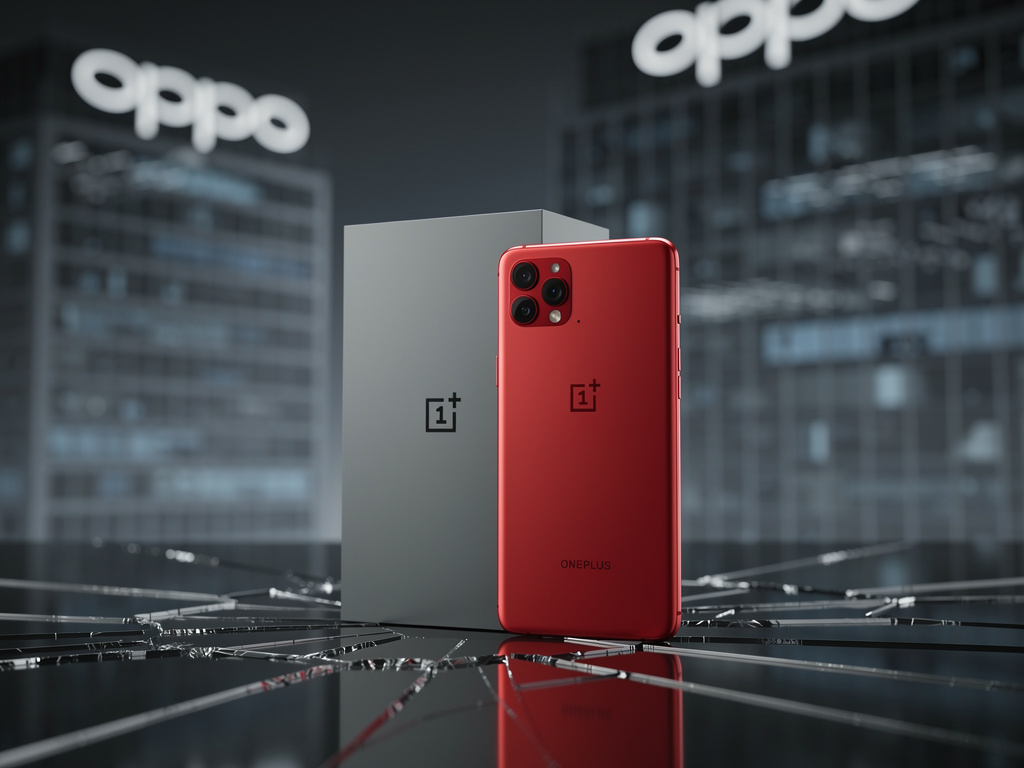
A swift and unequivocal denial from a corporate president is typically enough to quash a market rumor. Yet, when OnePlus President and COO Kinder Liu took to the social media platform X to label speculation about his company’s demise as “false,” the industry’s collective sigh of relief was conspicuously shallow. The whispers, suggesting OnePlus was ceasing key operations and folding deeper into its parent, Oppo, were officially silenced. The underlying anxiety, however, continues to reverberate through the competitive smartphone sector, exposing a deeper crisis of identity and trust that plagues the once-celebrated “flagship killer.”
The rumor, which ignited from a post on X, painted a grim picture: OnePlus was allegedly pulling out of Europe, discontinuing its innovative line of foldable devices after just one generation, and effectively ceding control of its OxygenOS software to Oppo’s ColorOS team. In his rebuttal, Mr. Liu was emphatic, stating, “We are committed to our global markets and will continue to expand our product offerings across the globe.” He specifically reaffirmed the company’s dedication to its foldable line, a critical growth area. Still, for many industry analysts and long-time brand followers, the denial addressed the symptom, not the cause of the unease, as noted by observers at Android Authority.
The Lingering Shadow of Oppo’s Retreat
The rumor’s plausibility stems not from a vacuum, but from the very real and public struggles of OnePlus’s sister company, Oppo. Both firms operate under the vast umbrella of China’s BBK Electronics. Oppo has been forced into a strategic retreat from key European markets, most notably Germany, after a significant patent dispute with Nokia. A 2022 German court ruling in Nokia’s favor led to a sales ban on Oppo and OnePlus devices, creating a ripple effect of uncertainty across the continent. As reported by Reuters, this legal defeat effectively shuttered Oppo’s German operations, a major blow for any brand with global ambitions.
This precedent makes the idea of OnePlus also scaling back its European presence seem not just possible, but strategically logical. While OnePlus has since settled its own patent disputes with Nokia, the market memory of Oppo’s exit is fresh. The operational and supply chain entanglements between the two companies are so deep that a significant strategic shift by one is widely perceived to have a direct impact on the other. This shared fate, a consequence of their deep integration, means OnePlus is inevitably viewed through the lens of Oppo’s challenges, making it difficult for the brand’s denials to stand entirely on their own.
A Crisis of Identity and Integration
At the heart of the issue is a fundamental shift in OnePlus’s corporate structure and identity that began in 2021. The company, once fiercely proud of its independent startup ethos and direct-to-consumer model, formally merged its teams with Oppo. The move was positioned by CEO Pete Lau as a way to gain efficiencies and access greater resources. In an interview with The Verge at the time, Lau promised that OnePlus would continue to operate as an independent brand. However, the years since have seen what many critics call the “Oppo-fication” of OnePlus, blurring the lines that once made the brand unique.
This integration has manifested in shared hardware designs, with some OnePlus phones appearing as near-identical rebranded versions of Oppo devices released in other markets. More contentiously, it has impacted the software, once the soul of the OnePlus experience. The brand’s clean, enthusiast-focused OxygenOS was merged onto the same codebase as Oppo’s ColorOS. While the company has maintained separate branding for the software, users and reviewers have consistently pointed out that OxygenOS now looks and feels more like its Oppo counterpart than the stock-Android-like experience it once was, eroding a key brand differentiator.
Credibility on the Line
This slow erosion of autonomy has created a trust deficit. The company’s initial assurances in 2021 that the brands would remain distinct now ring hollow to many in its core user base. Consequently, when the recent shutdown rumors emerged, they landed on fertile ground, cultivated by years of observing a widening gap between corporate messaging and product reality. The denial from Kinder Liu, while firm, is being weighed against a history of statements that, in retrospect, downplayed the full extent of the Oppo integration. This history makes it harder for the market to accept the company’s current declarations at face value.
The specific claim that the ColorOS team would fully absorb OxygenOS development was particularly potent because it aligns with the trajectory observers have witnessed for years. For an industry built on brand loyalty and clear value propositions, this perceived lack of transparency is a significant liability. OnePlus finds itself in a position where it must not only refute a specific rumor but also actively work to rebuild the credibility it has lost through its strategic evolution. As outlets like GSMArena reported, the strong denial was necessary, but the underlying questions from the community persist.
Navigating a Crowded Global Arena
While the shutdown speculation is officially off the table, the incident forces a harsh look at OnePlus’s strategic position. The company has found significant success in markets like India, where it often competes for the top spot in the premium segment. However, in the highly competitive North American and European markets, its position is more complex. It competes against the dominance of Apple and Samsung, the aggressive pricing of other Chinese brands, and the growing presence of Google’s Pixel line.
The challenge for OnePlus is no longer just about engineering a great device; it is about articulating a reason to exist. If its hardware is indistinct from Oppo’s and its software is a variation of ColorOS, what is the core value proposition for a consumer in London or New York? The merger was meant to give OnePlus the scale to compete, but it has simultaneously stripped it of the very identity that made it a compelling alternative in the first place. The company’s future now depends on its ability to carve out a distinct and convincing identity from within the vast BBK Electronics machine, proving it is more than just a flanker brand for Oppo’s global ambitions.


 WebProNews is an iEntry Publication