
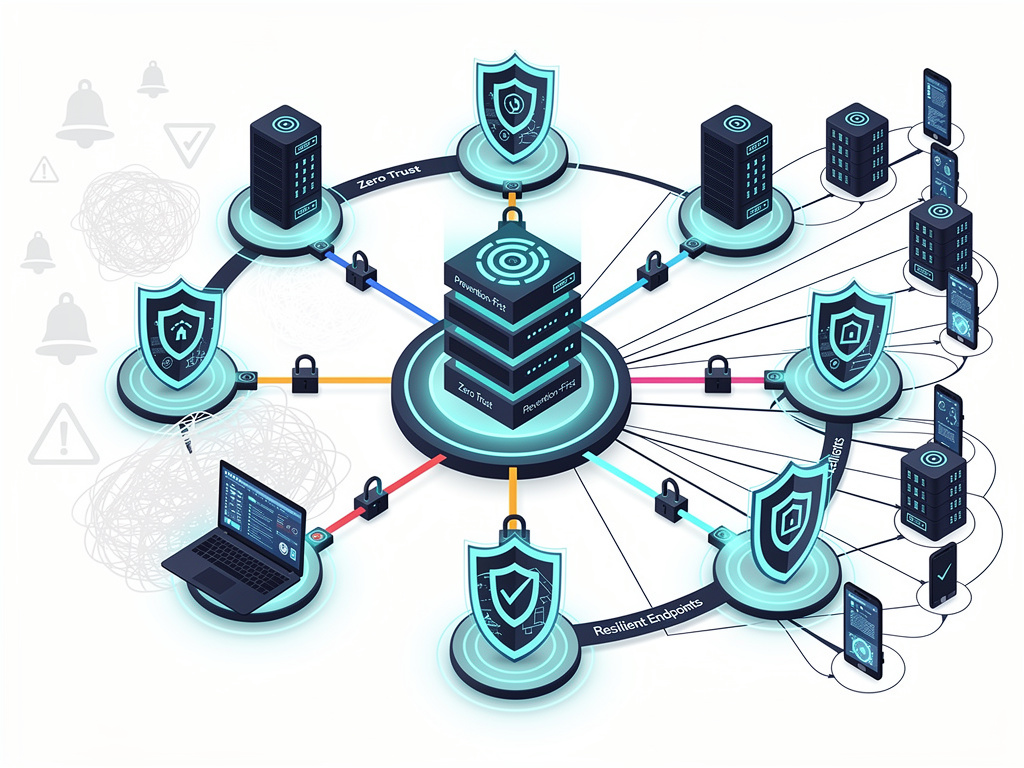
Zero trust has dominated cybersecurity conversations for years, yet many organizations remain trapped in the conceptual phase, struggling to translate its principles into tangible security improvements. The gap between theoretical frameworks and practical implementation has widened as enterprises grapple with complex legacy systems, distributed workforces, and increasingly sophisticated threat actors. Now, a fundamental shift is underway as prevention-first architectures and resilient endpoint strategies transform zero trust from an aspirational concept into an operational reality.
According to CIO.com, the evolution toward practical zero trust implementation centers on two critical pillars: prevention-first security architectures that stop threats before they materialize, and resilient endpoints that maintain security integrity regardless of user behavior or network conditions. This approach represents a departure from traditional detect-and-respond methodologies that have proven inadequate against modern attack vectors. Organizations are discovering that true zero trust requires fundamentally rethinking how endpoints are provisioned, managed, and secured throughout their lifecycle.
The traditional endpoint security model relied heavily on detection capabilities, antivirus software, and user training to identify and mitigate threats after they had already penetrated defenses. This reactive posture left organizations perpetually one step behind attackers who could exploit the window between infiltration and detection. Prevention-first architectures flip this model by assuming breach from the outset and designing systems that make successful exploitation exponentially more difficult, regardless of whether an initial compromise occurs.
The Economic Imperative Driving Practical Implementation
Financial pressures are accelerating the transition from theoretical zero trust to practical deployment. The average cost of a data breach reached $4.45 million in 2023, according to IBM Security’s annual report, with detection and escalation accounting for significant portions of breach-related expenses. Organizations are recognizing that investing in prevention-first architectures delivers superior return on investment compared to continually expanding detection and response capabilities. The mathematics of cybersecurity economics increasingly favor architectures that reduce attack surface area and eliminate entire classes of vulnerabilities rather than attempting to identify every possible threat variant.
Enterprise IT leaders are also confronting the operational costs of complexity. Traditional zero trust implementations often required deploying multiple point solutions, each with its own management console, policy engine, and integration requirements. This fragmentation created administrative overhead that negated many of the security benefits while introducing new potential failure points. Modern prevention-first approaches consolidate security controls into streamlined architectures that reduce both complexity and cost while improving security outcomes. The operational efficiency gains prove particularly compelling for organizations facing budget constraints and cybersecurity talent shortages.
The shift toward practical zero trust implementation is further driven by regulatory requirements and compliance frameworks that increasingly mandate specific security controls. Industries from healthcare to finance face mounting pressure to demonstrate not just security awareness but concrete implementation of advanced security architectures. Prevention-first zero trust models provide auditable, measurable security postures that satisfy regulatory requirements while delivering genuine risk reduction.
Resilient Endpoints as the Foundation of Operational Zero Trust
The endpoint has emerged as the critical battleground where zero trust principles either succeed or fail in practice. Traditional endpoint security focused on protecting devices through software agents that monitored for malicious activity, but this approach proved vulnerable to sophisticated attacks that could disable or evade detection mechanisms. Resilient endpoints take a fundamentally different approach by building security into the device architecture itself, creating systems that maintain security integrity even when individual components are compromised.
As detailed by CIO.com, IGEL’s approach to endpoint resilience exemplifies this architectural shift. By implementing read-only operating systems and preventive security controls at the firmware level, resilient endpoints eliminate entire categories of attacks that rely on persistent access or system modification. When users cannot install unauthorized software, attackers cannot establish persistence. When system files cannot be modified, malware cannot alter security controls. This prevention-first design philosophy transforms endpoints from potential liability into reliable security enforcement points.
The resilient endpoint model also addresses one of zero trust’s most persistent implementation challenges: maintaining security posture across diverse user populations with varying technical sophistication. Traditional endpoint security required users to make correct security decisions and avoid risky behaviors, an expectation that consistently proved unrealistic. Resilient endpoints remove users from the security decision chain by making secure operation the default and only option. This architectural approach proves particularly valuable for organizations with remote workforces, contractors, or other user populations that may not receive comprehensive security training.
Prevention-First Architectures Eliminate Attack Vectors at Scale
Prevention-first security architectures extend beyond individual endpoints to encompass network segmentation, application access controls, and data protection mechanisms that collectively reduce organizational attack surface. Rather than attempting to detect every possible threat, these architectures eliminate the conditions that make attacks successful. Network microsegmentation prevents lateral movement even when initial access is achieved. Application whitelisting ensures only authorized software executes. Data encryption and access controls render exfiltrated information useless to attackers.
The practical implementation of prevention-first architectures requires careful attention to user experience and business process integration. Early zero trust deployments often created friction that impeded productivity, leading to user workarounds that undermined security objectives. Modern prevention-first approaches balance security requirements with operational needs through intelligent policy engines that grant appropriate access based on contextual factors including user identity, device posture, location, and requested resource sensitivity. This nuanced approach maintains security without creating artificial barriers to legitimate business activities.
Organizations implementing prevention-first architectures report significant reductions in security incidents and faster response times when incidents do occur. By eliminating common attack vectors and reducing the number of potential compromise points, security teams can focus resources on genuine threats rather than investigating false positives or responding to preventable incidents. This operational efficiency translates directly into improved security outcomes and reduced total cost of ownership for security programs.
Integration Challenges and Architectural Considerations
Transitioning from theoretical zero trust to practical prevention-first architectures presents significant integration challenges, particularly for organizations with substantial legacy infrastructure investments. Existing systems often lack the granular access controls, continuous verification capabilities, and security telemetry required for effective zero trust implementation. Organizations must develop migration strategies that progressively enhance security posture without disrupting critical business operations or requiring wholesale infrastructure replacement.
Successful prevention-first implementations typically follow a phased approach that prioritizes high-value assets and high-risk access scenarios. Organizations begin by implementing resilient endpoints for privileged users who access sensitive systems, then progressively expand coverage to broader user populations. Network segmentation starts with isolating critical assets before extending microsegmentation throughout the environment. This incremental approach allows organizations to realize security benefits quickly while building expertise and refining policies based on operational experience.
The architectural decisions made during prevention-first implementation have long-term implications for security effectiveness and operational efficiency. Organizations must carefully evaluate whether to pursue best-of-breed point solutions or integrated platforms that consolidate multiple security functions. While point solutions may offer superior capabilities in specific areas, integrated platforms typically provide better policy consistency, simplified management, and reduced integration complexity. The optimal approach varies based on organizational size, technical capabilities, and specific security requirements.
Measuring Success Beyond Compliance Checkboxes
Evaluating the effectiveness of prevention-first zero trust implementations requires moving beyond traditional security metrics that focus on detection rates and response times. Organizations implementing prevention-first architectures should measure success through metrics including attack surface reduction, mean time to productivity for new endpoints, policy violation rates, and most importantly, the absence of successful attacks. These metrics reflect the fundamental goal of prevention-first security: making successful attacks so difficult that they become economically unattractive to adversaries.
The business impact of effective zero trust implementation extends beyond pure security metrics to encompass operational efficiency, user satisfaction, and business enablement. Organizations report that well-implemented prevention-first architectures actually improve user experience by eliminating security friction for legitimate activities while blocking malicious actions transparently. This positive user experience proves critical for sustained success, as user acceptance determines whether security controls remain effective or get circumvented through shadow IT and workarounds.
Long-term success with prevention-first zero trust requires ongoing commitment to architectural refinement and policy optimization. Threat actors continuously evolve tactics, business requirements change, and new technologies introduce fresh security considerations. Organizations must establish processes for regularly reviewing security architectures, updating policies based on threat intelligence and operational experience, and incorporating new security capabilities as they mature. This continuous improvement approach ensures prevention-first architectures remain effective against evolving threats while supporting changing business needs.
The Path Forward for Enterprise Security
The transition from theoretical zero trust to practical prevention-first implementation represents more than incremental security improvement—it fundamentally redefines the relationship between security and business operations. By building security into architectural foundations rather than layering it on as an afterthought, organizations create environments where secure operation becomes the natural state rather than a constant struggle against user behavior and attacker innovation. This architectural approach proves particularly valuable as organizations navigate hybrid work models, cloud adoption, and digital transformation initiatives that expand attack surfaces and complicate traditional perimeter-based security.
The convergence of economic pressures, regulatory requirements, and technological maturity is creating unprecedented momentum for practical zero trust implementation. Organizations that previously viewed zero trust as aspirational are now developing concrete deployment roadmaps and allocating resources for implementation. This shift from concept to practice reflects growing recognition that traditional security approaches cannot adequately protect against modern threats, and that prevention-first architectures offer both superior security outcomes and better operational efficiency than detect-and-respond alternatives.
As prevention-first zero trust implementations mature, industry best practices are emerging that will guide future deployments. Organizations benefit from learning from early adopters who have navigated integration challenges, refined policy frameworks, and demonstrated measurable security improvements. The evolution from zero trust theory to prevention-first practice marks a pivotal moment in enterprise security, one that promises to reshape how organizations approach cybersecurity for years to come. Success requires commitment to architectural thinking, willingness to challenge legacy approaches, and recognition that genuine security comes from making attacks fail rather than detecting them after they succeed.


 WebProNews is an iEntry Publication