
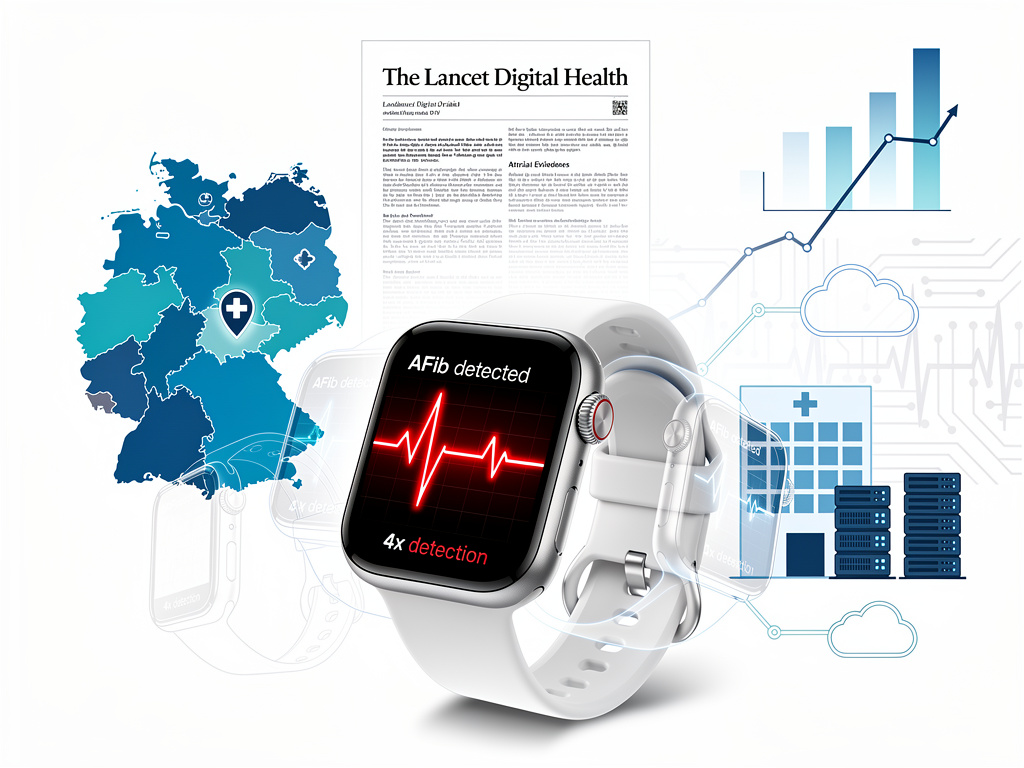
HAMBURG, Germany – For years, the smartwatch has been viewed primarily as a fitness accessory, a digital coach on the wrist counting steps, tracking sleep, and nudging users to stand up. But a groundbreaking German clinical trial is forcing a radical reassessment, positioning these consumer gadgets as powerful tools for proactive healthcare and potentially revolutionizing the detection of one of the leading causes of stroke: atrial fibrillation (AFib).
The eBRAVE-AF trial, a large-scale randomized controlled study, found that individuals using a commercially available smartwatch were more than four times as likely to be diagnosed with AFib compared to those receiving standard medical care. This stark finding, published in the prestigious journal The Lancet Digital Health, provides some of the most robust evidence to date that consumer wearables can effectively screen for the dangerous and often asymptomatic heart rhythm disorder. The results are sending ripples through the technology and healthcare sectors, accelerating the collision of consumer electronics and clinical medicine.
A Rigorous Test Puts Consumer Tech Under the Microscope
Conducted by researchers at the University Medical Center Hamburg-Eppendorf (UKE), the trial involved 5,551 German adults aged 50 and over with no prior AFib diagnosis. Participants were randomly assigned to one of two groups. The first group received a Withings ScanWatch with an embedded photoplethysmography (PPG) sensor and single-lead electrocardiogram (ECG) capability. They were instructed to use the device for six months. The second group, the control, received usual care, relying on routine check-ups and symptom-triggered doctor visits to detect any heart issues.
The results were unequivocal. Over the six-month period, AFib was newly diagnosed in 19 participants in the smartwatch group, representing 0.7% of the cohort. In the control group, only five new diagnoses were made, or 0.2%. “This means that screening using a smartwatch can identify previously undetected atrial fibrillation in more people,” said Prof. Dr. Dirk Westermann of the UKE in a press release. The study’s design as a randomized controlled trial—the gold standard in clinical research—lends significant weight to its conclusions, moving beyond the observational data that has characterized much of the research in this field to date.
From Fitness Gadget to Diagnostic Contender
This German study builds upon a foundation laid by earlier, larger-scale efforts, most notably the Apple Heart Study. That landmark observational study, published in the New England Journal of Medicine, enrolled over 400,000 Apple Watch users and demonstrated the feasibility of large-scale screening. However, the eBRAVE-AF trial’s randomized nature provides a more direct comparison and stronger evidence of the technology’s effectiveness in a targeted, at-risk population.
The convergence of consumer technology and health monitoring is driving a multi-billion dollar market. Tech giants like Apple, Google (via its ownership of Fitbit), and Samsung are locked in a fierce battle to integrate more sophisticated, FDA-cleared health sensors into their devices. According to a 2024 forecast from Deloitte, the market for smart patches and other health wearables is expected to grow significantly, as these devices transition from wellness trackers to essential components of remote patient monitoring and preventative care strategies. The eBRAVE-AF results will likely fuel further investment and innovation in this space.
Navigating the Data Deluge: A New Challenge for Clinicians
While the prospect of catching a silent killer early is compelling, the flood of data from millions of wrists presents a formidable challenge for the medical establishment. Reports, such as one from tech publication Slashdot, highlighted the quadrupled detection rate, but behind that number lies a complex new reality for cardiologists. Clinicians now face the task of validating these smartwatch alerts, filtering out false positives, and managing the “worried well”—individuals who may experience heightened anxiety from frequent, sometimes ambiguous, notifications.
Integrating this torrent of consumer-generated data into established electronic health record (EHR) systems and clinical workflows remains a significant logistical and technical hurdle. The healthcare system is not yet built to seamlessly absorb and act upon continuous data streams from devices not formally prescribed by a physician. This creates a critical gap between the technology’s capability and the health system’s capacity to use the information effectively.
The Unanswered Questions of Clinical Utility and Cost
The authors of the eBRAVE-AF study are careful to note its limitations. While the trial proved that smartwatches can detect AFib more often, it was not designed to determine the ultimate, and most critical, question: does this increased detection lead to a reduction in strokes? Preventing strokes is the primary goal of AFib treatment, which typically involves anticoagulant medications. Proving this downstream benefit will require longer, more extensive, and far more expensive clinical trials.
Furthermore, the economic implications of mass screening via smartwatches are still unclear. The cost-effectiveness of equipping a large population with these devices, coupled with the downstream costs of follow-up appointments, confirmatory tests, and potential over-treatment, must be rigorously evaluated. Health systems and insurers will need to see clear evidence of improved long-term outcomes and overall cost savings before they broadly endorse and reimburse for this screening model.
The Regulatory and Ethical Frontier for Health Tech
The line between a consumer wellness product and a regulated medical device is becoming increasingly blurred, creating a complex new frontier for regulators like the U.S. Food and Drug Administration (FDA). As companies embed more powerful sensors capable of detecting conditions from sleep apnea to blood pressure, the level of regulatory scrutiny will inevitably intensify. The industry must navigate this evolving environment while managing user privacy and the ethical implications of collecting vast amounts of personal health data.
The eBRAVE-AF trial is a pivotal moment, marking a definitive shift for the smartwatch from a novelty item to a serious medical screening instrument. It validates the technology’s potential but also illuminates the significant work that remains. For the tech industry, the challenge is to refine the algorithms to improve accuracy and reduce false alarms. For the medical community, the task is to build the infrastructure and protocols to manage this new source of information. The ultimate success of this technological revolution will be measured not in the number of alerts sent, but in the number of strokes prevented.


 WebProNews is an iEntry Publication