
We haven’t even finished building out 5G. Most Americans still don’t have consistent access to the fastest flavors of fifth-generation wireless. And yet the telecommunications industry, along with governments in Washington, Beijing, Seoul, and Helsinki, is already spending billions to define what comes next.
6G. The sixth generation of wireless connectivity. It doesn’t have a final standard yet. It doesn’t have a launch date everyone agrees on. But the broad contours are taking shape, and they suggest something far more ambitious than a simple speed bump over today’s networks.
What 6G Actually Promises — and Why It Matters Beyond Faster Downloads
As Android Central recently laid out, the practical applications of 6G extend well beyond streaming movies faster on your phone. The publication highlighted three core capabilities that 6G is expected to enable: true holographic communication, real-time digital twins of physical environments, and hyper-precise sensing that blurs the line between connectivity and perception. These aren’t science fiction bullet points. They’re engineering targets that research labs are actively working toward.
Start with speed. 6G networks are projected to deliver peak data rates of 1 terabit per second — roughly 100 times faster than the theoretical ceiling of 5G. But raw throughput is only part of the story. Latency, the delay between sending and receiving data, is expected to drop below one millisecond, potentially reaching microsecond-level responsiveness. That kind of speed and responsiveness would make it possible to transmit volumetric video — full three-dimensional representations of people and objects — in real time.
Holographic communication has been a staple of futurist presentations for decades. 6G might actually make it work. The bandwidth required to render a convincing, real-time hologram is staggering, far beyond what even the best 5G connections can handle today. With terabit-class speeds and near-zero latency, the data pipeline finally gets wide enough. Imagine a surgeon in New York guiding a procedure in rural Montana, not through a flat video feed but through a spatial, three-dimensional representation of the operating field. Or an engineer inspecting a bridge thousands of miles away as if standing on it.
Then there’s sensing. This is where 6G gets genuinely strange and interesting. Future networks won’t just carry data — they’ll perceive the physical world. Using extremely high-frequency signals, including sub-terahertz and terahertz bands, 6G base stations could detect movement, measure distances, and map environments with extraordinary precision. Your network connection becomes, in effect, a distributed sensor array. Android Central notes that this capability could transform everything from autonomous driving to disaster response, giving machines and first responders an ambient awareness of their surroundings that doesn’t depend on cameras or lidar alone.
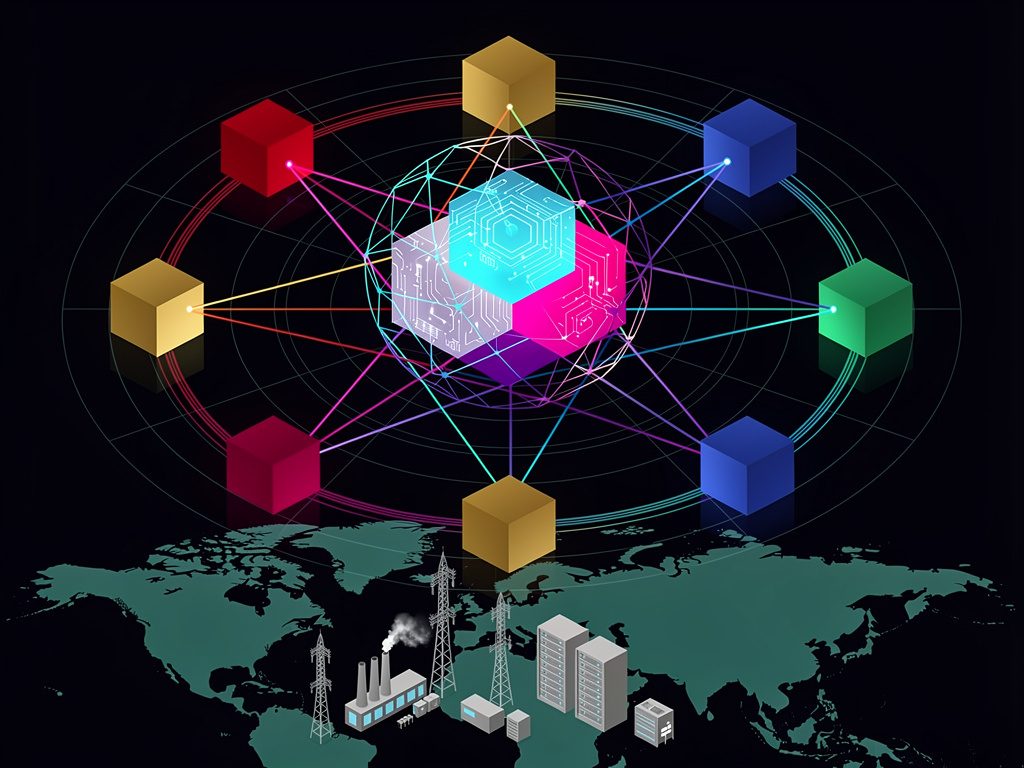
Digital twins represent perhaps the most commercially significant application. A digital twin is a real-time virtual replica of a physical system — a factory floor, a city’s traffic grid, a power plant. Today’s digital twins are updated periodically, often with noticeable lag. 6G’s combination of massive bandwidth, minimal latency, and integrated sensing could keep these virtual models synchronized with reality down to the millisecond. For industries like manufacturing, logistics, and energy, that kind of fidelity changes how decisions get made.
So the vision is clear enough. The question is execution.
The Global Race — and the Geopolitical Undercurrents
6G development is not happening in a vacuum. It’s happening against the backdrop of an intensifying technology competition between the United States and China, with South Korea, Japan, Finland, and the European Union all jockeying for position.
The U.S. has moved to establish early leadership. The Next G Alliance, organized under the Alliance for Telecommunications Industry Solutions (ATIS), includes major players like AT&T, Qualcomm, Apple, Google, and Microsoft. The Federal Communications Commission has opened up spectrum above 95 GHz for experimental use, a critical step since 6G will almost certainly require access to terahertz frequency bands that have never been used for commercial wireless before.
China, meanwhile, launched a dedicated 6G research initiative as early as 2019. Huawei, despite being under heavy U.S. sanctions, has filed more 6G-related patents than any other single entity globally, according to research tracked by several patent analytics firms. Beijing views wireless leadership as a matter of national strategic importance, and 6G is no exception.
South Korea has committed over $400 million in public funding toward 6G research, with Samsung and LG leading private-sector efforts. The country has publicly stated its goal of launching pilot 6G services by 2028, ahead of the broader commercial timeline most analysts expect. Finland’s University of Oulu, home to the 6G Flagship research program, has been one of the most prolific academic contributors to early 6G standards work.
And here’s where the stakes get real. Whoever defines the standards for 6G — the protocols, the spectrum allocations, the intellectual property — will hold enormous economic and strategic leverage for decades. The 5G standards battle between the U.S. and China was bruising. The 6G fight will be worse. Control over foundational wireless standards means control over licensing revenue, supply chain architecture, and the terms on which every connected device on Earth operates.
The International Telecommunication Union (ITU) has begun its “IMT-2030” framework process, which will eventually produce the formal requirements for 6G. That process is expected to conclude around 2028 or 2029, with commercial deployments beginning in the early 2030s. But the real negotiations — over spectrum, over technical approaches, over whose patents sit at the core of the standard — are happening now, in working groups and research consortia that rarely make headlines.
There’s also a security dimension. The U.S. government’s concerns about Chinese-built 5G infrastructure, which led to the effective ban on Huawei equipment in American networks, will carry forward into 6G with even greater intensity. If 6G networks double as sensing platforms — capable of detecting movement and mapping physical spaces — the security implications of foreign-built infrastructure become considerably more serious. A network that can see is a network that can surveil.
Not everyone in the industry is equally enthusiastic about the 6G timeline. Some engineers and analysts argue that the focus should remain on maximizing 5G’s potential, particularly the underdeployed millimeter-wave spectrum that was supposed to deliver gigabit-class speeds to dense urban areas. 5G Advanced, sometimes called 5.5G, is already being rolled out by carriers as an interim step, offering improved speeds and lower latency without requiring an entirely new network architecture. There’s a reasonable argument that the industry is getting ahead of itself.
But the research investment tells a different story. Billions of dollars are flowing into 6G labs. Spectrum is being allocated. Patents are being filed at an accelerating pace. The train has left the station, whether or not every passenger is ready.
The Hard Problems That Remain
For all the excitement, 6G faces formidable technical challenges that no amount of funding has yet solved.
Terahertz frequencies, which are central to many 6G concepts, behave very differently from the radio waves used in today’s networks. They can carry enormous amounts of data but are easily absorbed by walls, rain, foliage, and even humidity in the air. Range is extremely limited. Building a network that relies on terahertz signals will require a density of base stations and repeaters that dwarfs even the most aggressive 5G small-cell deployments. The infrastructure cost could be staggering.
Power consumption is another concern. Running millions of ultra-dense base stations, processing terabits of data per second, and maintaining real-time digital twins of physical environments will require enormous amounts of energy. The telecommunications industry is already one of the largest consumers of electricity globally. 6G, if built as currently envisioned, could significantly increase that footprint — a problem that sits uncomfortably alongside corporate and governmental commitments to reduce carbon emissions.
Then there’s the question of devices. Your current smartphone almost certainly won’t work on a 6G network. New chipsets, new antennas, new materials — all will be required. Qualcomm, MediaTek, Samsung, and others are already investing in the silicon that will be needed, but the timeline from lab prototype to mass-market consumer device is long. And expensive.
Privacy deserves serious attention too. A network that can sense the physical world — detecting whether a room is occupied, tracking movement patterns, mapping the interior of buildings — raises questions that existing regulatory frameworks aren’t equipped to answer. Who owns the data that a 6G network passively collects? Who has access to it? How is it stored? These aren’t hypothetical concerns. They’re policy gaps that need to be addressed before commercial deployment, not after.
There’s also a more mundane but critically important issue: spectrum allocation. Governments around the world will need to agree on which frequency bands are designated for 6G use. That process is inherently political, involving negotiations between telecom carriers, military users, satellite operators, and scientific institutions that all have competing claims on the same airwaves. The World Radiocommunication Conference, held every four years under ITU auspices, will be the primary venue for these decisions. The next major conference is expected to be pivotal.
And yet, despite all of these obstacles, the momentum is undeniable. Samsung has published detailed 6G vision papers. Nokia Bell Labs is deep into fundamental research. The European Commission’s Hexa-X project, which wrapped its first phase in 2023, produced a comprehensive framework for 6G requirements that has influenced the global conversation. Academic institutions from MIT to Tsinghua University are producing a steady stream of research papers exploring everything from reconfigurable intelligent surfaces to AI-native network architectures.
AI, in fact, may be the thread that ties the entire 6G vision together. Future networks are expected to be designed from the ground up with artificial intelligence at their core — not bolted on as an optimization layer, but integrated into the fundamental operation of the network. AI would manage spectrum allocation in real time, predict and prevent congestion, optimize energy consumption, and coordinate the billions of connected devices that 6G is expected to support. Some researchers describe this as the shift from “connected things” to “connected intelligence.”
For consumers, the most visible changes may still be years away. But for industries — manufacturing, healthcare, defense, transportation, energy — the implications of 6G are already shaping investment decisions and strategic planning. Companies that build the infrastructure, design the chips, and hold the patents will capture enormous value. Those that don’t will find themselves dependent on those who do.
I grew up in the Midwest watching technology evolve from dial-up modems to broadband to mobile internet. Each generation of connectivity reshaped daily life in ways that were hard to predict in advance. 6G will likely do the same. But this time, the transformation won’t just be about what’s on your screen. It’ll be about what the network itself can see, sense, and understand about the world around you.
That’s a fundamentally different kind of connectivity. And it’s coming whether we’re ready or not.


 WebProNews is an iEntry Publication