
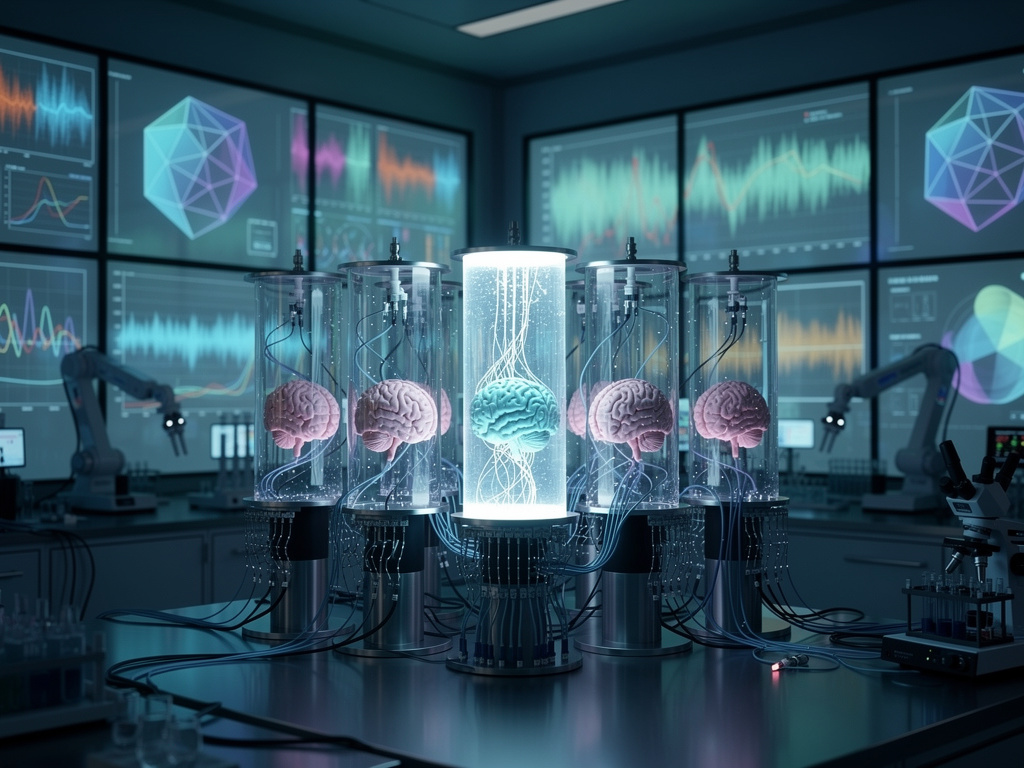
In a lab overlooking Yale University, brains that beat inside people just days earlier now rest inside plexiglass chambers. Tubes pump blood substitutes and fluids through them. Oxygen flows. Waste clears. Sensors capture hundreds of data points on proteins, cells and reactions to experimental compounds. Yet electrical activity stays silent, suppressed by anesthetics. These organs hover in a state that defies simple categories.
Bexorg, a five-year-old startup, has sustained more than 700 such brains with its BrainEx platform. The system lets researchers test drugs directly in human neural tissue burdened by decades of real-life exposures, genetics and disease. Founder and CEO Zvonimir Vrselja puts it plainly. “You get cells that have been there for 60 to 80 years.” The approach, detailed in a Science article published May 20, 2026, aims to bridge gaps left by animal models and simple cell cultures, especially for neurodegenerative conditions.
Results look promising so far. A 2025 poster showed preserved brains respond to certain therapies much like living ones do. Bruna Bellaver, a neurodegeneration researcher at the University of Pittsburgh, calls the platform “a huge step up from mouse models.” Pharmaceutical partners agree. Biohaven has run tests on roughly 130 Bexorg brains. One candidate that failed to hit its target in mice succeeded in human tissue at a dose 20 times lower than expected. That insight saved a year of development and lowered risks of side effects.
Biohaven’s chief science officer Bruce Car sounds convinced. “The technology has been everything it’s been promised to be.” His team now advances BHV-8100, a compound that improves how neurons use glucose and boosts energy production in ailing brains. Data from Bexorg brains helped secure FDA clearance to start clinical trials. The company plans to announce the specific neurodegenerative target later this month.
The brains arrive through partnerships with organ procurement organizations. Families learn the full process. Responses, Vrselja says, turn overwhelmingly positive. Surgeons suture plastic ports into major vessels. The organ connects to an artificial lung and kidney that oxygenate and filter the circulating fluids. For 24 hours the brain metabolizes drugs. Then technicians slice it into hundreds of pieces for deeper molecular analysis. A new robotic arm will soon automate slicing up to 1,600 brains annually while measuring 11,000 proteins in each.
Ethical questions follow the work closely. The brains lack coordinated neural firing required for even minimal consciousness, notes Brendan Parent, bioethicist at New York University Langone Health and member of Bexorg’s advisory board. Propofol and other measures keep any electrical signals quiet. No one expects pain or memory retention. Still the company held a recent media event to reassure the public that its disembodied organs cross no moral lines.
This disembodied brain model joins a broader surge in human-relevant testing systems. Lab-grown brain organoids, tiny self-organizing clusters of neural cells derived from stem cells, have advanced rapidly. They model aspects of development, disease and drug response without relying on animals. In September 2025 the National Institutes of Health committed $87 million to create the nation’s first dedicated organoid development center focused on standardization and reproducibility. Months earlier, in April 2025, the FDA announced plans to promote organoids and similar technologies as alternatives to animal testing for certain drugs.
An Undark article from February 26, 2026 captures the excitement and the unease. Sergiu Pasca at Stanford has used assembloids, fused organoids representing multiple brain regions, to uncover mechanisms behind Timothy syndrome, a rare disorder with autism-like features. His team developed a potential therapeutic now in safety studies with plans for a clinical trial. “No other organ is as inaccessible as the human brain,” Pasca told Undark. “So if you really want to make any progress, we’re going to have to get access to the cells.”
Lena Smirnova at Johns Hopkins grows hundreds of organoids to study learning, memory and toxicology. “Right now, these organoids give us a human-specific, ethical way to study how learning and memory work,” she says. “In the near future, they could help us test new drugs, understand brain disorders, and develop better therapies.” Yet she also flags consent challenges as the technology scales toward biocomputing applications.
Progress brings harder questions. Can organoids develop sentience? Feel pain? Gain rudimentary forms of consciousness? A November 2025 commentary in Science signed by 17 scientists and bioethicists from five countries, including Pasca, called for an international oversight body. The group cited risks around donor consent, animal chimeras, and the possibility that neural tissue in a dish might suffer. They referenced the FDA and NIH shifts toward reduced animal use as signs that the field is accelerating. “We’re not saying there’s necessarily the same kind of urgency as there was at that time,” Pasca said of earlier CRISPR debates. “But what we are trying to do is predict what the issues will be down the line.”
Bexorg’s whole-brain approach sidesteps some organoid limitations. These organs carry full adult cellular maturity and often multiple overlapping pathologies common in dementia patients. Vrselja notes neurodegenerative diseases rarely depend on electrical signaling, making the anesthetized state less disruptive for relevant drug testing. The company also builds NeuroLens, a machine-learning model trained on brain data, medical histories and molecular profiles. It could let researchers simulate drug effects in a virtual brain before touching physical tissue.
Limitations remain obvious. Li-Huei Tsai, neuroscientist at MIT, describes Bexorg’s brain bank as remarkable yet imperfect. Fluid drainage differs from a living body. Lack of neuronal firing alters blood flow. The current setup cannot predict seizure risk, though the team plans to test slices without anesthesia. Car acknowledges other models must fill those gaps. And scaling to maintain brains for two weeks instead of one day could reveal more about plasticity and longer-term drug effects.
But the direction feels clear. Government pressure to move beyond animal testing creates what Vrselja calls “a huge tailwind.” Drug developers see faster, cheaper paths to clinical candidates with better human predictivity. Biohaven’s experience with dose translation already demonstrates concrete savings in time and safety margins.
Public reaction mixes fascination with discomfort. Images of brains in vats evoke old science-fiction fears. Bioethicists like Hank Greely at Stanford remind observers that these systems, whether organoids or perfused whole brains, lack the full architecture of a mind. “Whatever else they are, they aren’t brains,” he said. The real test may lie in whether society accepts nuanced states between alive and dead when the payoff is faster treatments for devastating diseases.
Bexorg prepares to publish its first human data paper. Partnerships expand. The robotic slicer will soon hum with higher throughput. And those virtual brains inside NeuroLens may one day test compounds long after the physical organs leave the machines. The boundary between life and death has grown porous. Science now probes what that means for medicine, ethics and our definition of a person.


 WebProNews is an iEntry Publication