
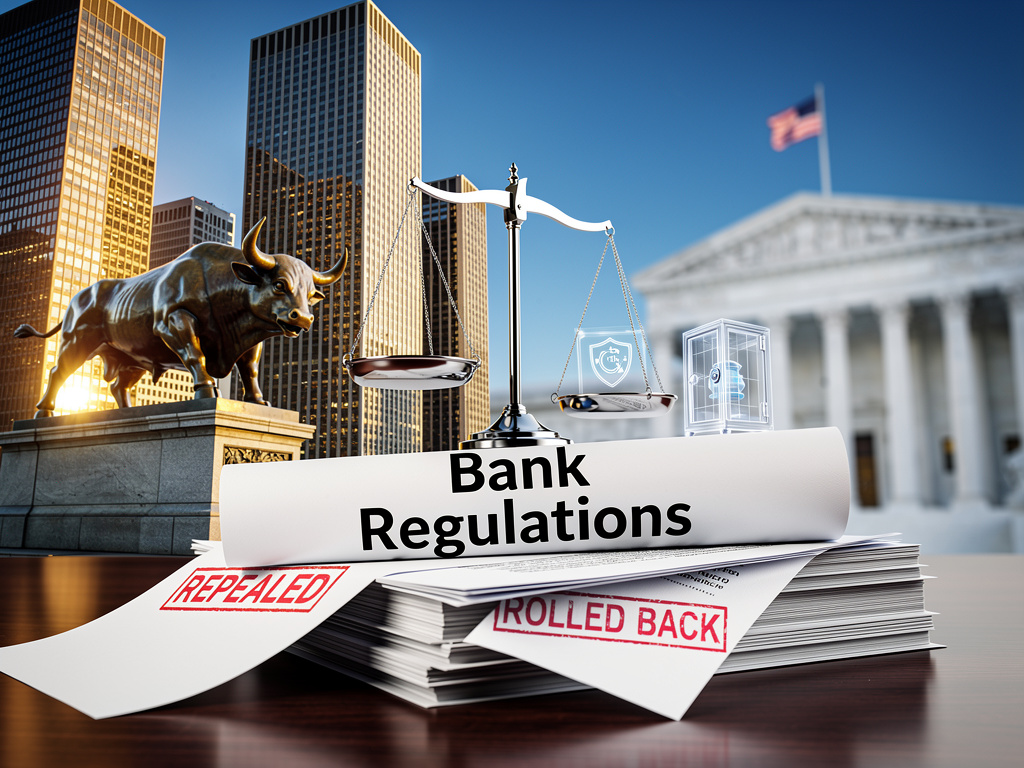
Treasury Secretary Scott Bessent is spearheading a rapid push to dismantle post-2008 financial rules, centralizing control over independent agencies to relax oversight on lenders, integrate digital assets into banking, cut costs for megabanks trading government debt, and clear paths for artificial intelligence use. This aggressive strategy marks a sharp departure from prior administrations’ hands-off posture toward regulators, raising alarms among critics that Wall Street gains could undermine systemic safeguards.
Jonathan McKernan, undersecretary for domestic finance and Bessent’s deputy, articulated the vision in stark terms: “As the secretary has said, we need a fundamental reset of financial regulation. That reset needs to be rooted in a long-term vision for the financial system.” Treasury’s deeper involvement, McKernan added, “helps give reform legitimacy and ensures that we’re all looking to the same true north.”
Bessent’s deregulatory drive has already unlocked significant capacity, with the secretary telling Politico that changes have freed “$2.5 trillion of extra lending capacity,” based on private-sector estimates. Yet the pace has ignited debate, as regulators like FDIC Chair Travis Hill, Comptroller Jonathan Gould, and Fed Vice Chair for Supervision Michelle Bowman— all aligned with Trump-era priorities—move in lockstep.
Bessent’s Regulatory Power Grab
Unlike predecessors who deferred to agency independence, Bessent chairs the Financial Stability Oversight Council (FSOC) and convenes frequent meetings to align priorities. In his introductory letter to FSOC’s 2025 annual report—the first such missive since 2011—Bessent declared the panel would pivot from “prophylactic” policies to prioritizing economic growth, as detailed in Treasury remarks.
Specific targets include rules curbing banks’ debt reliance, anti-money laundering guidelines, and liquidity buffers. Regulators have proposed recalibrating leverage capital, rescinding a 60,000-word Community Reinvestment Act rule, and tailoring supervision to material risks, per Bessent’s Federal Reserve Capital Conference speech. Community banks stand to gain most, with Bessent vowing to end rules that “suffocated” them.
Industry executives cheer the momentum. Bank stocks hit records amid compliance cost cuts, Bessent noted at Davos, assuring lenders that deregulation offsets President Trump’s proposed 10% credit card rate cap, according to American Banker.
Post-Crisis Rules in the Crosshairs
The post-financial crisis framework, born from Dodd-Frank after 2008’s meltdown, faces wholesale review. McKernan criticized it for entrenching megabanks while stifling smaller players: “Post-crisis regulation has entrenched the big banks, suffocated community banks, and stifled growth and innovation. About the only winners have been the Washington bureaucrats.”
Bessent echoed this at the American Bankers Association, urging focus on “technical, substantive aspects of regulatory reform,” as reported in Treasury transcripts. Plans extend to blockchain, stablecoins, failed bank resolutions from 2023 crises like Silicon Valley Bank, and boosting mortgage lending via community banks, per HousingWire.
FSOC’s shift includes working groups on Treasury market resilience, household finances, AI safeguards, and cyberattacks, aiming to balance innovation with stability, as outlined in The New York Times.
Critics Sound Systemic Alarms
Sen. Elizabeth Warren decried the moves: “Our financial cops on the beat are no longer independent from the White House — and they are certainly not independent from Wall Street. Secretary Bessent has spearheaded Trump’s Wall Street First agenda that is good for bank executives and billionaire hedge fund investors while leaving the economy vulnerable to another financial crash.”
Graham Steele, former Treasury assistant secretary now at Stanford Law School, warned of pressure to “subordinate sound risk management to accommodate policies that try to solve broader economic problems through more borrowing,” citing pushes for AI, crypto financing, and housing via leverage, via Politico.
Jeremy Kress, University of Michigan professor and ex-Fed lawyer, acknowledged Bessent’s grasp: “Bessent is interested, and he gets this stuff,” but past hands-off approaches left no leader in charge.
Agency Alignment Fuels Rapid Change
Regulators’ synergy stems from Trump appointees: FDIC’s three Republicans dominate its board; OCC’s Gould cites unchanged statutes but close Treasury ties; Bowman’s supervision streamlining aligns seamlessly. A senior regulator noted picks “sing from the same songbook,” minimizing dissent.
Bessent touted this at the Milken Institute: “The growth of private credit tells me that the regulated banking system has been too tightly constrained,” pledging “safe, sound and smart” redo of rules, as in Banking Dive. At the Fed Community Bank Conference, he called regulation a suffocator of Main Street dreams, per Treasury.
OCC Comptroller Gould affirmed: “The statute that governs my relationship with the Treasury secretary is unchanged,” yet collaboration thrives.
Growth Over Guardrails
Bessent frames deregulation as essential for “re-privatization,” per Economic Club of New York remarks, countering 2023 supervisory lapses. Private credit’s rise signals overregulation, pushing activity to shadows; easing burdens revives bank lending for homes, cars, small business.
At Davos, amid tariff talks, Bessent linked deregulation to countering rate caps: “Through my position on [FSOC] and the three bank regulators… we have done a lot to deregulate banks — earnings are way up,” via National Mortgage News. ABA’s journal hailed him as the first secretary initiating community bank relief, citing asset threshold hikes.
McKernan stressed: “This regulatory reset isn’t reactionary… Treasury’s plan is rooted in a blueprint for innovation, economic growth, safety and soundness, and financial stability.”
Path Forward and Lingering Risks
With early wins like leverage tweaks and CRA rescissions, Treasury builds toward broader overhaul. FSOC’s 2025 report celebrates digital asset integration and supervision transparency, per Politico. Yet Warren warns of crash vulnerability as “cracks emerge,” citing recent failures like Tricolor Holdings.
Bessent’s Economic Club of Minnesota speech projected 2026 rewards from tax cuts, trade realignments, deregulation: “With capital flowing, productivity surging… robust, non-inflationary growth.” On X, discussions amplify divides, from praise for freeing banks to fears of repeating 2008.
As Bessent presses ahead, the bet is growth trumps granular guardrails, reshaping finance for innovation—or peril.


 WebProNews is an iEntry Publication