
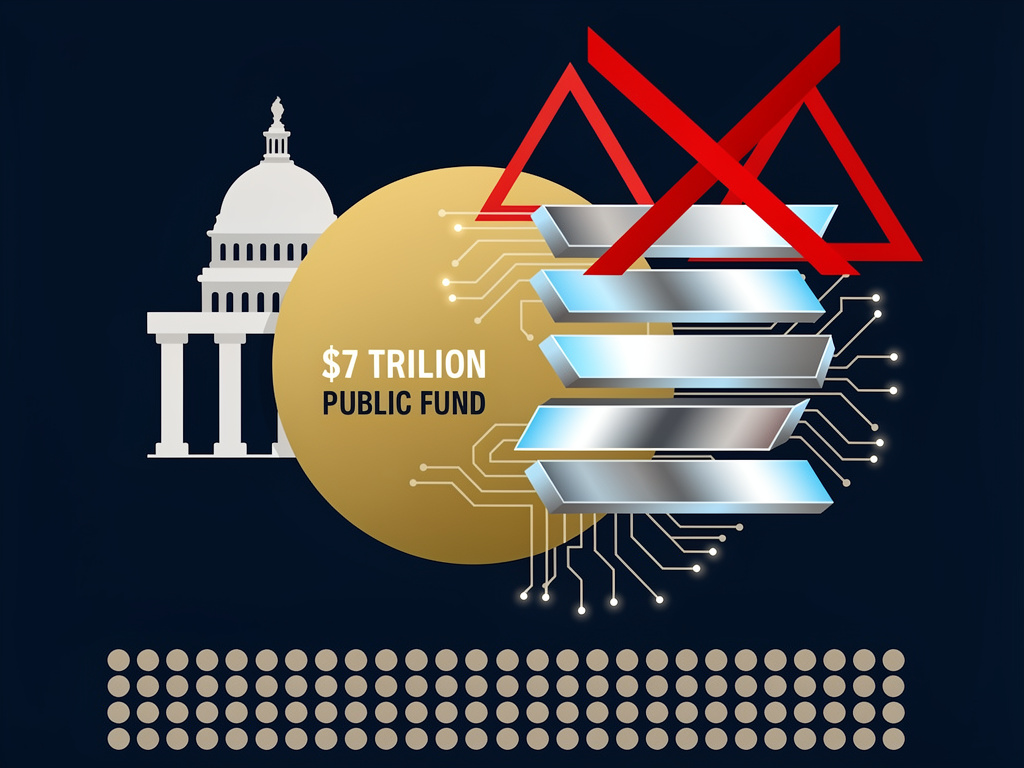
Sen. Bernie Sanders has introduced legislation that would force the largest artificial intelligence companies to hand over half their stock to the federal government. The move aims to create a sovereign wealth fund worth an estimated $7 trillion at current valuations. Proceeds would deliver annual payments of more than $1,000 to every man, woman and child in the United States.
The American AI Sovereign Wealth Fund Act, unveiled Thursday, targets firms generating more than $200 million in annual AI-related sales. OpenAI, Anthropic and xAI sit squarely in its sights. A one-time 50% tax paid in equity, not cash, would fund the vehicle. No taxpayer dollars at risk if valuations tumble. The government gains voting shares and board seats. It could block decisions deemed harmful to the public and steer priorities toward broader benefit.
Sanders frames the plan as simple justice. Artificial intelligence draws from humanity’s shared store of books, conversations, code, art and research. Tech leaders built their models on that foundation, often without permission or payment. The resulting wealth, he argues, cannot flow solely to a handful of billionaires.
“AI is built on the foundation of human knowledge of the work of millions and millions of people. Every tweet that you send out, every email that you send out, every article that you write, that’s part of AI,” Sanders told reporters, per Fortune. “The American people should be able to stop what’s bad and benefit from the financial gains of AI.”
The Vermont independent isn’t alone in spotting the tension. OpenAI CEO Sam Altman met with Sanders for nearly an hour earlier this month at Altman’s request. Altman agreed the public deserves equity in AI companies. Yet he rejected the 50% threshold. “Their goal is to make as much money as they can, not concerned about the impact it has on the American people or people throughout the world,” Sanders said of industry leaders after the talk.
In his own op-ed, Sanders put the case bluntly. “Since A.I. is built on the collective knowledge of humanity, the wealth it generates must benefit humanity. Not just Mr. Musk, Mr. Altman, Dario Amodei and other moguls whose companies are positioned to dominate the industry.” He cited Altman’s past acknowledgment that models train on “collective experience, knowledge” and “learnings of humanity.”
Elon Musk, whose xAI joins the list, once posted that “Universal HIGH INCOME via checks issued by the Federal government is the best way to deal with unemployment caused by AI.” Anthropic has floated national sovereign wealth funds holding AI stakes. Even President Donald Trump has mused about government equity positions in leading AI firms. Odd political alignments surface here. Populists on left and right sense the same risk: concentrated power and wealth amid rapid job displacement.
A five percent annual dividend from the fund would generate the $1,000 payments, Sanders estimates. As the fund grows, money could flow toward health care, education and housing. An independent seven-person commission, nominated by the president and confirmed by the Senate, would oversee operations. Companies with mixed businesses must separate their AI units. The public stake applies only to that portion.
Many AI leaders remain unprofitable. OpenAI and Anthropic burn cash on compute and talent. Sanders waves away the concern. “We’re not going to lose any money, even if there is a bust in the bubble,” he said, according to the Associated Press. “The American people are not going to lose any money, because we are going to be owning half of the stock. We’re not buying it. We’re getting it.”
The proposal echoes Alaska’s oil-funded permanent fund, which sends annual dividends to residents. Norway’s $2 trillion vehicle, built on petroleum riches, directs benefits to citizens rather than private executives. Sanders points to these models. Public pension funds already hold corporate equity across America. His plan scales the concept to the most powerful technology yet invented.
But size invites skepticism. A $7 trillion fund would dwarf many national budgets. Government board seats at private AI labs raise conflict-of-interest questions. Regulation and ownership blur. Industry lobbyists possess deep pockets and close White House ties. Sanders himself noted the challenge. “It’s very hard right now to talk to AI companies… because they have a gun at our heads,” he remarked, referencing campaign spending threats.
The bill arrives as anxiety swells. Students polled by Harvard see AI as a job threat. Data centers spark local opposition over energy and water demands. White-collar roles face automation pressure. Sanders tours the country under a “Fighting Oligarchy” banner. He portrays the choice as stark. Either AI enriches a narrow elite while displacing workers, or it lifts living standards for all.
“The future of A.I. and the fate of humanity must not be decided behind closed doors in Silicon Valley,” he wrote. “It must not be dictated by billionaires seeking to maximize their power and profit. It must be decided by workers, parents, teachers, artists, scientists, communities and the American people. It’s our future. We must decide it.”
Passage looks unlikely in short order. No co-sponsors have signed on publicly. Details on implementation remain to be tested in hearings. Still, the idea gains traction. Recent coverage from The Washington Post notes growing discussion of public stakes across the political spectrum. Trump’s team has floated similar concepts without committing to percentages.
Sanders insists this isn’t anti-innovation. “I’m not a luddite. I think that AI can do some very good things,” he said. The goal stays focused. Direct public ownership ensures citizens capture upside and hold veto power over downside risks. Privacy erosion, mental health impacts on youth, mass layoffs. These worries demand more than voluntary corporate promises.
Critics will call it nationalization by another name. Supporters see reclamation of a public resource more valuable than oil. The debate has begun in earnest. Sanders’ bill forces Congress to confront who really owns the future. And whether ordinary Americans will receive more than rhetoric when the machines take over routine work.
Proposals from industry figures show the concept isn’t fringe. OpenAI’s April document called for a public wealth fund giving every citizen a stake in AI-driven growth. Musk and Amodei have nodded toward similar mechanisms. The disagreement centers on scale. Five percent? Ten? Or the 50% Sanders demands for genuine influence?
Implementation would prove complex. Valuations shift. Separation of business lines invites disputes. Commission independence requires safeguards. Yet the principle persists. When a technology rests on collective human output, the returns should not concentrate in private hands alone. Sanders has thrust that argument into legislation. The coming months will test whether Washington listens or lets the oligarchs write the rules.


 WebProNews is an iEntry Publication