
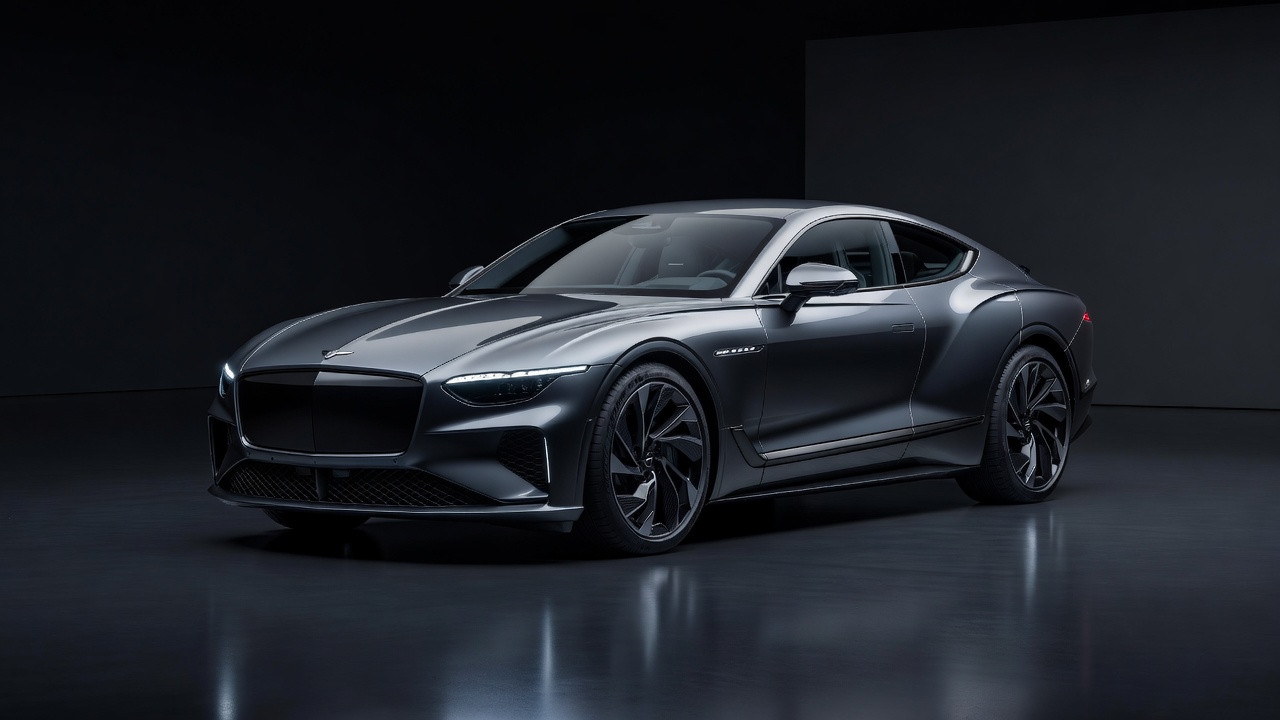
Bentley has officially revealed the first images and details of its upcoming electric vehicle, the Torcal, marking a significant step in the British luxury automaker’s transition away from traditional combustion engines. The announcement, covered by Engadget, shows a sleek prototype that blends the brand’s signature styling cues with an all-new electric architecture designed to maintain the performance and comfort levels customers expect from the marque.
The Torcal represents Bentley’s entry into the fully electric segment after years of preparation. The company plans to offer only electric models by 2030, and this vehicle serves as the opening chapter in that strategy. Early renders display a low-slung grand tourer with dramatic proportions, featuring a long hood, short rear deck, and a roofline that slopes gently toward the back. While the images remain partially disguised, observers can already spot familiar Bentley elements such as the distinctive matrix grille, now reinterpreted with active shutters for aerodynamic efficiency, and the iconic round headlights that have defined the brand for generations.
Powertrain specifications remain under wraps for now, but industry analysts expect the Torcal to employ a dual-motor setup delivering well over 600 horsepower. Battery capacity could exceed 100 kilowatt-hours, potentially offering a range above 300 miles on a single charge according to WLTP estimates. The vehicle will sit on a dedicated electric platform developed in partnership with other brands under the Volkswagen Group umbrella, though Bentley engineers have applied extensive modifications to preserve the ride quality and refinement the company is known for.
Interior concepts shown alongside the exterior teasers suggest a continuation of Bentley’s handcrafted approach. Sustainable materials replace traditional leather in many areas, with wool blends, recycled plastics, and responsibly sourced woods taking center stage. The dashboard appears to feature a massive curved display complemented by physical controls for essential functions, striking a balance between modern technology and the tactile experience Bentley customers demand. Diamond-quilted seats and ambient lighting zones further emphasize the opulent cabin environment that has become a hallmark of the brand.
Engineering teams have focused heavily on sound management within the Torcal. Electric vehicles present unique acoustic challenges since the absence of engine noise can make wind and tire sounds more apparent. Bentley has developed active noise cancellation systems specifically tuned for this model, along with specialized tires designed to reduce road noise while maintaining grip. The result aims to create what the company describes as an “acoustic sanctuary” that enhances the serene driving experience associated with luxury electric propulsion.
Performance targets include acceleration from zero to 60 miles per hour in under four seconds, though the Torcal prioritizes effortless cruising over outright track performance. Top speed will likely be electronically limited to 155 miles per hour to preserve battery range and component longevity. Four-wheel steering and torque vectoring systems should provide agility that belies the vehicle’s substantial size and weight, which is expected to exceed 5,000 pounds due to the large battery pack.
The name Torcal carries historical significance for the company. It references a location in Spain where founder W.O. Bentley tested early prototypes during the 1920s. By choosing this designation, the automaker connects its electric future with its storied past, a theme that appears repeatedly in the design language. Subtle nods to vintage Bentley models can be seen in the Torcal’s silhouette, particularly in the way the fenders flare outward from the body.
Production is scheduled to begin in late 2026 at Bentley’s Crewe facility, which has undergone extensive retooling to accommodate electric vehicle assembly. The factory transition includes new battery integration areas and specialized testing chambers designed to validate electric powertrain durability under various conditions. Workers have received comprehensive retraining programs to ensure they can maintain the same quality standards that have defined Bentley vehicles for decades.
Pricing will position the Torcal as one of the more expensive electric vehicles on the market, with expectations of a base figure starting around $250,000 before options. Customizations through Bentley’s Mulliner division will push many examples well beyond $300,000, continuing the brand’s tradition of highly personalized vehicles. Early indications suggest strong interest from existing Bentley customers looking to update their garages with electric options that match their current fleet in terms of exclusivity and presence.
Competitors in this space include the Rolls-Royce Spectre, which launched recently as that brand’s first electric offering, and various high-end models from Porsche and Aston Martin. The Torcal differentiates itself through its emphasis on long-distance comfort rather than sporting dynamics, though it will still deliver impressive performance figures. Where some electric luxury vehicles focus on acceleration records, Bentley appears more concerned with creating a vehicle that owners will enjoy driving across continents in complete comfort.
Sustainability forms a core element of the Torcal’s development. Bentley has committed to achieving carbon neutral status across its operations by 2030, and the new electric model plays a central role in meeting those targets. The company sources battery cells from suppliers with transparent environmental records and has implemented recycling programs for end-of-life components. Even the shipping containers used to transport parts to the Crewe factory incorporate recycled materials.
Technology integration extends beyond the powertrain. The vehicle will feature advanced driver assistance systems developed specifically for luxury applications, avoiding the intrusive interventions sometimes found in mainstream electric vehicles. Instead, these systems provide subtle support that enhances safety without diminishing the driver’s connection to the road. Over-the-air updates will allow Bentley to refine vehicle behavior and add new features throughout the ownership experience.
The chassis employs a sophisticated air suspension system with adaptive dampers that can adjust in milliseconds to changing road conditions. This setup builds upon technologies refined in previous Bentley models but adds electric-specific calibrations to account for the different weight distribution and instant torque delivery. The result should be a vehicle that feels planted during high-speed highway driving while still absorbing urban road imperfections with the expected Bentley suppleness.
Design director Tobias Behr has spoken about the challenge of translating Bentley’s design DNA into an electric vehicle format. The Torcal avoids the dramatic, angular styling seen in some electric concepts, instead favoring elegant proportions and subtle surface detailing. The front end maintains a sense of formality appropriate for a luxury grand tourer while incorporating necessary cooling ducts and aerodynamic elements without compromising visual appeal.
Market timing appears strategic. As more luxury buyers express interest in electric vehicles, particularly in Europe and parts of Asia where emissions regulations are tightening, the Torcal arrives at a moment when infrastructure has improved sufficiently to support long-distance travel. Bentley dealers are already preparing charging solutions for customers, including home installation services and partnerships with premium charging networks.
The broader Volkswagen Group connection provides access to advanced battery technology and electric motor expertise while allowing Bentley to maintain its distinct character. This collaborative approach helps control development costs while ensuring the Torcal benefits from the latest advancements in electric vehicle components. Shared platforms do not necessarily mean shared personalities, as evidenced by the distinct characters of other group products like the Porsche Taycan and Audi e-tron GT.
Customer feedback during early prototype testing has been overwhelmingly positive according to sources close to the project. Participants praised the vehicle’s refinement and the way it delivers power smoothly without the drama sometimes associated with high-performance electric cars. The quiet cabin allows for effortless conversation even at highway speeds, reinforcing Bentley’s positioning as a creator of sophisticated transportation rather than simply fast cars.
Looking ahead, the Torcal will be followed by additional electric models, including an electric version of the Flying Spur sedan and eventually a replacement for the Bentayga SUV. Each vehicle will build upon the technical foundation established by this first electric offering, creating a cohesive family of luxury electric vehicles. The company has also hinted at limited-edition variants that will explore more extreme performance parameters while maintaining the core values of comfort and craftsmanship.
The transition to electric power represents more than just a change in propulsion for Bentley. It requires rethinking fundamental aspects of vehicle construction, material selection, and customer experience. The Torcal demonstrates that the company has approached these challenges thoughtfully, preserving what customers love about Bentley vehicles while embracing the benefits that electric technology can provide. From the carefully engineered silence to the sustainable material choices, every aspect reflects a considered approach to luxury in an electric age.
As production draws closer, anticipation continues to build within the automotive community. The Torcal has the potential to attract new customers to the brand while giving long-time Bentley enthusiasts a compelling reason to make the switch to electric power. Its combination of performance, luxury, and advanced technology positions it as a significant entry in the evolving luxury vehicle segment. With the first customer deliveries expected in 2027, the coming years will reveal how successfully Bentley has translated its heritage into the electric era. The initial indications suggest a vehicle that honors the past while confidently embracing the future of automotive transportation.


 WebProNews is an iEntry Publication