
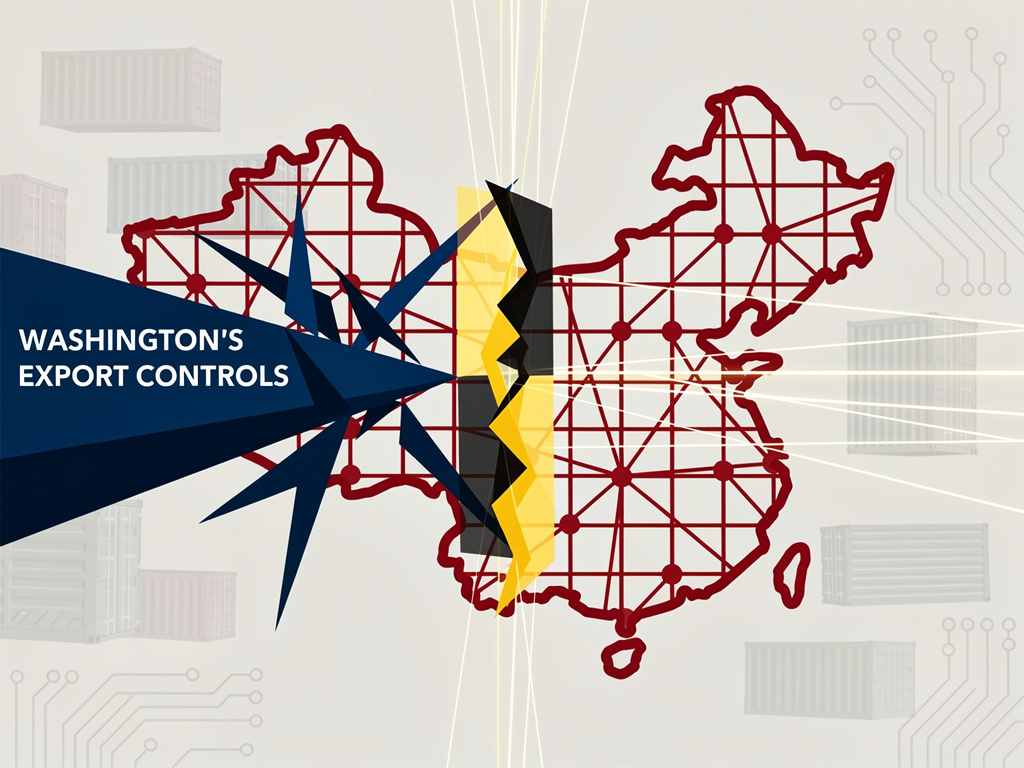
China just rewrote the rules on supply chain security. And the implications stretch far beyond its borders.
On June 16, 2025, Beijing’s Ministry of Public Security enacted the Regulations on the Security Management of Key Supply Chains, a sweeping legislative framework that imposes strict new requirements on companies operating within or through China’s supply chain infrastructure. The regulations, which took effect immediately, mandate that businesses handling critical goods — from semiconductors to rare earth minerals to agricultural inputs — register with government authorities, submit to regular security audits, and share detailed logistics and sourcing data with state agencies. As Investing.com reported, the new rules represent one of the most comprehensive attempts by any government to assert sovereign control over commercial supply chain data.
The timing is not accidental.
These regulations arrive amid escalating trade tensions between China and the United States, a global semiconductor supply war that shows no signs of cooling, and an increasingly fragmented international trading order where data is as strategically valuable as the physical goods it tracks. Beijing’s move codifies what many multinational executives have long feared: that operating in China now means opening your logistics playbook to the state.
The regulations apply to what Beijing defines as “key supply chains,” a designation that covers industries the Chinese government considers essential to national security and economic stability. The list is broad. It includes energy, telecommunications equipment, pharmaceuticals, food and agriculture, critical minerals, advanced manufacturing inputs, and — predictably — anything touching artificial intelligence or high-performance computing. Companies that source, manufacture, transport, or distribute goods in these sectors within Chinese territory must now register with local branches of the Ministry of Public Security and designate a “supply chain security officer” responsible for compliance.
That compliance burden is not trivial. Firms must maintain real-time records of their supplier networks, including the identities of upstream and downstream partners, transportation routes, inventory levels, and contractual terms. These records must be made available to government inspectors upon request, with no advance notice required. Annual security assessments — conducted either by government-approved auditors or internal teams meeting state-defined standards — are mandatory. Failure to comply carries penalties ranging from fines of up to 5 million yuan (roughly $690,000) to suspension of operating licenses and, in severe cases, criminal prosecution of responsible executives.
But the data-sharing provisions are what have multinational corporations most alarmed. Under the new framework, companies must report any “supply chain security incidents” — a term the regulations define expansively to include disruptions, shortages, cyberattacks, sanctions-related complications, and even changes in foreign government trade policy that could affect supply continuity. In practice, this means that if a U.S. export control adjustment impacts a company’s ability to source chips for its Chinese operations, that company is now legally obligated to inform Beijing’s security apparatus about the disruption, including details about the affected suppliers and alternative sourcing plans.
This is where the geopolitical dimensions become impossible to ignore.
The regulations effectively create an intelligence pipeline. By requiring companies to disclose how they respond to foreign sanctions and export controls, Beijing gains real-time visibility into the pressure points and workarounds in global supply chains — information that has obvious strategic value in an era of economic competition with Washington. Trade lawyers and compliance specialists across Asia and Europe have been parsing the text since its release, and the consensus is sobering: these rules give Chinese authorities a legal mechanism to demand information that most companies would consider proprietary and, in some cases, that foreign governments would classify as sensitive.
“This isn’t just a regulatory compliance issue,” said one Hong Kong-based trade attorney at a major international law firm, speaking on condition of anonymity because their clients include companies directly affected by the new rules. “This is an information architecture issue. Beijing is building a system where the state has a comprehensive, real-time map of how goods and materials flow through the Chinese economy and, by extension, through global supply chains that touch China.”
The reaction from industry has been swift but cautious. Major trade associations, including the European Chamber of Commerce in China and the American Chamber of Commerce in Shanghai, have acknowledged the regulations but have so far limited their public statements to calls for “clarity” and “dialogue” with Chinese authorities on implementation details. Privately, executives at several large multinationals told reporters that they are accelerating contingency planning for scenarios in which they may need to reduce their exposure to Chinese supply chain nodes — not because they want to, but because the compliance risks and data exposure are becoming untenable.
The semiconductor industry is a particularly acute pressure point. Companies like TSMC, Samsung, and Intel — all of which have significant manufacturing or sourcing relationships that pass through mainland China — now face the prospect of disclosing to Beijing precisely how they are managing the impact of U.S. and allied export controls on advanced chips and chipmaking equipment. The irony is sharp: Washington has spent the last three years trying to choke off China’s access to advanced semiconductor technology, and Beijing has now created a legal framework that could force the very companies caught in the middle to reveal exactly how those restrictions are being implemented.
China’s government has framed the regulations as a defensive measure. State media outlets, including Xinhua and the Global Times, have described the rules as necessary to protect China’s economic security against “external disruptions and hostile actions” — language clearly aimed at U.S. trade policy. Officials from the Ministry of Public Security emphasized in a press briefing that the regulations are designed to ensure “the stability and resilience of supply chains critical to the people’s livelihood and national development,” and insisted that they are consistent with international norms around supply chain risk management.
That framing is contested. Several international trade policy experts have pointed out that while many countries — including the United States, the European Union, Japan, and Australia — have enacted supply chain security measures in recent years, none go as far as China’s new rules in requiring private companies to share granular, real-time logistics and sourcing data directly with national security agencies. The U.S. CHIPS Act, for instance, imposes conditions on companies receiving federal subsidies, but it doesn’t mandate that all companies operating in designated sectors open their books to the Department of Homeland Security.
The EU’s Corporate Sustainability Due Diligence Directive, which is being phased in over the next several years, requires supply chain transparency around environmental and human rights standards — but again, the data flows to regulators focused on sustainability compliance, not to intelligence or security ministries. Japan’s Economic Security Promotion Act, enacted in 2022, identifies critical supply chains and provides government support for diversification, but its disclosure requirements are narrower and more targeted than what Beijing has now put in place.
So what happens next?
In the near term, the regulations will likely accelerate a trend that’s already well underway: the bifurcation of global supply chains into China-centric and China-alternative tracks. Companies that can afford to maintain parallel supply networks — one for Chinese markets and one for everything else — will increasingly do so, accepting the higher costs as the price of managing geopolitical risk. Smaller firms without that luxury will face harder choices.
The regulations also raise questions about reciprocity. If China demands this level of supply chain transparency from foreign companies operating within its borders, will the United States and its allies respond with equivalent requirements for Chinese companies operating in their jurisdictions? There are already signals that this is under consideration. Members of the U.S. House Select Committee on the Chinese Communist Party have been pushing for legislation that would require Chinese-owned or Chinese-affiliated companies in the U.S. to disclose their supply chain relationships in greater detail, and the new Chinese regulations may provide the political impetus to move such proposals forward.
For compliance teams at multinational corporations, the immediate task is granular and unglamorous: mapping which of their operations fall under the new rules, identifying the data that will need to be disclosed, and assessing whether that disclosure creates conflicts with the laws of other jurisdictions — particularly U.S. export control regulations, which in some cases prohibit sharing certain supply chain information with foreign governments. The potential for companies to find themselves caught between contradictory legal obligations in Washington and Beijing is not theoretical. It’s already here.
And the enforcement question looms large. China has a well-documented pattern of enacting broad regulations and then enforcing them selectively — using the threat of penalties as a tool of economic statecraft rather than applying rules uniformly. This means that compliance alone may not be sufficient protection. Companies that fall out of political favor, or that are headquartered in countries engaged in trade disputes with Beijing, could find themselves subjected to more aggressive audits and harsher penalties than competitors with closer ties to the Chinese government.
The regulations also intersect with China’s expanding data governance regime, including the 2021 Data Security Law and the Personal Information Protection Law, which already impose significant restrictions on cross-border data transfers. The new supply chain rules add another layer of complexity to an already dense regulatory environment, creating additional vectors for enforcement action against companies that Beijing may wish to pressure for reasons unrelated to supply chain security per se.
None of this is happening in a vacuum. The broader context is a world in which the old assumptions about globalized trade — that economic interdependence would moderate geopolitical conflict, that supply chains would remain largely apolitical, that data would flow freely across borders — have been systematically dismantled over the past five years. China’s new supply chain security regulations are both a product of that dismantlement and an accelerant of it.
For the executives, lawyers, logistics managers, and policymakers who must now reckon with these rules, the calculus is straightforward even if the solutions are not. Doing business in China has always involved a degree of political risk. What’s changed is the granularity of the state’s demands — and the strategic stakes of the information it’s now legally entitled to collect.
The supply chain, once a back-office function managed by operations teams and procurement specialists, has become a front line in great-power competition. Beijing’s latest move makes that reality impossible to deny.


 WebProNews is an iEntry Publication