
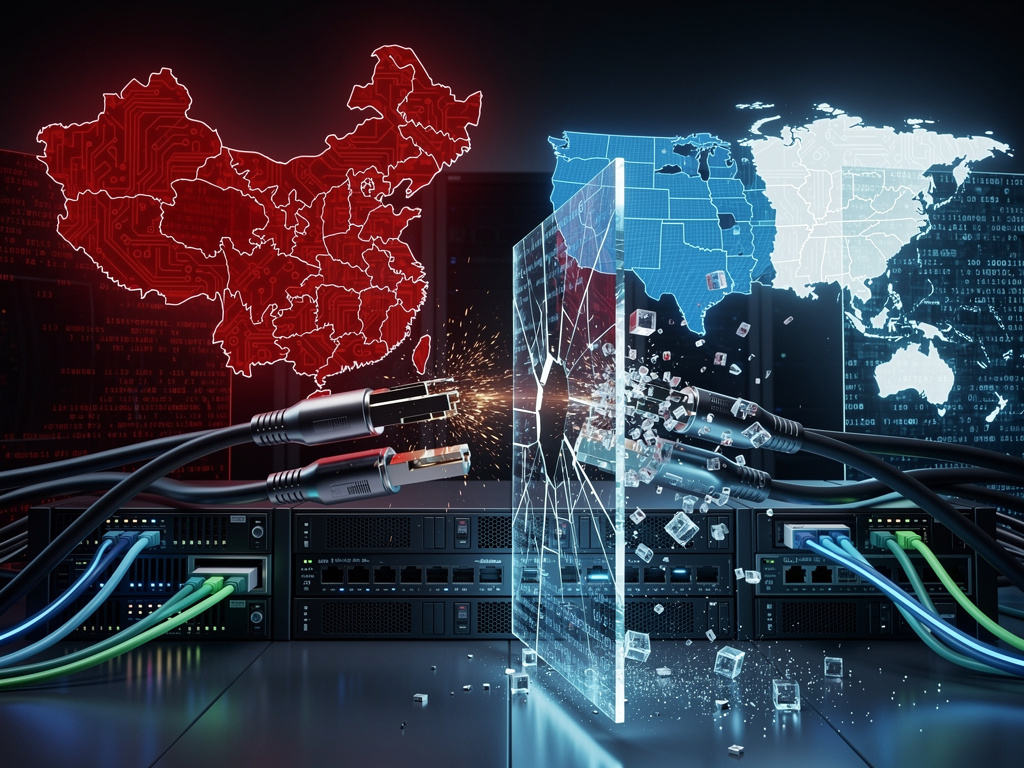
Chinese authorities have issued directives ordering domestic companies to cease using cybersecurity products from more than a dozen U.S. and Israeli firms, escalating tensions in the global technology rivalry. The move, driven by fears of data exfiltration to foreign entities, targets industry heavyweights and signals Beijing’s accelerating drive toward technological self-reliance.
According to three sources familiar with the matter, the restrictions stem from national security concerns that these tools could transmit sensitive information overseas. The list includes Broadcom-owned VMware, Palo Alto Networks, Fortinet, CrowdStrike, SentinelOne, Recorded Future, McAfee, Claroty, Rapid7, Mandiant, and Wiz—now under Alphabet’s ownership. Israeli targets encompass Check Point Software Technologies, CyberArk (recently acquired by Palo Alto), Orca Security, Cato Networks, and Imperva, owned by France’s Thales.
Roots of the Restriction
This purge arrives as China intensifies efforts to supplant foreign software with homegrown options, amid U.S.-China trade frictions and diplomatic strains. Beijing has long viewed Western cybersecurity vendors as potential vectors for espionage, a charge echoed in past U.S. blacklists of Chinese tech giants like Huawei. The directive, circulated internally, mandates immediate discontinuation and replacement with approved domestic alternatives.
Fox Business reported that officials explicitly warned of data collection risks, aligning with China’s broader ‘secure and controllable’ policy for critical infrastructure. Posts on X from industry watchers, including references to Reuters, highlight the rapid spread of the news, with users noting impacts on enterprise deployments across finance, energy, and manufacturing sectors.
Targeted Firms Respond
Affected companies issued measured statements downplaying exposure. CrowdStrike affirmed it conducts no sales in China, maintains no offices or infrastructure there, and anticipates negligible effects. SentinelOne echoed this, citing zero direct revenue from the market. Recorded Future stated it avoids business in China entirely, while McAfee positioned itself as consumer-focused, unfit for enterprise or government use.
Claroty confirmed no sales to China. Orca Security CEO Gil Geron told Reuters his firm received no formal notification but emphasized its defensive focus. Palo Alto Networks, which acquired CyberArk for $25 billion last year, has not commented publicly, though the deal drew scrutiny amid U.S.-Israel tech ties.
Geopolitical Backdrop
The ban unfolds against preparations for a potential April visit by President Donald Trump to Beijing, per Reuters. Simultaneously, the Trump administration eased export curbs on Nvidia’s H20 AI chips, set for formal publication January 15. Nvidia hailed the decision: “We applaud President Trump’s decision to allow America’s chip industry to compete to support high-paying jobs and manufacturing in America,” a spokesperson told Fox Business. “Offering H20 to approved commercial customers, vetted by the Department of Commerce, strikes a thoughtful balance that is great for America.”
Bloomberg News reviewed a government directive explicitly naming Palo Alto, Fortinet, and Check Point, underscoring the order’s breadth. Ynet News detailed the Israeli angle, noting Check Point’s prominence. This follows China’s pattern of favoring local champions like Qihoo 360, Sangfor, and Huawei’s security arms.
Industry Ripples
For U.S. firms, China represented a sliver of revenue—Palo Alto derived less than 5% from the region pre-restrictions, per analyst estimates. Yet the symbolic blow reverberates, accelerating supply chain diversification. Enterprises now face urgent migrations, with contracts potentially voided and compliance audits looming.
The Japan Times framed the action within Beijing’s push to oust Western tech, paralleling EU probes into U.S. cloud dominance. X discussions reveal enterprise IT teams scrambling, with some posts citing accelerated adoption of Chinese endpoint detection tools.
Domestic Alternatives Rise
China’s cybersecurity market, valued at over $20 billion, increasingly tilts toward vendors like Venustech, NSFOCUS, and Hillstone Networks. Government procurement rules prioritize these, with subsidies for transitions. A 2025 policy expanded ‘trusted product lists,’ excluding foreign entrants.
Calcalist reported national security as the core rationale, with tech tensions cited explicitly. This mirrors U.S. actions like the 2022 ban on Kaspersky Lab software, closing a feedback loop in bilateral restrictions.
Broader Tech Decoupling
Yahoo Finance linked the ban to flaring trade disputes, noting both nations vie for AI and chip supremacy. China’s $47 billion semiconductor fund and talent repatriation programs bolster self-sufficiency. U.S. firms, meanwhile, pivot to Southeast Asia and India.
Economic Times Telecom highlighted VMware’s plight post-Broadcom acquisition, warning of cascading effects on virtualization stacks. Firstpost emphasized replacement mandates, projecting multi-year revenue hits for blacklisted vendors.
Strategic Implications
Security experts warn of innovation trade-offs; Chinese tools lag in threat intelligence sharing, potentially exposing firms to unchecked ransomware or state-sponsored attacks. Yet Beijing views indigenization as non-negotiable for data sovereignty.
As per PulsePoint News on X, the directive covers VMware, Palo Alto, and Check Point explicitly. This positions China as a bifurcated cybersecurity arena, mirroring split standards in 5G and cloud computing.
Future Trajectories
With Trump’s visit looming, negotiations could temper escalations, though analysts doubt reversals. U.S. export licenses for chips signal selective thaw, but cybersecurity remains a red line. Firms like Zscaler and Okta, absent from lists, monitor for expansion.
The purge cements a parallel ecosystem, challenging global interoperability. Industry insiders anticipate retaliatory measures, from enhanced CFIUS scrutiny of Chinese investments to new entity lists targeting Beijing’s security exporters.


 WebProNews is an iEntry Publication