
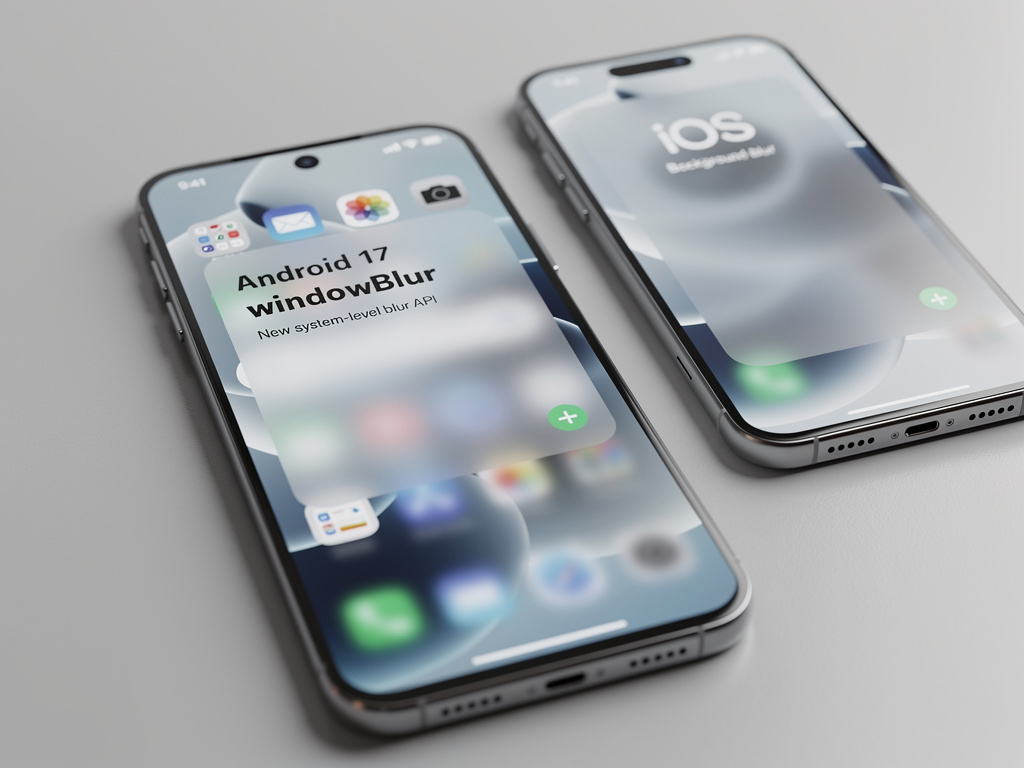
In the relentless battle for mobile operating system supremacy, the fight is increasingly waged not just on raw features, but on the subtle nuances of user experience. Google appears to be preparing its next major move on this front. Buried within early development code for what is expected to be Android 17, a new system-level feature has been discovered that aims to bring a layer of visual polish long enjoyed by users of Apple’s iOS: a sophisticated background blur effect.
This nascent feature, codenamed “windowBlur,” would allow an application’s window, such as a pop-up dialog or a menu, to blur the content behind it, creating a depth effect that focuses the user’s attention. The capability was first uncovered by veteran Android technical editor Mishaal Rahman, who detailed the initial findings in a report for Android Authority. While seemingly a minor aesthetic tweak, its implementation at the core system level signals a significant strategic shift for Google, underscoring a commitment to refining Android’s visual identity and closing a perceived design gap with its chief rival.
For years, Android developers seeking this “frosted glass” effect have been forced to rely on cumbersome workarounds. Existing tools could blur content within an app’s own view, but blurring what lay behind the app—be it the home screen or another application—required complex, often inefficient code that could degrade performance and increase battery consumption. This new native Application Programming Interface (API) promises to standardize the effect, making it both easy to implement and highly optimized, a development poised to be welcomed by the platform’s vast community of software creators.
A Native Solution to a Longstanding Developer Headache
The technical implementation of “windowBlur” is what sets it apart from past efforts. Unlike app-level solutions that essentially take a screenshot of the background and apply a blur filter to it, this new feature operates at the WindowManager level—the very core of how Android draws and manages application windows on screen. In a more detailed analysis for Android Police, Rahman explained that this allows the system to handle the blur efficiently and consistently across all applications that choose to adopt it.
This move directly addresses a fragmentation issue that extends beyond the developer community and into the user experience. Currently, some device manufacturers, such as Samsung with its One UI and Xiaomi with HyperOS, have engineered their own proprietary versions of this effect. While this provides a more polished feel on their respective devices, it creates an inconsistent visual language across the broader Android ecosystem. An official, AOSP-level (Android Open Source Project) implementation could unify this experience, ensuring that a dialog box in an app looks and behaves similarly whether on a Google Pixel, a Samsung Galaxy, or a device from another manufacturer.
The introduction of a native API would democratize high-quality design, allowing independent developers and large corporations alike to incorporate modern visual effects without investing significant resources into building and maintaining custom solutions. This could lead to a tangible elevation in the look and feel of the entire Android app ecosystem, making the platform feel more cohesive and premium. The efficiency gains are also critical, particularly as Google pushes Android into a wider array of hardware, from high-end flagship phones to more modest, entry-level devices where performance overhead is a primary concern.
Chasing the Polished Aesthetic of a Key Rival
The strategic importance of “windowBlur” cannot be overstated when viewed through the lens of the competitive dynamic between Google and Apple. For more than a decade, iOS has utilized system-wide blur effects to create its signature layered and tactile interface. From the Control Center to notifications and pop-up alerts, this visual cue is a fundamental part of the iOS design language, contributing to a perception of polish and sophistication that has long been a key selling point for the iPhone.
Google’s move to build a similar capability directly into Android can be seen as a direct response. As hardware across flagship devices reaches a point of parity, the software experience becomes the primary differentiator. By addressing these long-standing aesthetic disparities, Google is working to neutralize one of Apple’s key advantages and appeal to users who prioritize design and a fluid user interface. It is a tacit acknowledgment that in a mature market, how an operating system feels is just as important as what it can do.
However, the feature’s future is far from certain. As noted in the initial reports, “windowBlur” is currently in an early, experimental stage and is disabled by default within Android’s development builds. It requires a specific system property to be manually enabled for testing, a common practice for features that are not yet ready for a public preview. It is entirely possible that performance considerations or other development priorities could lead Google to shelve the feature before Android 17, codenamed “Vanilla Ice Cream,” is officially released to the public.
The Broader Implications for Android’s Future
Should “windowBlur” make the final cut, it would represent more than just a new visual effect. It would signify the continuing evolution of Android from a purely functional, open-source project into a mature, design-conscious platform. Under the guidance of Matías Duarte, Google’s Vice President of Design, the company has made significant strides with its Material Design language, and this feature appears to be the next logical step in that journey—a move toward a more dynamic, layered, and aesthetically pleasing interface.
This focus on refinement is critical for Google’s broader ambitions. A more polished core operating system provides a stronger foundation for its entire hardware portfolio, from Pixel phones and tablets to future form factors. It is about building a holistic experience where hardware and software are seamlessly integrated, a strategy that has been central to Apple’s success. By investing in these foundational UI/UX elements, Google is laying the groundwork to compete more effectively on all fronts.
Ultimately, the discovery of “windowBlur” offers a compelling glimpse into Google’s strategic thinking. It is a play for the hearts and minds of both developers and consumers, promising a more beautiful and consistent platform for the former and a more delightful and intuitive experience for the latter. While its arrival is not guaranteed, its very existence in the development pipeline shows that Google is listening to the market and is willing to invest in the subtle details that, in aggregate, define a world-class operating system.


 WebProNews is an iEntry Publication