
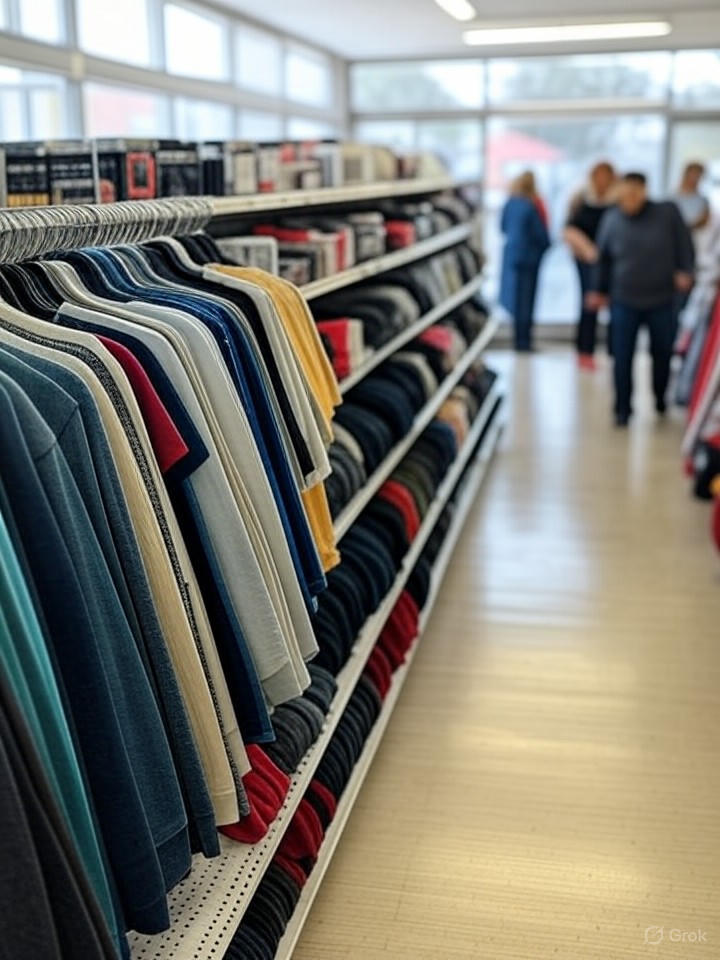
As the 2025 holiday season approaches, a seismic shift is underway in consumer behavior. Even high-income earners, traditionally insulated from economic pressures, are turning to thrift stores and discount outlets for their shopping needs. This trend, driven by lingering inflation concerns and economic uncertainty, is reshaping retail landscapes and forcing brands to adapt.
Savers Value Village, a major thrift store chain, has reported over 20% growth in affluent demographics visiting their stores. This influx highlights how value-seeking is no longer the domain of budget-conscious shoppers alone. Meanwhile, eyewear retailer Warby Parker has observed Gen Z consumers exhibiting heightened selectivity, with 77% planning to spend the same or more this holiday season, but 37% starting their shopping before November to snag early deals, according to insights shared in a CNBC report.
The Rise of Value-Seeking Across Incomes
Economic bifurcation is evident in recent data. Wealthier Americans, earning over $250,000 annually, now account for nearly 50% of all consumer spending—a record high, as noted in posts on X from financial analysts. Yet, this group is increasingly prioritizing bargains, reflecting a ‘K-shaped’ recovery where the affluent continue spending but with a frugal twist.
According to a CNBC analysis, high-income consumers are flexing their purchasing power selectively, often opting for secondhand goods or discounted items amid fears of tariff-related price hikes. This mirrors broader trends where inflation squeezes discretionary budgets, prompting even the well-off to hunt for value.
Gen Z’s Selective Spending Strategy
Generation Z is at the forefront of this thrift boom. A Newsweek survey from Deloitte indicates that young shoppers are feeling the economic pinch, planning to spend significantly less overall. However, their approach is strategic: thrifting for sustainable, nostalgic items while capitalizing on early holiday deals.
Warby Parker’s data underscores this selectivity. With 77% of Gen Z intending to maintain or increase spending, their focus is on value—evident in the 37% who begin shopping pre-November. Posts on X from Business Insider highlight how Gen Z’s love for thrifting extends to lucrative side hustles, with some earning up to $300,000 annually reselling on platforms like Depop.
Economic Uncertainty Fuels Thrift Growth
The broader economic context is one of tepid optimism mixed with caution. PwC’s Holiday Outlook 2025 predicts a 5% drop in overall holiday spending, fueled by value-seeking and generational divides. Consumers are concerned about inflation, leading to changes in shopping habits, as detailed in McKinsey’s holiday shopping insights.
High-income shoppers’ economic optimism hit a five-month low in October 2025, per Coresight Research, yet holiday shopping is accelerating early. This paradox—optimism waning but spending persisting through bargains—signals a resilient yet cautious consumer base.
Retailers Adapt to Bargain-Driven Demand
Retailers are responding by emphasizing discounts and experiences. BCG’s report advises de-risking the season through early planning amid AI-driven shifts and uncertainty. Discount retailers are dominating, with 13.4% of consumers already finishing holiday buys by October, up from 2.5% last year, according to Coresight Research posts on X.
Savers Value Village’s growth in affluent visitors exemplifies this. The chain’s appeal lies in offering quality secondhand goods at fractions of retail prices, attracting demographics once loyal to premium brands. Warby Parker, too, notes Gen Z’s deal-hunting, aligning with McKinsey’s observation of practical gifting redefining holiday approaches.
Inflation and Tariffs Loom Large
Inflation remains a key driver. NerdWallet’s 2025 Holiday Spending Report finds shoppers planning to spend nearly $200 more on gifts due to potential tariff increases, pushing them toward thrift options. Axios reports that wealthy shoppers are driving gains while others feel squeezed, spotlighting America’s economic divide this holiday season.
Posts on X from investment firms like unusual_whales reveal lower-income households cutting back on nonessentials (62%) and seeking cheaper alternatives (59%). This contrast amplifies the thrift trend among the affluent, who maintain spending power but shift to value-focused channels.
Generational Shifts in Holiday Habits
Millennials and Gen Z are rewriting rules, per Investopedia’s analysis. Facing student loans and a softer job market, they’re tightening budgets, as echoed in X posts from elcastilloinvestments.com. Early sales, experiential gifts, and online convenience are top trends, according to the U.S. Chamber of Commerce’s CO— platform.
Warby Parker’s insights show Gen Z’s blend of spending intent and selectivity, with many starting early for deals. This aligns with McKinsey’s state of the US consumer report, noting early shopping and generational shifts for a tepid 2025 season.
Thrift Stores as the New Luxury Hunt
Thrift stores are booming as even high earners discover the thrill of bargains. Savers Value Village’s 20%+ affluent growth, as cited in CNBC, positions them as key players. X posts from Business Insider note Gen Z’s thrifting for sustainable fashion, blending eco-consciousness with cost-saving.
Economic analysts on X, like Mohamed A. El-Erian referencing the Wall Street Journal, highlight cheaper gifts this year compared to inflation peaks, encouraging bargain hunting. This democratizes access to quality items, blurring lines between luxury and thrift.
Future Implications for Retail
Looking ahead, retailers must prioritize value and adaptability. PwC and McKinsey emphasize that brands ignoring these shifts risk losses. With holiday spending forecasts mixed—NerdWallet predicting increases due to tariffs, but overall drops per PwC—the thrift surge could persist beyond 2025.
Affluent shoppers’ pivot, as seen in Savers Value Village data, signals a lasting change. Gen Z’s habits, per Warby Parker and various surveys, will shape future retail, emphasizing deals, sustainability, and selectivity in an uncertain economy.


 WebProNews is an iEntry Publication