
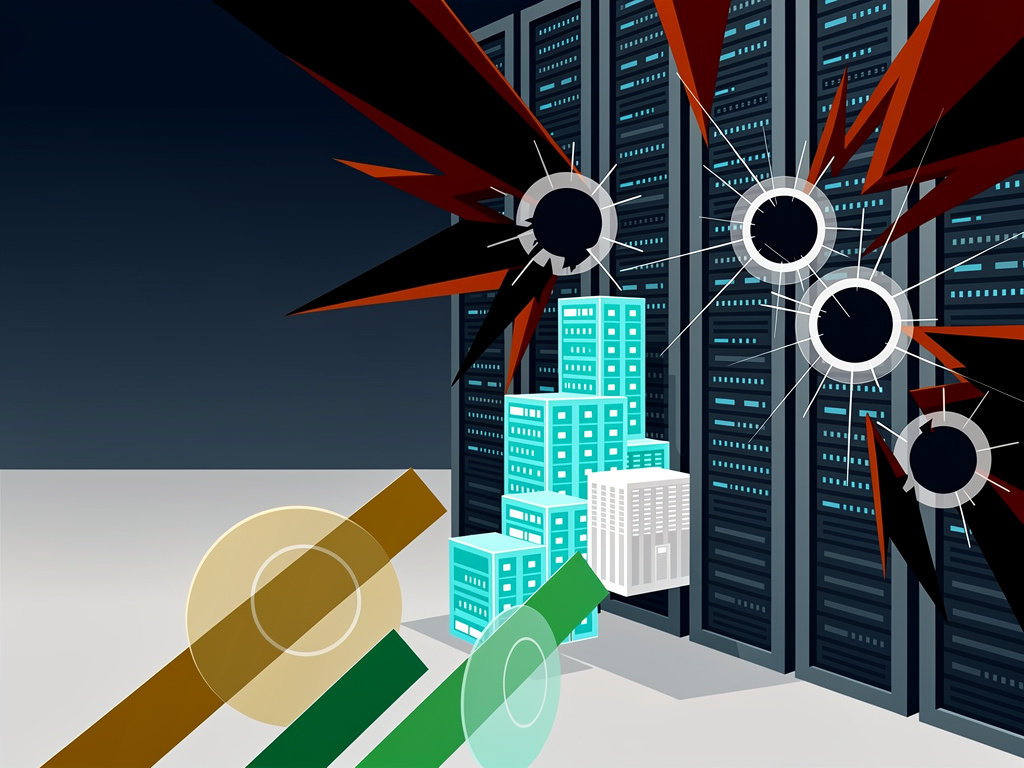
Gunshots shattered the night in Indianapolis. A city councilman, Ron Gibson, huddled inside with his eight-year-old son as bullets pierced his storm door. Come morning, a note waited on the porch: “No Data Centers.” Days earlier, Gibson had voted to greenlight a local project. USA Today captured the raw fear in his words: “I was scared.”
This wasn’t isolated rage. In a small Missouri town, voters ousted four of eight council members after they approved a $6 billion AI data center. A petition now targets the rest, plus the mayor. Data Center Watch tallies $64 billion in projects delayed or killed by such pushback. And it’s escalating. A 20-year-old Texan hurled a Molotov cocktail at OpenAI CEO Sam Altman’s home, then tried storming headquarters with a chair. Two more arrests followed gunfire nearby. Heatmap News linked it to anti-tech extremism, quoting researcher Mauro Lubrano: “A prevailing pessimism about the future, AI acceleration, and climate anxiety is making people more likely to launch physical attacks.”
Opposition spans red and blue states. Maine’s legislature just passed the nation’s first statewide moratorium on large data centers—those guzzling over 20 megawatts—until late 2027. Governor Janet Mills, eyeing a Senate run, weighs her veto. Lawmakers cited grid strain, soaring bills, noise, water gulps. The New York Times noted at least 12 other states mulling similar pauses. Pennsylvania Senator Katie Muth pushes ratepayer protections. Even Seattle eyes a total freeze.
Why the firestorm? AI data centers devour power—gigawatts, equivalent to small cities. They spike local electricity rates. Water for cooling rivals industrial thirst. Noise pollution hums 24/7. Jobs? Mostly construction, then zilch. Environmentally, they’re vampires on grids chasing net zero. Hyperscalers like Meta, Microsoft, Amazon, Alphabet pledged over $700 billion in capex this year alone. Yet nearly half of 2026 U.S. projects face delays from power shortages, transformer bottlenecks, community no’s. X posts echo the chaos: one trader crowed, “AI investments used as collateral to short $AMC and $GME GONE.”
Markets feel the tremors. Marc Guberti warned in The Motley Fool: “More than $60 billion worth of AI data centers have been blocked or delayed so far, creating friction in the tech buildout.” Hyperscalers suffer most. Scarcity jacks site premiums, drags timelines, delays revenue. Meta stock dipped 2.61% that day; Microsoft 1.15%; Alphabet 1.26%. Construction plays like Argan and Comfort Systems USA risk order droughts.
But winners emerge. Firms with baked-in infrastructure thrive. Iren, sporting a 2 GW Sweetwater site on 1,800 acres, boasts 26.67% gross margins. Terawulf generates revenue now. Edge AI outfits dodge mega-opposition—smaller footprints, simpler zoning. One Stop Systems climbed 2.02%; Honeywell’s building automation surged 8% YoY. Guberti nailed it: “Companies with secured AI data centers, power, and infrastructure will do well in this environment. Fewer available AI data center sites can delay revenue recognition for tech giants while making existing infrastructure more expensive.”
And violence? It amplifies the chill. Lubrano sees data centers as prime targets in the “mega-machine”—tech’s interconnected beast. Decentralized networks plot online, strike offline. From Tesla arsons to pipeline sabotage, patterns harden. Tech must pivot: address water woes, push edge computing, lobby for grid upgrades. Wall Street whispers resets. Morgan Stanley’s Todd Castagno observed in The New York Times: “From a markets perspective, expectations might be… realigned with the fact that it’s hard to put a couple trillion dollars in the ground in a short time.”
Short-term noise, perhaps. AI demand roars—Nvidia’s Blackwell orders hit $1 trillion through 2027. But activism forces choices. Hyperscalers bid wars for rare sites. Edge players slip through cracks. Investors eye moats: power access, pre-built capacity. Missouri’s revolt. Maine’s freeze. Shots in the dark.
The buildout stumbles. Tech stocks wobble. Grassroots power surges.


 WebProNews is an iEntry Publication