
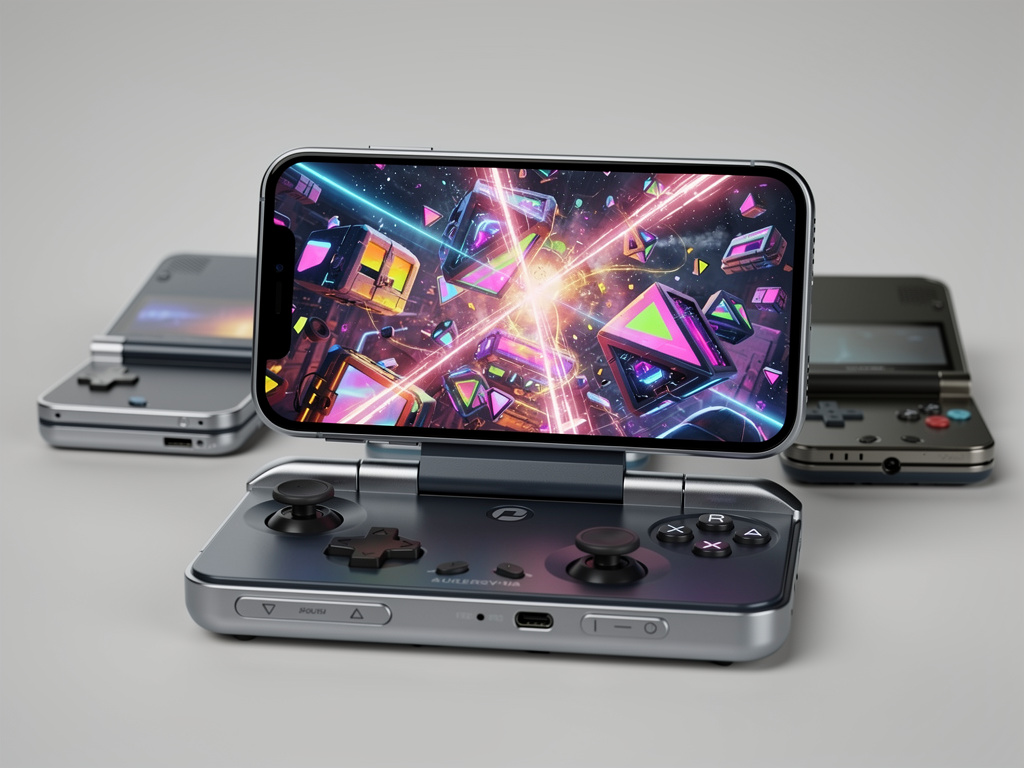
Reviving the Slider: Ayaneo’s Pocket Play Merges Mobile Mastery with Handheld Heritage
In the ever-evolving realm of portable gaming, Ayaneo is making waves with its latest innovation, the Pocket Play. This device isn’t just another smartphone or gaming handheld—it’s a hybrid that echoes the spirit of classics like the Sony Xperia Play while pushing boundaries with modern tech. Announced amid a flurry of teasers, the Pocket Play features a slide-out controller hidden behind its screen, promising a seamless transition between everyday phone use and immersive gaming sessions. Drawing from recent updates, including details shared on crowdfunding platforms, the device positions itself as a bold entry in a market crowded with dedicated handhelds and gaming phones.
At the heart of the Pocket Play’s appeal is its display technology, which has been a focal point of recent revelations. According to a report from Android Authority, the device boasts a 6.8-inch OLED panel with a 165Hz refresh rate, designed to deliver vibrant visuals and smooth performance. This screen avoids the common punch-hole camera cutout, opting instead for a clean, uninterrupted surface that enhances the gaming experience. Ayaneo’s choice reflects a deliberate focus on gamers who prioritize immersion over front-facing camera convenience, a move that sets it apart from mainstream smartphones.
Beyond the basics, the OLED technology here is tuned for high performance, supporting features like variable refresh rates that adapt to content demands. This isn’t just about specs; it’s about creating a display that feels responsive during fast-paced action games or fluid in casual scrolling. Industry insiders note that such panels are becoming standard in premium gaming devices, but Ayaneo’s implementation in a slider form factor adds a layer of ingenuity. The screen’s high refresh rate ensures minimal lag, crucial for competitive play, while its size strikes a balance between portability and visibility.
Innovative Design Choices and Controller Integration
The slider mechanism is where the Pocket Play truly shines, reviving a design long absent from modern devices. When closed, it functions as a sleek smartphone, but sliding the screen reveals a full gamepad with D-pad, ABXY buttons, and dual-mode smart touchpads that mimic analog sticks. This setup, as detailed in coverage from Liliputing, allows compatibility with both mouse-input games and those requiring precise joystick control, all without bulky protrusions that could compromise the phone’s slim profile. It’s a clever solution to the age-old problem of integrating physical controls into a pocketable device.
Ayaneo’s engineering team has emphasized durability in this design, with the sliding mechanism built to withstand repeated use. Posts on X from enthusiasts highlight excitement around this feature, with users praising the nostalgic nod to older slider phones while appreciating the modern twist. The device is expected to come in black or white, featuring dual rear cameras, stereo speakers, and a USB-C port—essentials for a hybrid that needs to excel in both worlds. Yet, questions linger about battery life and heat management, given the demands of gaming on a phone chassis.
Comparisons to predecessors like the Xperia Play are inevitable, but the Pocket Play elevates the concept with superior hardware. While the Xperia relied on dated tech, Ayaneo’s offering promises a high-performance processor—rumored to be in the Snapdragon 8 Elite family—paired with ample RAM for multitasking. This positions it not just as a gaming toy, but as a viable daily driver for tech-savvy users who game on the go.
Crowdfunding Strategy and Market Positioning
Ayaneo’s decision to launch via Kickstarter, as outlined on their campaign page, underscores a community-driven approach. The preview page teases minimalist styling and precise controls, inviting backers to register for early bird offers. This mirrors the company’s history of successful crowdfunding for handhelds, building a loyal fanbase eager for innovative products. However, pricing remains a mystery, with speculation pointing to a premium tag that could deter casual buyers.
In the broader market, the Pocket Play enters a competitive arena dominated by devices like the Asus ROG Phone series and dedicated handhelds from Valve and Nintendo. A piece from PC Gamer humorously notes the “criss-cross” sliding action, highlighting the fun factor while acknowledging the challenges of blending phone and gaming functionalities. Ayaneo’s track record with Windows-based handhelds suggests the Pocket Play might run Android, optimized for emulation and cloud gaming services.
Recent news on X reflects growing buzz, with posts from influencers like Retro Game Corps discussing the shift from Indiegogo to Kickstarter and expressing anticipation for release details. This sentiment aligns with Ayaneo’s motto, “Real gamers know gamers,” fostering a sense of community around their products. Yet, as with any crowdfunded project, backers should temper expectations, given potential delays in production.
Performance Expectations and Processor Speculation
Diving deeper into the hardware, the Pocket Play’s processor choice is a hot topic. While Ayaneo has teased a “high-performance” chip, leaks and analyses suggest something akin to the Snapdragon 8+ Gen 1 or better, based on their previous devices like the Pocket Vert. Coverage from Retro Handhelds emphasizes the screen’s competence, noting its importance in a phone-gaming hybrid. This processor would enable smooth emulation of retro titles up to modern AAA games via streaming, a key selling point for handheld enthusiasts.
Battery capacity is another critical element, with the device needing to support extended gaming without frequent recharges. Drawing parallels to Ayaneo’s Pocket S, which featured Snapdragon tech, the Pocket Play could incorporate efficient cooling systems to handle thermal loads. Insiders speculate on features like hall-effect sensors in the controls for drift-free precision, a staple in premium gaming peripherals.
Moreover, the dual-mode touchpads offer versatility, functioning as virtual joysticks or mouse pads. This innovation addresses a common pain point in mobile gaming, where touch controls often fall short. By integrating these into a sliding design, Ayaneo avoids the bulk of attachable controllers, making the Pocket Play a self-contained powerhouse.
Ecosystem Integration and Software Optimization
Software plays a pivotal role in the Pocket Play’s success. Ayaneo’s experience with custom interfaces on their handhelds suggests a tailored Android skin that prioritizes gaming. Features like quick-access game libraries, performance modes, and integration with services like Xbox Game Pass could elevate the user experience. A report from The Gadget Flow describes it as a “compact handheld gaming controller inside a mobile phone,” underscoring its dual nature.
For industry observers, the device’s potential lies in bridging mobile and PC gaming ecosystems. With Windows compatibility in Ayaneo’s lineage, there’s speculation about hybrid OS capabilities, though Android seems more likely for a phone form. This could open doors to cross-platform play, appealing to gamers who switch between devices seamlessly.
Challenges remain, such as ensuring the slider’s longevity and optimizing the screen for outdoor visibility. OLED panels excel in color accuracy but can struggle with brightness in sunlight, a factor Ayaneo must address. Feedback from X posts indicates users are keen on durability tests, reflecting broader concerns in the portable gaming sector.
Competitive Edge and Future Implications
Against rivals, the Pocket Play’s unique slider gives it an edge in ergonomics. Unlike bulkier handhelds, its phone-like form allows discreet carry, while the controls provide a tactile advantage over touchscreen-only gaming phones. Insights from XDA Developers on Ayaneo’s pricing adjustments for other devices suggest lessons learned, potentially leading to a more accessible entry point for the Pocket Play.
The timing is apt, with the handheld market booming post-Steam Deck. Ayaneo’s expansion into phones could signal a trend toward converged devices, blurring lines between categories. Enthusiast posts on X praise the 165Hz OLED for making games “pop,” aligning with Android Authority’s take on its e-sports grade quality.
Looking ahead, the Pocket Play’s success hinges on execution. If Ayaneo delivers on promises, it could redefine portable gaming, inspiring competitors to innovate. For now, the Kickstarter campaign serves as a litmus test, gauging demand for this ambitious hybrid.
Community Feedback and Launch Anticipation
Backer enthusiasm is palpable, with X discussions buzzing about potential accessories like cases or docks. Ayaneo’s community-focused approach, evident in their official product page, invites input, fostering loyalty. This contrasts with larger manufacturers’ top-down strategies, giving Ayaneo a grassroots advantage.
Pricing speculation ranges from mid-tier to premium, influenced by component costs. A piece from Engadget on related devices hints at competitive starting points, which could apply here. Insiders watch for bundle options, enhancing value.
As launch nears in 2026, per X posts, the Pocket Play embodies Ayaneo’s innovative spirit. It challenges norms, offering a glimpse into a future where phones and handhelds converge effortlessly.
Technological Underpinnings and Display Deep Dive
Delving into the screen tech, the 6.8-inch OLED’s 165Hz rate supports high frame rates, reducing motion blur in dynamic scenes. This is bolstered by advanced color calibration, ensuring accurate reproduction for games and media. Compared to LCD alternatives in budget handhelds, OLED provides deeper blacks and higher contrast, as noted in analyses from ThinkComputers.
The absence of a notch or hole-punch maximizes usable area, a design choice that prioritizes gaming purity. Ayaneo’s engineering likely incorporates anti-reflective coatings to mitigate glare, enhancing playability in varied environments.
Integration with the controller adds another layer: the screen’s responsiveness pairs with haptic feedback for immersive control. This synergy could set new standards, influencing future devices in the sector.
Strategic Moves in a Crowded Field
Ayaneo’s foray into phones with the Pocket Play is strategic, capitalizing on their handheld expertise. By avoiding Windows for a likely Android base, they target a wider audience accustomed to mobile ecosystems. Coverage from XiaomiToday on similar products underscores Ayaneo’s premium positioning, with materials like metal bodies enhancing perceived value.
Market data suggests growing demand for hybrids, driven by remote play trends. The Pocket Play could capture this, especially if priced competitively against pure gaming phones.
Ultimately, as details unfold, the device promises to blend nostalgia with cutting-edge tech, potentially reshaping portable entertainment.


 WebProNews is an iEntry Publication