
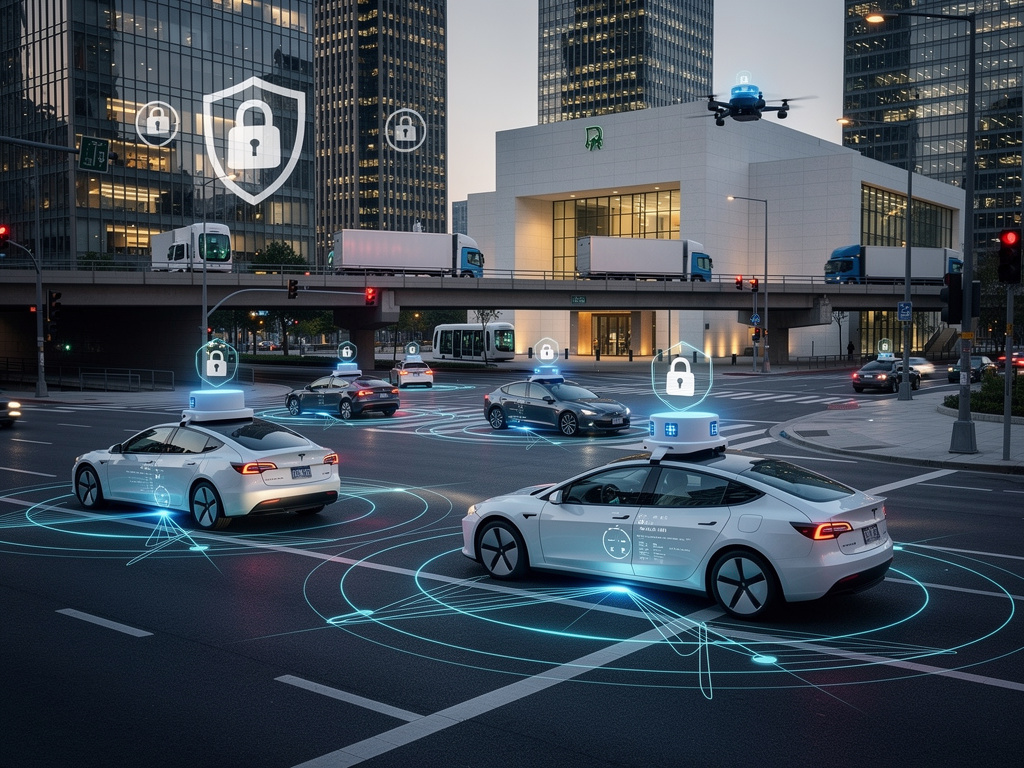
As the autonomous vehicle sector accelerates into 2025, industry players are pushing boundaries with unprecedented investments and technological leaps, signaling a pivotal shift in how we envision mobility. Recent developments underscore a race where companies like Tesla, Waymo, and emerging startups are not just innovating but redefining transportation norms. Drawing from the latest insights, this surge is fueled by advancements in AI, sensor technology, and regulatory green lights that promise to make self-driving cars a mainstream reality sooner than anticipated.
In particular, Tesla’s aggressive rollout of Full Self-Driving (FSD) features has captured attention, with plans for unsupervised autonomy in key markets like Texas and California this year. This comes amid broader industry momentum, where global markets are projected to expand dramatically. According to a report from OpenPR, the worldwide autonomous and self-driving cars market is expected to reach $180.1 billion by 2030, growing at a 27.8% compound annual rate, with North America holding a 40% share led by players such as Tesla, Waymo, and General Motors.
Beyond market forecasts, real-world deployments are gaining traction. Waymo, under Alphabet’s umbrella, continues to lead with its robotaxi services in select U.S. cities, expanding operations and integrating deeper AI capabilities. Meanwhile, NVIDIA’s recent announcements at NeurIPS highlight tools like the DRIVE Alpamayo-R1 model, described as the world’s first open industry-scale reasoning vision language action model for mobility, as detailed in the NVIDIA Blog.
Accelerating Technological Frontiers
These innovations aren’t isolated; they’re part of a concerted push to overcome longstanding hurdles in autonomous systems. For instance, high-definition mapping is emerging as a critical enabler, with the HD map market for autonomous driving poised for a 42.1% CAGR through 2031, per analysis from OpenPR. This growth reflects the need for precise, real-time environmental data to support Level 4 and 5 autonomy, where vehicles operate without human intervention in defined areas.
Sensor technologies are equally vital, with companies like Bosch, Velodyne, and Mobileye driving rapid expansions in the autonomous vehicle sensor market. Advancements in LiDAR, radar, and camera systems are enhancing ADAS features, making vehicles safer and more reliable. A recent OpenPR report notes that this segment is booming due to rising demand for fully autonomous capabilities and hefty investments from automotive original equipment manufacturers.
On the regulatory front, updates from bodies like the U.S. Department of Transportation are streamlining standards, as outlined in a factsheet from the Center for Sustainable Systems at the University of Michigan. These include new safety reporting guidelines aimed at accelerating development while addressing liability concerns, such as those highlighted by the 2016 Tesla Model S incident.
Market Projections and Key Players
Shifting focus to economic implications, the autonomous driving market is forecasted to hit $668.64 billion by 2033, according to Taiwan News. This projection accounts for the accelerating shift toward electric and hybrid models, intertwined with autonomy trends, as environmental regulations push the industry forward. In Asia, China is ramping up, with expectations that 20% of new car sales there will be autonomous by 2030, per insights from Liberty Advisor Group.
Tesla remains a frontrunner, with 2025 plans including a refreshed Model Y, more affordable models leveraging next-gen platforms, and pilot production of its Optimus robot, which ties into broader autonomy ecosystems. Posts on X from industry observers echo this optimism, noting Tesla’s anticipated 20-30% vehicle growth this year and FSD expansions into Europe and China, potentially transforming urban mobility.
Competitors aren’t far behind. General Motors’ Cruise division is rebounding from past setbacks, while startups are innovating in niche areas like last-mile delivery. A white paper from the World Economic Forum emphasizes the need for accessible ADAS across regions, highlighting high technology costs as a barrier but projecting billions in AI algorithm investments to bridge the gap.
Urban Transformations and Challenges
Envisioning future cities, experts predict robotaxis could dominate, potentially leading to restrictions on human-driven vehicles in dense urban zones. This vision, shared in various X posts, aligns with broader discussions on how autonomy will enhance safety, reduce congestion, and boost asset utilization. By 2030, the U.S. National Highway Traffic Safety Administration anticipates over 3.5 million self-driving vehicles on roads, scaling to 4.5 million shortly after.
However, challenges persist. Liability shifts from drivers to manufacturers at higher autonomy levels complicate adoption, as noted in the University of Michigan factsheet. Driver attention systems in Level 2 vehicles are often inadequate, necessitating advanced solutions like eye-tracking to prevent misuse.
Moreover, cybersecurity remains a concern, with the sector vulnerable to hacks that could disrupt critical infrastructure. Industry reports stress the importance of robust frameworks, especially as autonomy integrates with smart cities and connected ecosystems.
Investment and Innovation Hotspots
Investment flows are surging, with automotive AI markets expected to grow from $18.83 billion in 2025 to $38.45 billion by 2030 at a 15% CAGR, per OpenPR. This includes AI for speech, safety, and driving, as NVIDIA’s releases demonstrate, fostering open models that encourage collaboration.
In terms of geographic hotspots, North America leads, but Singapore is highlighted as the most prepared for adoption, according to the Liberty Advisor Group analysis. Europe and China are close behind, with Tesla’s FSD rollout poised to catalyze growth there.
Emerging trends also point to autonomy extending beyond passenger vehicles. The Tesla Semi’s production ramp-up and concepts like Robovan suggest applications in logistics and public transport, potentially revolutionizing supply chains as explored in a report from Ghostresearch.
Regulatory Evolution and Safety Imperatives
Regulatory bodies are adapting swiftly. The U.S. DOT’s 2025 framework modernizes standards for commercial AVs, emphasizing safety amid deregulation to spur innovation. This balances progress with precautions, addressing past incidents that underscored the need for clear liability rules.
Safety advancements are central, with AI algorithms demanding massive investments to ensure reliability. The World Economic Forum white paper notes that autonomous systems must be user-centric, enhancing accessibility while tackling regional disparities.
Public sentiment, gleaned from X discussions, shows excitement mixed with caution. Posts highlight how self-driving tech could automate diagnostics and trading, but also warn of job displacements in tech sectors by 2028-2030.
Broader Societal Impacts
As autonomy matures, its ripple effects on society are profound. Fewer accidents, lower pollution, and greater mobility access are touted benefits, per the Liberty Advisor Group. By transforming cars into living spaces, as the World Economic Forum suggests, AVs could redefine daily life.
Yet, ethical dilemmas arise, such as data privacy in AI-driven systems and equitable access across socioeconomic groups. Industry insiders note that while Level 4 robo-taxis are geofenced now, expansions could democratize transport.
Looking ahead, the integration of autonomy with other tech waves—like NVIDIA’s open models—promises synergies that could accelerate adoption exponentially.
Strategic Shifts in Global Value Chains
The transition to autonomous networks is reshaping global value chains, as detailed in the Ghostresearch report. From Industry 4.0 to self-aware machine fleets, this evolution involves real-time negotiations among vehicles, potentially eliminating human traffic control by 2035.
Key players are defining roles: OEMs like BMW and Daimler are investing heavily, per a market trends analysis from OpenPR. This includes supply chain studies revealing competitive dynamics in sensors and software.
X posts reinforce this, with discussions on how companies like Uber aim to become platform layers for autonomy, partnering with leaders like Waymo.
Future Trajectories and Industry Outlook
Peering into the next decade, trends like city-level autonomous fleets and AI-driven logistics are on the horizon, as one X post outlines. Cross-border regulations will be crucial for seamless global adoption.
Morgan Stanley projections, referenced in X commentary, see self-driving markets hitting $200 billion by 2030, with Tesla and Google at the forefront due to data advantages.
Ultimately, the sector’s trajectory hinges on balancing innovation with safety and ethics. As TechCrunch aptly puts it in its recent piece, “The accelerator is on the floor for autonomous vehicles,” capturing the urgent pace of progress that could soon make self-driving a ubiquitous feature of modern life.
Industry watchers agree that 2025 marks an inflection point, where pilot projects scale to commercial viability, setting the stage for a transformed mobility ecosystem. With ongoing advancements, the promise of safer, more efficient transport inches closer to reality, driven by relentless innovation and strategic foresight.


 WebProNews is an iEntry Publication