
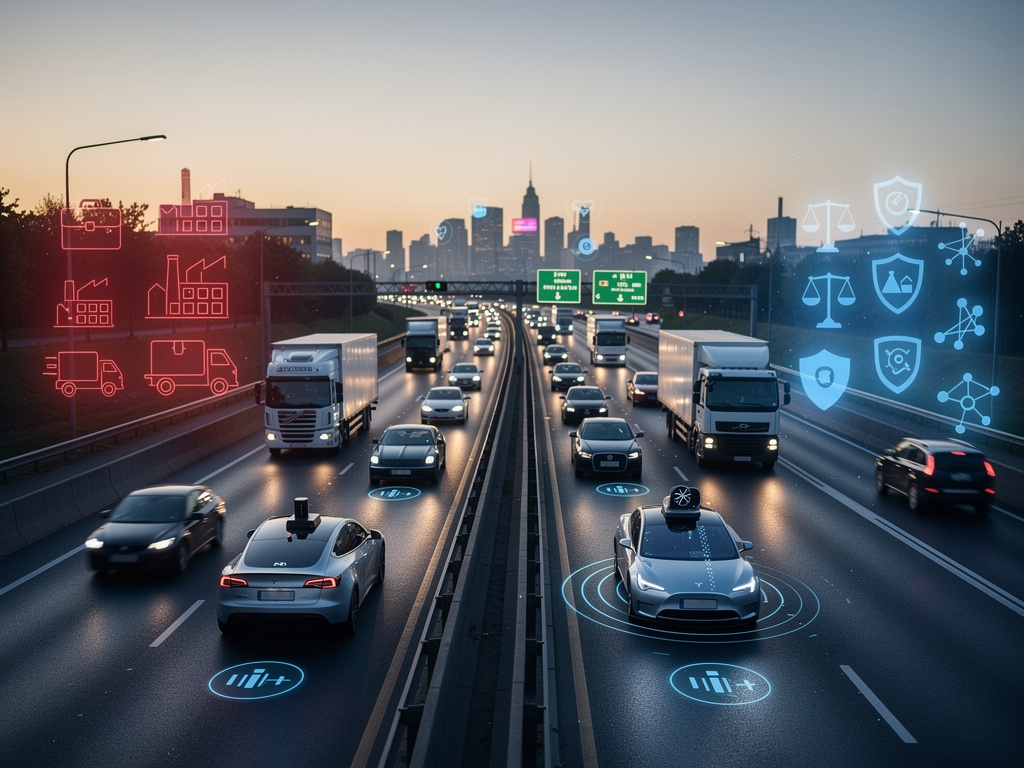
Increased automation in transportation stands poised to upend daily commutes, economic structures, and urban designs, delivering profound safety gains while igniting debates over jobs and equity. With deployments accelerating in 2025, including driverless long-haul routes in Texas and ride-hailing expansions in cities like Dallas and Miami, the technology promises to slash the 37,461 annual U.S. road fatalities largely tied to human error, as noted in a PNAS study. Yet, as NHTSA unveiled its new AV Framework in April 2025 prioritizing safety and innovation, stakeholders grapple with workforce shifts affecting millions of drivers.
Waymo’s service surpassed 450,000 weekly paid rides by late 2025, per McKinsey, underscoring commercial viability. McKinsey forecasts autonomous ride-sharing could halve cost-per-mile by 2030, fueling a Mobility-as-a-Service market from $538 billion in 2025 to $2,962 billion by 2035. These advances free passengers for work or rest, potentially reclaiming billions in lost productivity from U.S. commutes averaging 52 minutes daily.
Safety Revolution Unfolds
AVs target the 94% of crashes from human failings like distraction or impairment. NHTSA’s 2025 rulemakings modernized standards, ditching requirements for steering wheels in true driverless systems, as highlighted by the University of Michigan’s Center for Sustainable Systems. Waymo logged over 71 million driverless miles by 2025, with simulations in billions, demonstrating reliability. Trials show 11% fuel savings, up to 27% on highways, easing environmental strains.
Enhanced mobility empowers the elderly, disabled, and youth, granting independence where none existed. The Autos Innovate report emphasizes AVs optimizing supply chains for efficient deliveries at lower costs, benefiting fleets. Urban efficiency beckons: smoother flows cut congestion, while reduced parking needs reclaim land for housing or parks, per Victoria Transport Policy Institute analyses.
Workforce Reckoning Looms
Yet, displacement shadows progress. Up to 5 million U.S. jobs—3% of the workforce, including 3.5 million truckers and taxi drivers—face obsolescence, warns RethinkX. The Department of Commerce pegs one in nine workers in vulnerable roles. Truck driving, plagued by shortages and an aging workforce, sees long-haul automation starting in Texas, per Eno Center for Transportation’s 2025 policy wrap-up.
Low-skill, low-income, and minority communities bear the brunt, demanding retraining investments. Goldman Sachs projected 300,000 annual losses from 2025-2030 as AV sales hit 20%. While new roles emerge in maintenance and tech, geographic mismatches hinder transitions; one study finds insufficient alternatives for 35% trucker displacement without tailored policies, as detailed in a ScienceDirect analysis.
Ethical and Legal Fault Lines
Ethical quagmires persist, epitomized by the trolley problem: in unavoidable crashes, whom does an AV prioritize—passengers or pedestrians? Surveys like the Moral Machine reveal utilitarian leanings, but experts critique trolley scenarios as unrealistic, ignoring AVs’ crash-avoidance primacy, per a Frontiers in Robotics and AI study. Germany’s 2017 guidelines ban programming to sacrifice based on traits like age or status.
Liability blurs: manufacturer, owner, or programmer? The 2016 Tesla fatality spurred clarity demands, with NHTSA streamlining reporting in 2025. IEEE P7001 mandates transparency, requiring decision explanations. As AVs migrate agency from drivers, courts must adapt, avoiding simplistic trolley framings that overlook probabilistic risks, Brookings Institution argues.
Equity and Access Divides
High costs risk elite-only access, widening gaps. Biases plague AI: AVs detect lighter-skinned pedestrians better, per studies. Shared models could enhance equity via low-cost rides, but private ownership might spur sprawl, boosting suburban demand as commutes ease, warns Victoria Transport Policy Institute.
Paradoxically, tolerable long trips could induce sprawl and ‘zombie cars’ circling sans parking fees, hiking congestion. Yet, integrated with transit, AVs cut vehicle miles traveled 25%, slashing urban pollution 80% by 2050 if shared and electric, per EESI. Policies must subsidize low-income access to avert divides.
Privacy and Security Imperatives
Vast data streams—locations, habits—invite breaches. Cybersecurity tops concerns, with hacks risking infrastructure sabotage, as Automate.org notes. NHTSA’s framework stresses protection amid connected AVs’ vulnerabilities. Europe eyes antivirus mandates; U.S. balances innovation with safeguards.
Urban Transformation Horizons
Cities rethink designs: narrower lanes, repurposed parking. McKinsey sees L4 highway autonomy widespread by 2025 in premium segments. X posts highlight ripple effects—eliminated lots, 200mph caravans, suburban booms. Policies like congestion pricing and SAV-public transit ties prevent VMT surges, fostering dense, efficient hubs.
Federal pushes, including 2026 reauthorization, signal momentum. Trump’s innovation focus via Duffy’s April 2025 agenda accelerates amid China rivalry, Heritage Foundation reports. Success hinges on equitable rollout, mitigating displacements while harnessing safety and efficiency.


 WebProNews is an iEntry Publication