
The $700 Million Leap: Humanoid Robots Charge into Industrial Revolution
In a move that could redefine manufacturing floors worldwide, a major industrial conglomerate has placed a staggering $700 million order for humanoid robots, signaling a pivotal shift toward widespread AI integration in heavy industry. This deal, announced earlier this month, involves thousands of advanced bipedal machines designed to perform complex tasks alongside human workers. Industry experts view this as more than just a purchase—it’s a watershed moment that accelerates the fusion of artificial intelligence with physical labor, potentially transforming how goods are produced from automobiles to consumer electronics.
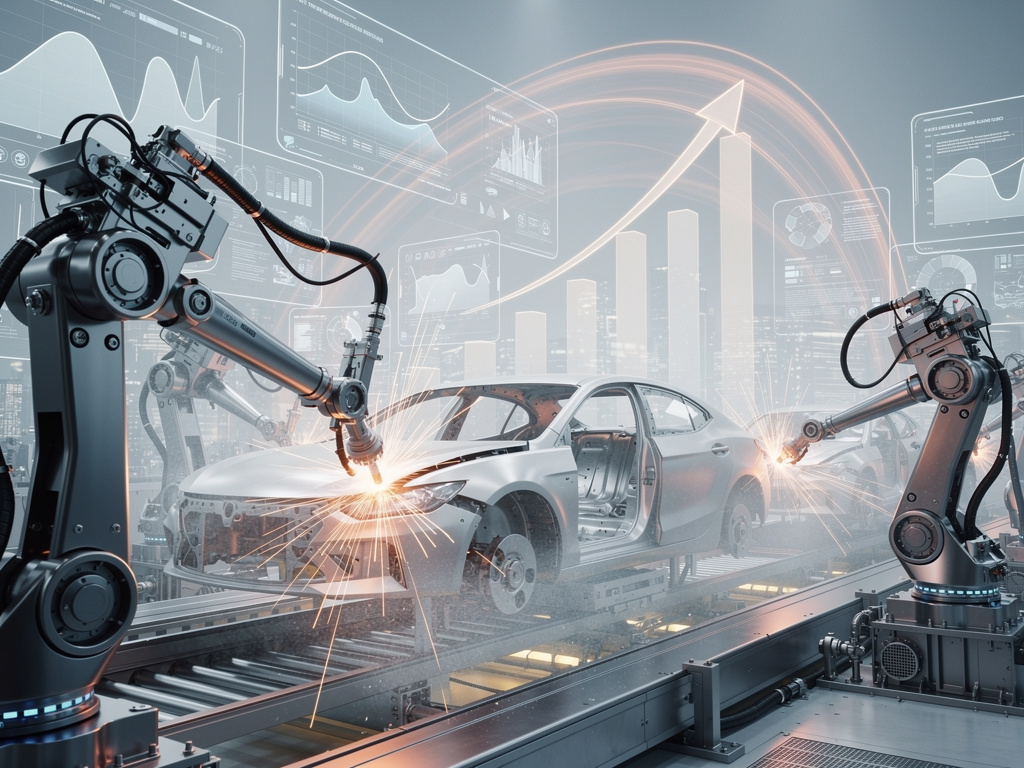
The order comes from a leading automotive manufacturer, which has partnered with a cutting-edge robotics firm to deploy these humanoids in assembly lines starting next year. These robots, equipped with sophisticated AI brains, can handle intricate operations like welding, painting, and quality inspection with precision that rivals or exceeds human capabilities. Unlike traditional industrial robots confined to fixed positions, these humanoids move freely, adapting to dynamic environments and learning from their surroundings in real time. This flexibility addresses long-standing challenges in automation, where rigid machinery often falls short in variable settings.
Sources close to the deal indicate that the investment isn’t merely about cost savings—though projections suggest a 30% reduction in labor expenses over five years—but also about enhancing safety and efficiency. By taking on hazardous tasks, these robots could minimize workplace injuries, a persistent issue in industrial sectors. The scale of this order underscores growing confidence in humanoid technology, which has evolved rapidly from experimental prototypes to viable production tools.
Pioneering Partnerships and Technological Milestones
The robotics provider behind this breakthrough is leveraging advancements in machine learning and sensor technology to make their humanoids not just functional but intuitive. Drawing from recent developments highlighted in a Bloomberg report, these machines incorporate new AI techniques that allow them to pour lattes or navigate crowded spaces with ease, hinting at their potential in more demanding industrial applications. At a recent Silicon Valley summit, similar prototypes demonstrated transformative capabilities, though full-size models remain in limited supply.
This $700 million commitment builds on earlier pilots where humanoids proved their worth in controlled factory settings. For instance, trials in automotive plants showed these robots boosting output by 25% without disrupting human workflows. The deal’s magnitude—encompassing custom software integrations and ongoing maintenance—reflects a deeper bet on embodied AI, where intelligence isn’t confined to screens but embedded in physical forms that interact with the world.
Industry analysts point to this as evidence of accelerating adoption. A projection from Morgan Stanley estimates the humanoid robot market could swell to $5 trillion by 2050, driven by accelerations in adoption expected to ramp up by the end of the next decade. This order alone could catalyze that growth, encouraging other sectors like logistics and construction to follow suit.
Market Dynamics and Competitive Pressures
Competition in the humanoid robotics space is heating up, with players from the U.S. and abroad vying for dominance. Posts on X, formerly Twitter, buzz with excitement about deployments in hotels and warehouses, where AI-driven humanoids generate significant revenue by operating around the clock. One such post highlighted a Vegas hotel’s use of these robots, yielding $347,000 in additional revenue within 30 days, illustrating their immediate economic impact beyond traditional manufacturing.
China’s aggressive push in this field adds another layer of intrigue. As noted in a Fortune article, while Silicon Valley grapples with skepticism, China exhibits strong momentum in humanoid development, potentially positioning it as an economic powerhouse through robotics. This global rivalry could drive down costs and spur innovation, making advanced humanoids more accessible to smaller enterprises.
The $700 million order also highlights economic incentives. With labor shortages plaguing industries post-pandemic, companies are turning to AI solutions to fill gaps. Projections from Edge AI and Vision Alliance forecast the global humanoid market reaching $51 billion by 2035, fueled by advancements in AI, dexterity, and cost reductions. This deal exemplifies the convergence of these factors, paving the way for three waves of adoption: initial prototypes, scaled deployments, and ubiquitous integration.
Challenges in Deployment and Ethical Considerations
Yet, this breakthrough isn’t without hurdles. Integrating humanoids into existing workflows requires substantial retraining for human staff and overhauls of factory layouts. Skeptics, as discussed in a The Verge piece, question the timeline, with some arguing that full-scale humanoid armies, as envisioned by figures like Elon Musk, may still be years away. Reliability in real-world conditions—dealing with unexpected variables like spills or equipment failures—remains a key concern.
Safety risks loom large as well. A WebProNews analysis details impressive capabilities like heavy lifting but warns of uncertainties due to proprietary technologies and inconsistent standards. Lawsuits and calls for regulation are already emerging, emphasizing the need for robust safety protocols to prevent accidents in shared human-robot spaces.
Moreover, ethical questions arise about job displacement. While proponents argue that humanoids will create new roles in robot maintenance and programming, critics fear widespread unemployment in blue-collar sectors. The World Economic Forum stresses the importance of clear guardrails to ensure society benefits from this transformation, advocating for policies that balance disruption with promise.
Innovations Driving Future Growth
Looking ahead, innovations in AI are set to enhance humanoid capabilities further. A South China Morning Post overview of 2025 breakthroughs mentions China’s robot boot camps and game-changing AI models like DeepSeek, which could supercharge humanoid intelligence. These developments promise robots that not only perform tasks but anticipate needs, learning from vast datasets of human behavior.
Industry insiders anticipate a boom in 2026, as predicted in a Digit report, with endorsements from tech leaders like Elon Musk and Sam Altman. This aligns with X posts discussing Tesla’s Optimus robot, targeting affordability at $20,000 per unit, which could democratize access to humanoid technology.
The $700 million order serves as a bellwether for this surge. By committing to large-scale deployment, the automotive giant is testing the waters for broader industrial application, potentially influencing sectors like healthcare and retail. Early adopters report seamless integration, with humanoids adapting to tasks via over-the-air updates, much like software patches for smartphones.
Global Implications and Strategic Shifts
On a global scale, this deal could reshape trade dynamics. Nations investing heavily in robotics, such as the U.S. and China, may gain competitive edges in manufacturing efficiency. A Automate.org insight piece explores how humanoids are evolving to shape the future of work, still in early stages but progressing rapidly.
Strategic partnerships are key to this evolution. The robotics firm involved in the $700 million order has collaborated with AI leaders to embed cutting-edge vision and language models, enabling natural interactions. This mirrors trends in a Humanoid Robotics Technology roundup of 2025’s top models, emphasizing advancements in human-robot interaction.
As adoption spreads, economic forecasts grow optimistic. X posts from industry watchers highlight projections of millions of units shipping by 2030, with revenue opportunities in the trillions. This enthusiasm is tempered by realism—scaling production to meet demand will require massive investments in supply chains and materials.
Human Factors in Robotic Integration
Design plays a crucial role in acceptance. A ABC News exploration delves into the psychology of trust, noting that humanoid robots must navigate the uncanny valley to gain human approval. Features like expressive faces and predictable movements help build rapport, essential for collaborative environments.
Training programs are emerging to prepare workforces for this shift. Companies are investing in upskilling initiatives, ensuring humans and robots coexist productively. Insights from Crescendo.ai on recent AI news underscore how these breakthroughs are reshaping daily operations, from warehouses to homes.
Ultimately, this $700 million order from the MSN-reported deal, detailed in their article, marks a turning point. It not only validates years of research but sets the stage for an era where AI-powered humanoids become indispensable allies in industry, driving efficiency, innovation, and perhaps even redefining the human role in production.
Vision for Tomorrow’s Factories
Envisioning the factories of tomorrow, these humanoids could handle everything from inventory management to custom assembly, adapting on the fly to production changes. X sentiment reflects bullish outlooks, with discussions of robots building houses and mining resources at minimal costs, signaling a profound economic shift.
Regulatory frameworks will evolve in tandem. Governments are beginning to draft guidelines for AI in industry, drawing from international forums to mitigate risks while fostering growth. The Bloomberg report earlier referenced underscores the transformative potential, even as prototypes scale up.
This breakthrough order, while groundbreaking, is just the beginning. As more industries embrace humanoid robots, the fusion of AI and physical capability promises to unlock unprecedented productivity, challenging us to adapt to a world where machines walk among us as partners, not just tools.


 WebProNews is an iEntry Publication