
Orchestrating Autonomy: How Autolane Aims to Direct the Future of Self-Driving Fleets
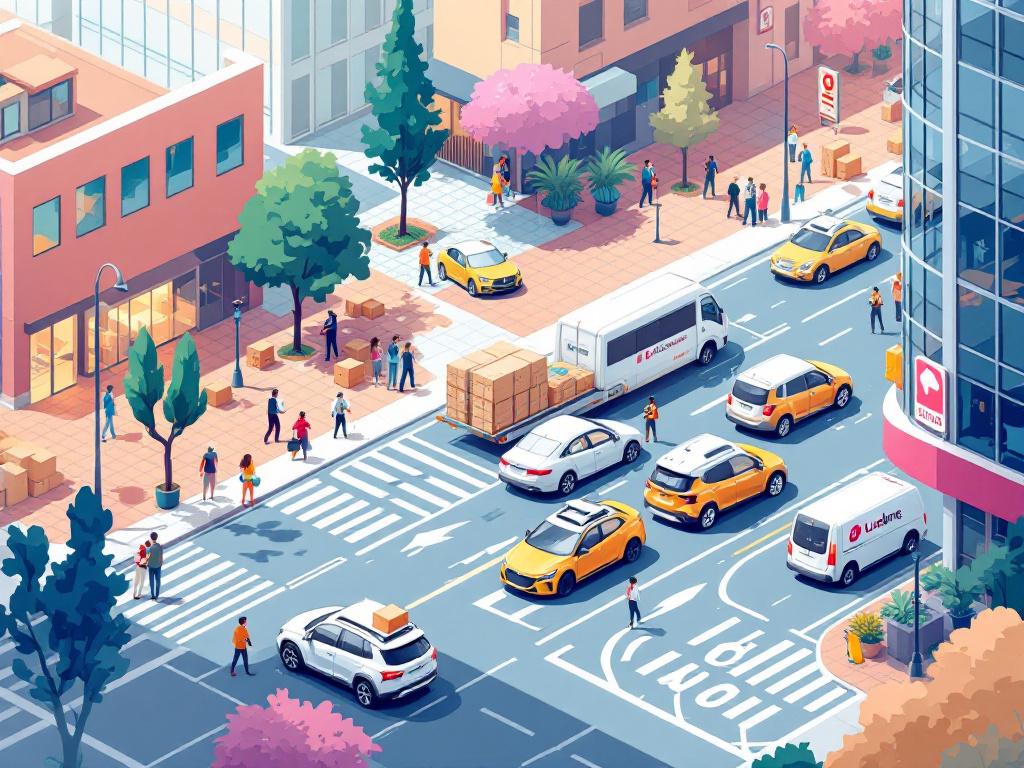
In the bustling world of autonomous vehicles, where robotaxis and delivery bots are rapidly multiplying on city streets, a new challenge has emerged: managing the chaos at the curb. Palo Alto-based startup Autolane is stepping in with an ambitious solution, likened to an “air traffic control” system for ground-based self-driving machines. Founded in 2024, the company has quickly garnered attention by raising $7.4 million in funding to develop technology that coordinates pickups, drop-offs, and deliveries in high-traffic areas. This innovation addresses what industry experts call the “last 50 feet” problem—the final stretch where autonomous vehicles must navigate crowded curbsides without human intervention.
Autolane’s flagship product functions as a curbside operating system, orchestrating vehicle movements at retail locations, shopping centers, and quick-service restaurants. By integrating with existing infrastructure, it assigns specific stalls, manages arrival times, and ensures smooth handoffs for passengers or packages. The system draws inspiration from aviation’s air traffic control, applying similar principles of real-time coordination to prevent bottlenecks. Early deployments at four Simon Property Group centers have shown promising results, reportedly cutting pickup times by 50% and enhancing scalability for autonomous vehicle operations.
The startup’s approach comes at a pivotal moment. With companies like Waymo and Zoox expanding robotaxi services, urban areas are seeing an influx of self-driving vehicles that need to interact seamlessly with human-driven traffic and pedestrians. Autolane’s technology aims to bridge this gap, creating dedicated zones where autonomous vehicles can operate efficiently. Investors, including Draper Associates and Hyperplane, see potential in this niche, betting that as autonomy scales, curbside management will become a critical bottleneck.
Pioneering Curbside Coordination
Autolane’s journey began with a recognition of the limitations in current autonomous vehicle deployments. While self-driving cars excel on open roads, they often struggle in dense, unpredictable environments like mall entrances or busy drive-thrus. Autolane uses sensors, AI algorithms, and cloud-based software to monitor curb space in real time, assigning slots much like airport gates. This not only reduces wait times but also minimizes conflicts with traditional vehicles, potentially easing congestion in urban hotspots.
Partnerships are key to Autolane’s strategy. The collaboration with Simon Property Group, a major real estate investment trust, allows for practical testing in high-volume settings. According to reports from StockTitan, the deployment at Simon centers is already demonstrating efficiency gains, with the system supporting both ride-hailing and delivery bots. This real-world application underscores how Autolane is not just theorizing but actively implementing solutions that could redefine retail and transportation interfaces.
Beyond funding and partnerships, Autolane’s tech stack incorporates advanced elements like low-latency computer vision and probabilistic modeling, drawing from broader innovations in autonomy. Posts on X highlight industry excitement around such low-latency pipelines, essential for real-time decision-making in dynamic environments. While not directly tied to Autolane, these discussions reflect the technological foundation enabling systems like Autolane to function with sub-15 millisecond responsiveness, crucial for avoiding collisions in crowded curbs.
Funding Fuels Expansion
The $7.4 million seed round, led by prominent venture firms, signals strong confidence in Autolane’s vision. Tim Draper of Draper Associates, known for early bets on Tesla and SpaceX, has thrown his weight behind the startup, viewing it as a foundational piece for the autonomous era. This capital injection follows Autolane’s launch of the Autolane platform in May 2025, as detailed in a BusinessWire release, which emphasized its role in managing arrivals for big-box retailers and high-volume eateries.
Autolane’s founders bring a mix of expertise from tech giants and startups, positioning the company to tackle interdisciplinary challenges. Their platform isn’t limited to one type of vehicle; it supports a range of autonomous systems, from robotaxis to delivery drones on wheels. This versatility could make Autolane a standard in the industry, much like how standardized protocols revolutionized air travel.
Recent news from TechCrunch highlights how Autolane’s system choreographs robotaxi and delivery bot movements, preventing the curbside pileups that plague early deployments. The article notes the startup’s focus on “autonomous commerce,” enabling seamless integration at retail points. This aligns with broader trends where autonomy is shifting from novelty to necessity, especially in e-commerce-driven logistics.
Broader Implications for Urban Mobility
As autonomous vehicles proliferate, cities must adapt their infrastructure. Autolane’s technology could influence urban planning, encouraging the designation of smart curbs equipped with sensors and connectivity. A study published in MDPI‘s Sustainability journal explores how dedicated lanes and control transitions for autonomous vehicles enhance traffic management and environmental benefits, reducing emissions through optimized flows. Autolane’s curbside focus complements these findings, potentially amplifying sustainability gains in dense areas.
Industry insiders point to the economic ripple effects. By streamlining operations, Autolane could lower costs for fleet operators like Uber or Amazon, which are investing heavily in autonomy. Posts on X from tech enthusiasts discuss roadmaps to full autonomy, emphasizing layers like control systems and Bayesian reasoning—elements evident in Autolane’s AI-driven orchestration. These online conversations, while speculative, underscore the excitement around innovations that make self-driving fleets viable at scale.
However, challenges remain. Regulatory hurdles, such as varying city ordinances on curb usage, could slow adoption. Autolane must navigate these while ensuring data privacy in its cloud-based system. Competitors in the space, including established players in traffic management software, may vie for the same market, but Autolane’s specialized focus on the “last 50 feet” gives it a unique edge.
Technological Underpinnings and Innovations
Diving deeper into Autolane’s tech, the platform leverages modular architecture similar to advancements in electric vehicle wiring, as noted in historical X posts about efficient data transmission in vehicles like Tesla’s Cybertruck. This modularity allows for scalable deployment, where curbside stalls are equipped with smart infrastructure that communicates directly with incoming vehicles.
The system’s real-time capabilities stem from advanced algorithms that predict and allocate space based on traffic patterns. For instance, in a busy shopping center, Autolane might reserve a spot for a Waymo robotaxi while directing a delivery bot to an adjacent lane, all synchronized to minimize delays. News from FindArticles describes this as choreographing where and how vehicles pull in, a metaphor that captures the elegance of the solution.
Integration with existing autonomous stacks is another strength. Autolane doesn’t replace vehicle AI but enhances it, providing an external layer of coordination. This is particularly vital in mixed-traffic scenarios, where human drivers and pedestrians add unpredictability. Early pilots, as reported in ChargingStack, have solved chaos in the final approach, paving the way for broader adoption.
Strategic Partnerships and Market Positioning
The alliance with Simon Property Group isn’t just a pilot; it’s a strategic move into premium real estate. Simon’s high-traffic malls serve as ideal testing grounds, with data from these sites informing iterative improvements. A Morningstar article quotes Autolane executives on how this partnership addresses the “last fifty feet” at scale, creating orchestrated handoff zones for passengers and deliveries.
Looking ahead, Autolane eyes expansion into quick-service restaurants, where drive-thru efficiency is paramount. A May 2025 launch covered by Restaurant Technology News highlights Autolane’s support for autonomous deliveries, potentially revolutionizing fast-food logistics. This sector alone represents a massive opportunity, as chains like McDonald’s experiment with bot-based fulfillment.
X posts from industry figures predict a future where robotaxis dominate urban mobility, with cities possibly restricting human-driven vehicles in core areas. Autolane’s system fits neatly into this vision, acting as the conductor for an orchestra of autonomous agents. By reducing friction at endpoints, it could accelerate the transition to fully autonomous fleets.
Navigating Challenges and Future Horizons
Despite the hype, Autolane faces technical and market risks. Ensuring compatibility across diverse vehicle platforms requires robust standards, and cybersecurity concerns loom large in connected infrastructure. Yet, the startup’s agile approach—iterating based on real deployments—positions it well.
Comparisons to air traffic control aren’t hyperbolic; just as aviation relies on centralized oversight, ground autonomy may need similar structures. Autolane’s early traction, evidenced by funding and partnerships, suggests it’s on track to become a key player.
As the autonomous vehicle sector evolves, innovations like Autolane could redefine how we interact with transportation. By taming the curbside tumult, Autolane isn’t just solving a logistical puzzle—it’s laying the groundwork for a more efficient, autonomous future. With continued investment and refinement, this startup could very well direct the flow of tomorrow’s streets.


 WebProNews is an iEntry Publication