
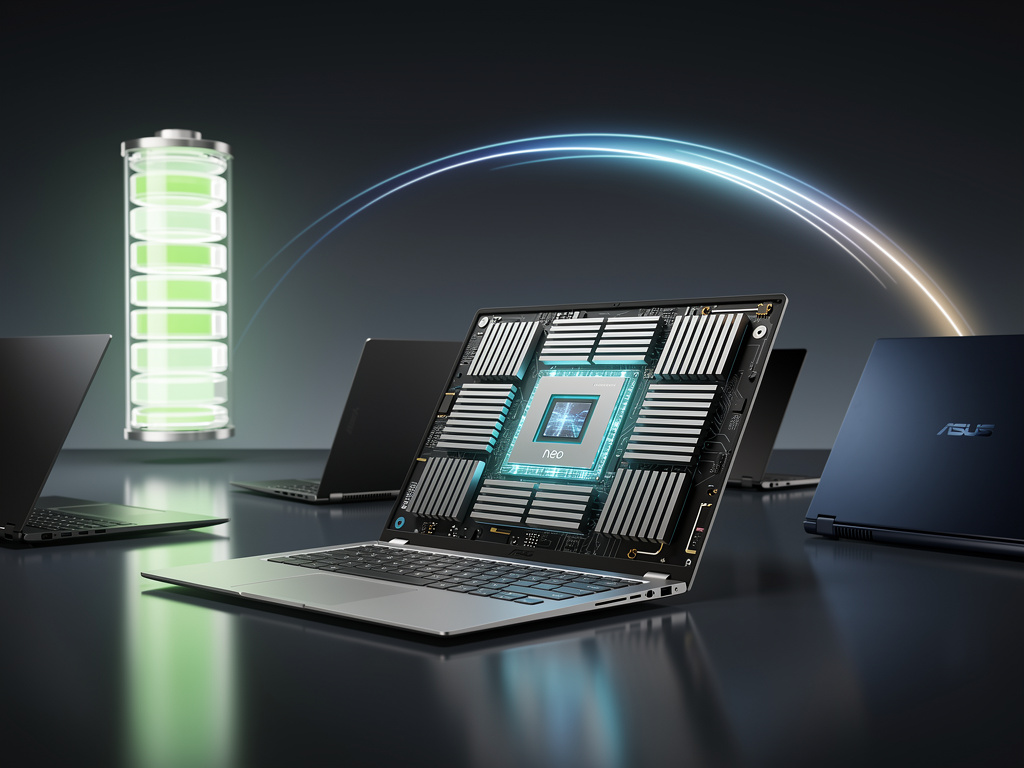
An executive from ASUS recently described Apple’s latest MacBook model as a significant disruption to the personal computer sector, sparking widespread discussion among manufacturers and consumers alike. In a statement highlighted on Slashdot, the ASUS leader pointed to the MacBook Neo’s design and performance features as elements that have caught the industry off guard. This comment arrives at a time when competition in laptops intensifies, with companies striving to match or exceed innovations from major players like Apple.
The MacBook Neo, unveiled in a low-key event last month, represents Apple’s continued push into custom silicon and integrated hardware. Unlike previous iterations, this model incorporates a new processor architecture that emphasizes efficiency and power management. Reports from Apple’s official newsroom detail how the Neo’s chip, dubbed the M5, handles multitasking with reduced energy consumption, allowing for longer battery life without sacrificing speed. This approach contrasts sharply with many Windows-based laptops, which often rely on third-party components from Intel or AMD, leading to varied performance across brands.
ASUS, known for its Zenbook and ROG series, has long positioned itself as a challenger in the premium laptop market. The executive’s admission of surprise underscores a broader sentiment within the PC world. For years, Apple has set benchmarks with its MacBook Air and Pro lines, but the Neo takes this further by introducing a display technology that adapts dynamically to ambient lighting and user tasks. According to analysis by AnandTech, this screen adjustment not only enhances visibility but also conserves power, contributing to the device’s claimed 25-hour battery runtime under typical use.
Industry observers suggest that the shock stems from Apple’s ability to control every aspect of its hardware and software stack. This vertical integration enables optimizations that PC makers struggle to replicate due to their dependence on external suppliers. For instance, while ASUS and competitors like Dell or HP can assemble high-quality machines, they must navigate compatibility issues between processors, graphics cards, and operating systems. Microsoft’s Windows ecosystem, while versatile, doesn’t offer the same level of fine-tuned harmony as macOS on Apple hardware. The ASUS executive’s words highlight this gap, implying that the Neo forces rivals to rethink their strategies.
To understand the full impact, consider the historical context. Apple’s shift to its own ARM-based chips began with the M1 in 2020, which outperformed many Intel-equipped laptops in benchmarks. Subsequent generations built on this foundation, but the Neo introduces refinements like advanced neural processing units for AI-driven features. These include real-time photo editing enhancements and voice recognition that operate offline, reducing reliance on cloud services. Data from IDC shows Apple’s market share in premium laptops growing steadily, from 15% in 2019 to over 25% last year, partly due to such advancements.
PC manufacturers have responded in various ways. ASUS, for example, has invested heavily in its own AI capabilities, as seen in the latest Zenbook models equipped with Intel’s Meteor Lake processors. These chips incorporate dedicated AI accelerators, aiming to compete with Apple’s offerings. However, reviews from The Verge indicate that while these efforts are commendable, they often fall short in seamless integration, leading to occasional software glitches or higher power draw. The executive’s statement may signal an internal push at ASUS to accelerate development, perhaps through closer partnerships with chipmakers.
Beyond hardware, the MacBook Neo influences software trends. Apple’s ecosystem encourages developers to optimize apps for its platform, resulting in a library of tools that run more efficiently on MacBooks. This creates a cycle where users prefer Apple devices for creative work, such as video editing or graphic design. In contrast, the PC side boasts greater hardware variety, allowing for custom builds tailored to specific needs like gaming or data analysis. Yet, the Neo’s appeal lies in its simplicity—plug in and go, with minimal setup required.
Economic factors play a role too. The Neo’s pricing starts at $1,299, positioning it as accessible yet premium. This undercuts some high-end PC laptops while offering superior build quality, including a chassis made from recycled aluminum. Sustainability has become a key selling point, with Apple emphasizing its carbon-neutral goals in marketing materials. PC brands are catching up; ASUS has introduced eco-friendly materials in select models, but the scale of Apple’s supply chain gives it an edge in implementation.
Critics argue that the “shock” might be overstated. Some analysts point out that PC innovation hasn’t stagnated. For instance, foldable laptops from Lenovo and hybrid designs from Microsoft Surface provide form factors Apple hasn’t explored yet. Moreover, the open nature of PCs allows for upgrades, a feature absent in Apple’s sealed designs. A report by Gartner predicts that while Apple will maintain its lead in ultraportables, the overall laptop market will see growth driven by Windows devices in enterprise and education sectors.
Still, the ASUS executive’s perspective resonates because it acknowledges a competitive pressure that could benefit consumers. When one company pushes boundaries, others follow, leading to better products across the board. Take battery life: pre-Neo, many laptops hovered around 10-15 hours, but now rivals are targeting 20+ hours to stay relevant. Similarly, display quality has improved industry-wide, with more models adopting OLED panels for richer colors and deeper blacks.
Looking ahead, the MacBook Neo might influence emerging technologies like augmented reality integration. Apple’s rumored AR glasses could pair effortlessly with the Neo, creating a unified experience. PC makers, including ASUS, are exploring similar avenues through collaborations with companies like Meta or Google. However, Apple’s head start in proprietary tech could widen the divide.
Consumer reactions have been mixed. Enthusiasts on forums like Reddit praise the Neo’s performance, citing smooth operation even under heavy loads. Professionals in fields like photography appreciate the color accuracy of its display, which rivals dedicated monitors. On the flip side, some users lament the lack of ports, a common Apple design choice that requires adapters for legacy devices. PC laptops often include more connectivity options out of the box, appealing to those who need versatility.
From a global standpoint, the Neo’s impact extends to supply chains. Apple’s reliance on TSMC for chip fabrication has spotlighted semiconductor shortages, affecting all manufacturers. ASUS, sourcing from multiple foundries, faces similar challenges but can diversify more easily. Geopolitical tensions, such as those between the US and China, add complexity, potentially delaying releases or increasing costs.
In terms of software security, the Neo benefits from Apple’s closed system, which minimizes vulnerabilities compared to the more open Windows environment. This makes it attractive for business users concerned about data breaches. PC companies counter with enhanced security features, like ASUS’s AI-driven threat detection in its business line.
Ultimately, the ASUS executive’s comment serves as a catalyst for reflection in the industry. It prompts questions about whether PC makers should pursue greater integration or double down on modularity. As competition heats up, we may see hybrid approaches, such as Windows laptops with custom co-processors designed in-house.
The broader implications touch on consumer choice. With Apple setting high standards, buyers gain access to refined products, but at the risk of reduced diversity if rivals can’t keep pace. Encouragingly, initiatives like ARM-based Windows devices from Qualcomm suggest a convergence of ideas, blending the best of both worlds.
In wrapping up this discussion, the MacBook Neo stands as a testament to Apple’s strategy of controlled innovation, prompting responses that could reshape the laptop market for years to come. Whether this “shock” leads to a wave of improvements or merely highlights existing divides remains to be seen, but it’s clear that the conversation it has ignited will drive progress forward.


 WebProNews is an iEntry Publication