
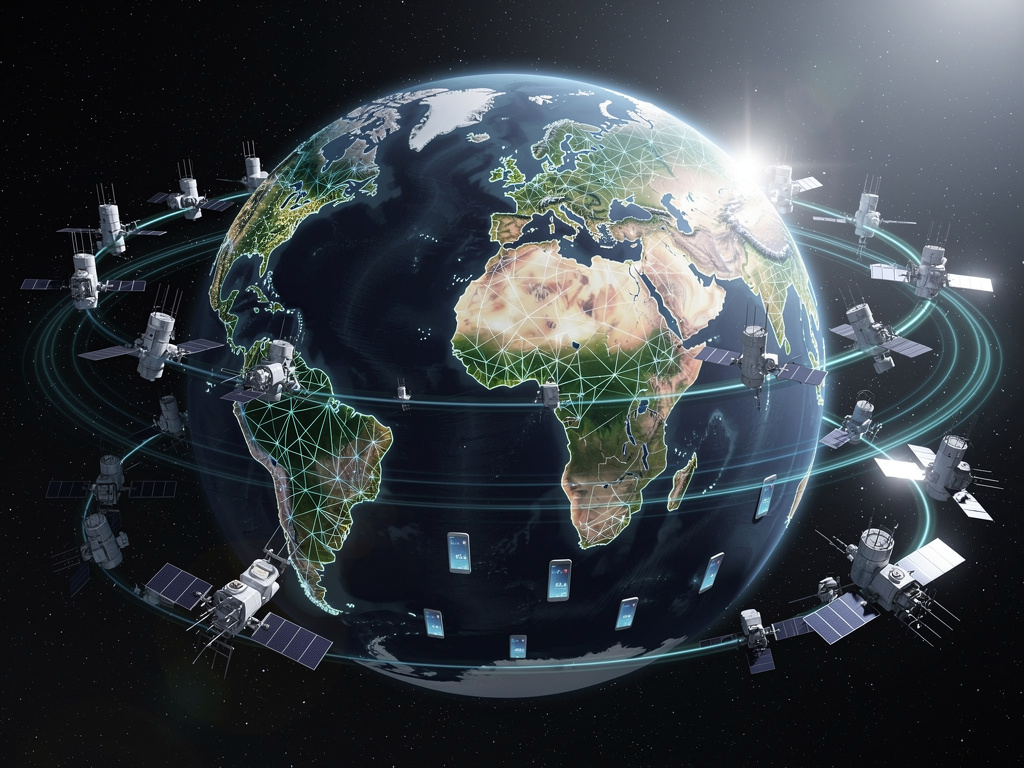
The Federal Communications Commission has granted AST SpaceMobile authorization to deploy up to 4,000 satellites in low Earth orbit, marking a pivotal moment in the emerging competition to provide direct-to-smartphone connectivity from space. The approval, announced in late 2024, positions the Texas-based company as a formidable challenger to SpaceX’s Starlink network and represents one of the largest satellite constellation licenses issued by U.S. regulators in recent years.
According to Engadget, the FCC’s approval allows AST SpaceMobile to construct, deploy, and operate a non-geostationary satellite orbit system using frequencies in the 1.4 GHz, 1.6 GHz, and 2 GHz bands. This regulatory milestone comes after years of development and testing, including successful demonstrations of space-based cellular connectivity that the company claims can work with standard, unmodified smartphones—a critical differentiator from other satellite communication systems that require specialized hardware or equipment.
The authorization represents a significant validation of AST SpaceMobile’s technology and business model, which aims to eliminate dead zones in cellular coverage by beaming connectivity directly to mobile devices from orbit. Unlike traditional satellite phones or systems requiring additional equipment, AST’s approach promises seamless integration with existing cellular networks, allowing carriers to extend their coverage areas without building additional terrestrial infrastructure. The company has already secured partnerships with major telecommunications providers including AT&T, Verizon, and Vodafone, representing potential access to hundreds of millions of subscribers worldwide.
Technical Architecture and Orbital Strategy
AST SpaceMobile’s satellite design differs substantially from conventional communication satellites. Each spacecraft features large phased-array antennas capable of creating cellular coverage zones comparable to terrestrial cell towers. The company’s BlueWalker 3 test satellite, launched in September 2022, deployed the largest-ever commercial communications array in low Earth orbit, measuring approximately 693 square feet when fully extended. This massive antenna enables the satellites to communicate directly with standard smartphones using the same cellular protocols employed by terrestrial networks.
The approved constellation will operate at altitudes between 700 and 800 kilometers, placing them in the lower tier of low Earth orbit. This positioning offers several advantages: lower latency compared to higher-altitude satellites, reduced signal loss, and the ability to provide stronger connections to mobile devices. However, satellites at this altitude move quickly relative to ground positions, requiring a large constellation to maintain continuous coverage. The 4,000-satellite authorization provides AST SpaceMobile with the capacity to deliver global coverage with redundancy and capacity for high-traffic areas.
Market Positioning Against Established Players
The FCC approval intensifies competition in the space-based connectivity sector, where SpaceX’s Starlink has established a commanding lead with more than 5,000 satellites already in orbit. However, Starlink’s initial focus on broadband internet service through dedicated ground terminals differs from AST SpaceMobile’s direct-to-smartphone approach. SpaceX has announced plans to offer direct-to-cellular service through a partnership with T-Mobile, but this service is expected to initially provide only text messaging capabilities, with voice and data services coming later.
Amazon’s Project Kuiper represents another major competitor, though its primary focus remains broadband internet service rather than cellular connectivity. Apple has also entered the satellite communications arena, partnering with Globalstar to provide emergency SOS services on iPhone 14 and later models. These offerings, while valuable for emergency situations, provide only limited functionality compared to the full cellular service that AST SpaceMobile envisions. The direct-to-device satellite market is projected to grow substantially, with industry analysts estimating the addressable market could reach tens of billions of dollars annually as the technology matures and adoption increases.
Regulatory Hurdles and International Coordination
The FCC’s approval includes several conditions designed to minimize interference with existing satellite systems and ensure responsible space operations. AST SpaceMobile must coordinate its operations with other satellite operators and comply with orbital debris mitigation requirements, including deorbiting satellites at the end of their operational lives. The company must also adhere to International Telecommunication Union regulations and obtain necessary authorizations from other countries where it plans to provide service.
Radio frequency coordination presents particular challenges for AST SpaceMobile’s operations. The frequencies allocated for its use are also employed by terrestrial cellular networks, requiring careful management to prevent interference. The company has worked extensively with the FCC and international regulators to develop protocols ensuring its space-based transmissions do not disrupt ground-based cellular services. These technical and regulatory complexities have contributed to the lengthy approval process, but successful navigation of these challenges positions AST SpaceMobile as a serious contender in the emerging space-based telecommunications sector.
Financial Implications and Deployment Timeline
Deploying 4,000 satellites represents a massive capital undertaking, with industry estimates suggesting total costs could exceed several billion dollars. AST SpaceMobile has raised significant funding through public markets and strategic partnerships with telecommunications carriers. The company went public through a special purpose acquisition company merger in 2021, providing access to capital markets for ongoing development and deployment. However, the company faces the challenge of generating revenue while simultaneously building out its constellation—a tension that has proven difficult for other space ventures.
The deployment timeline remains a critical factor in AST SpaceMobile’s competitive positioning. The company plans to launch its first commercial satellites, known as Block 1 BlueBirds, in 2025, with initial service expected to begin shortly thereafter. Full constellation deployment will likely take several years, requiring numerous launch campaigns using rockets from SpaceX, Blue Origin, or other launch providers. The pace of deployment will significantly impact the company’s ability to compete effectively against rivals who are simultaneously expanding their own networks.
Strategic Partnerships and Business Model
AST SpaceMobile’s business model relies heavily on partnerships with existing mobile network operators rather than attempting to compete directly with carriers. Under this approach, telecommunications companies can offer satellite connectivity as an extension of their terrestrial networks, providing seamless service to subscribers in areas without traditional cellular coverage. This strategy leverages existing customer relationships and billing systems while providing carriers with a competitive advantage in markets where coverage gaps exist.
The company has announced partnerships with more than 25 mobile network operators globally, representing over 1.5 billion existing subscribers. These agreements typically involve the carriers paying AST SpaceMobile for satellite capacity, with pricing structures based on usage or subscriber counts. This model provides multiple revenue streams and reduces market risk by spreading the company’s fortunes across numerous partners and geographic markets. The success of this approach will depend on seamless technical integration with carrier networks and competitive pricing that makes satellite connectivity economically viable for mainstream mobile subscribers.
Technical Challenges and Performance Expectations
Despite successful demonstrations, significant technical challenges remain in delivering consistent, high-quality cellular service from space. Signal strength represents a fundamental constraint—satellites hundreds of kilometers away must establish reliable connections with small smartphone antennas designed for terrestrial towers typically only a few kilometers distant. AST SpaceMobile’s large satellite antennas and sophisticated beamforming technology address this challenge, but real-world performance across diverse conditions and device types remains to be proven at scale.
Data throughput and capacity represent additional considerations. While AST SpaceMobile has demonstrated voice calls and data connectivity through its test satellites, the bandwidth available per user will likely be constrained compared to terrestrial networks, particularly in areas with many simultaneous users. The company positions its service as complementary to terrestrial networks rather than a replacement, focusing on coverage in remote areas, during emergencies, or in regions where building traditional infrastructure is economically impractical. Managing user expectations and pricing services appropriately for the delivered performance will be crucial for market acceptance.
Environmental and Astronomical Concerns
The proliferation of large satellite constellations has generated significant concern among astronomers and environmental advocates. AST SpaceMobile’s satellites, with their exceptionally large antennas, are particularly bright when illuminated by the sun, potentially interfering with astronomical observations. The BlueWalker 3 test satellite became one of the brightest objects in the night sky, prompting criticism from the astronomical community and raising questions about the impact of thousands of similar satellites.
The company has stated its commitment to working with astronomers to mitigate impacts, including potential modifications to satellite design and operational procedures. However, the fundamental tension between large antennas necessary for direct-to-smartphone connectivity and minimizing visual and radio frequency interference presents an ongoing challenge. Regulatory frameworks for addressing these concerns remain in development, and future restrictions or requirements could impact deployment plans and operational costs. As the space-based telecommunications industry continues its rapid expansion, balancing commercial objectives with scientific and environmental considerations will require ongoing attention from regulators, operators, and stakeholders.
Industry Transformation and Future Outlook
The FCC’s approval of AST SpaceMobile’s 4,000-satellite constellation signals a fundamental shift in telecommunications infrastructure. For decades, cellular coverage has been limited by the economics of tower deployment, leaving vast areas without reliable connectivity. Space-based systems promise to eliminate these coverage gaps, potentially connecting the billions of people currently without reliable mobile service. This transformation could have profound implications for economic development, emergency services, and global communications.
The coming years will determine whether AST SpaceMobile can successfully execute its ambitious vision and compete effectively against well-funded rivals. The company must navigate complex technical challenges, secure sufficient funding for deployment, deliver reliable service that meets user expectations, and do so while managing regulatory, environmental, and competitive pressures. Success would establish AST SpaceMobile as a major player in global telecommunications infrastructure, while failure would serve as a cautionary tale about the difficulties of commercializing space technology. Regardless of the outcome for any individual company, the race to provide direct-to-smartphone satellite connectivity represents a significant milestone in the ongoing convergence of space technology and terrestrial telecommunications networks, with implications that will reshape the industry for decades to come.


 WebProNews is an iEntry Publication