
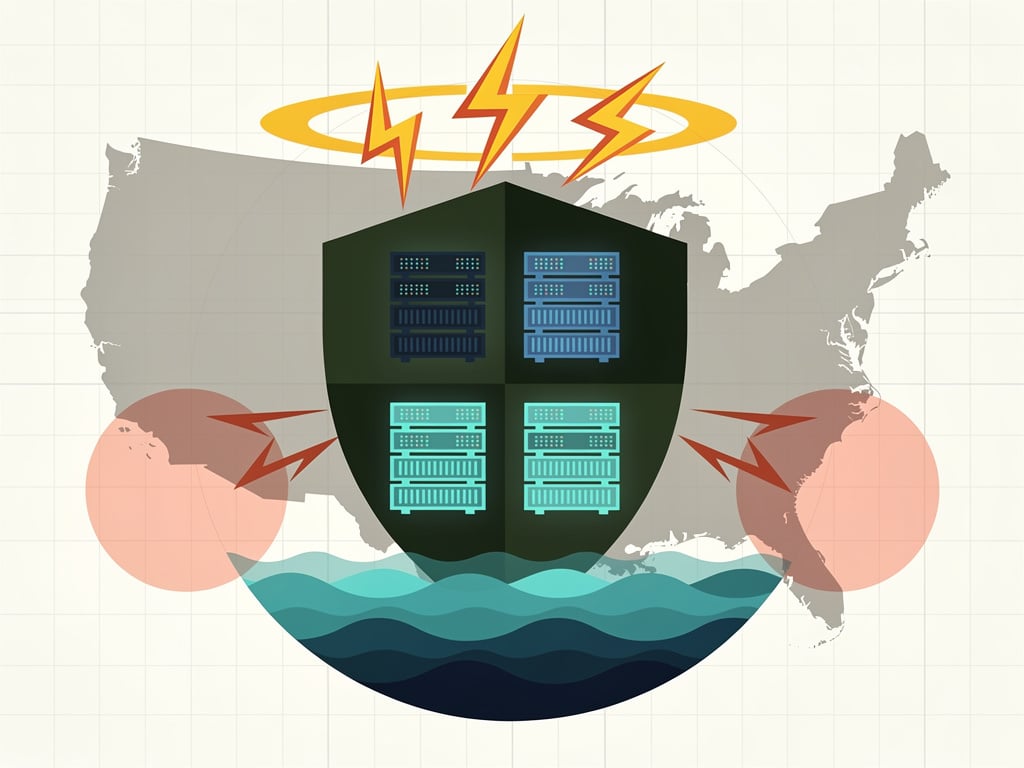
The U.S. Army has picked four installations for ambitious data center projects. Fort Bliss and Fort Hood in Texas. Fort Bragg in North Carolina. Dugway Proving Ground in Utah. Officials insist these won’t mirror the sprawling facilities built by tech giants that have sparked fierce local opposition across the country.
They plan to make their own power. They aim for net-zero water use. And they promise regular talks with neighbors. The approach stands in sharp contrast to private developers now facing moratoriums, petitions and canceled projects worth tens of billions.
Col. John Oliver serves as executive officer for deputy Army under secretary Dave Fitzgerald. He put it plainly. “Our data centers are not going to be just big buildings that are out in the middle of nowhere that are run by 10 people.” Oliver added that the Army lives alongside these communities. It will engage them routinely. “Because, yes, we understand that there’s been consternation with data centers.”
His comments reflect a calculated strategy. One born from watching commercial data center fights intensify. Since mid-2024 local groups have blocked or delayed projects totaling $64 billion. Trellis reported in May 2026 that at least 188 opposition organizations now operate in 40 states. Cancellations quadrupled to 25 in 2025. Twelve states have weighed moratorium bills.
Public sentiment has hardened. A Gallup survey from March 2026 found seven in 10 Americans oppose an AI data center in their area. Nearly half feel strongly against it. Gallup noted this marked the first time the pollster asked the question. Concerns center on electricity bills, water drawdown and noise.
Big Tech bears much of the blame in residents’ eyes. Facilities often suck millions of gallons daily. They strain aging grids. They arrive with little warning and few ongoing ties to the towns that host them. Rural areas feel the pinch hardest. Families on well water report dropping pressure. Farmers compete for resources. Erin Brockovich has highlighted these aquifer risks in recent public statements shared widely on social media.
The Army believes it can do better. Its facilities must generate their own electricity. No draw on local utilities. Water plans must achieve net-zero impact. Sites sit on existing military land already woven into regional economies. Soldiers, families and civilians already interact daily. That embedded presence, Army leaders argue, creates accountability Big Tech lacks.
Discussions with residents, water authorities and utilities have begun. Near Fort Bliss, Army representatives met with El Paso Water and El Paso Electric alongside Carlyle Group, the selected developer. The project covers 1,384 acres. It targets operations by 2027. Truthout detailed in May 2026 how Carlyle, a major private equity player, leads that effort. A second site at Dugway Proving Ground spans 1,201 acres. CyrusOne, backed by KKR and BlackRock’s Global Infrastructure Partners, will build it. Target date: 2029.
Yet local worries persist. Fort Bliss would become the third major data center in the El Paso area. Residents question impacts on water in an arid region and electricity demand that could rival or exceed the utility’s current customer base of roughly 460,000. Some call the arrangements sweetheart deals that subsidize private firms with federal land access.
Energy strategy forms the core safeguard. Army officials talk of geothermal, gas turbines or small modular nuclear reactors tailored to each location. The service already advances microreactor testing through programs like Janus, which eyes nine bases for potential deployment. Self-generation shields communities from rate hikes and blackouts tied to massive new loads. It also bolsters military resilience, a priority as AI reshapes defense computing needs.
Transparency will decide success or failure. Darrell West, senior fellow at the Brookings Institution, stresses this point. Residents demand specifics on consumption figures, noise profiles, sourcing choices and long-term costs. Without clear answers, even well-intentioned projects risk the same resistance that halted Google proposals in Indianapolis and sparked 20,000-signature petitions in Maryland.
Recent developments underscore the stakes. A House amendment in the 2026 NDAA, offered by Rep. Cory Mills of Florida, would restrict Defense Department land leases for data centers unless partners avoid certain foreign components. Federal News Network reported June 2026 that the Army warns this could scare off partners and stall modernization. The provision highlights broader tensions between security goals and rapid commercial buildout.
And opposition continues to spread. Maine became the first state to pass a ban on large-scale data centers. Wisconsin cities have given voters veto power over tax-supported projects. Prince George’s County, Maryland, paused all development to study effects. Robert Bryce’s Data Center Rejection Database now logs dozens of cases worldwide, from Indiana farmland to Irish towns. His June 2026 analysis on Substack showed rejections accelerating faster in early 2026 than all of 2025.
The Army’s timing feels deliberate. It launched its call for industry proposals in March 2026. Over 200 responses arrived. About 120 looked viable. Twenty have moved toward execution. More than 95 percent came from organizations new to Army contracting. The effort folds into a wider Strategic Capital Initiative that also targets manufacturing upgrades and critical minerals processing.
Officials envision more than isolated server farms. These could become mixed-use campuses. Military AI workloads alongside commercial capacity. Dedicated power plants. Jobs that stay local rather than vanishing behind chain-link fences staffed by skeleton crews. Oliver’s vision rejects the absentee landlord model. “We’re part of the communities that are there, and we are going to engage with them on a routine and regular basis.”
But execution will test the rhetoric. Data center demand shows no sign of slowing. AI training clusters grow ever larger. Power needs climb into the gigawatts. Water recycling technology has improved yet still faces limits in dry climates like West Texas or Utah deserts. Nuclear options promise clean, steady output but carry their own regulatory and public perception hurdles.
So far the service has avoided the loudest protests. No mass meetings packed with angry residents. No viral videos of overwhelmed wells. Community forums at places like Fort Bliss have stayed measured. Yet that calm could evaporate once dirt moves and water meters spin faster.
Success hinges on follow-through. Detailed public dashboards showing real-time usage. Commitments to hire locally. Investments in surrounding infrastructure like roads or schools. Continued dialogue even after ribbon-cuttings. The Army’s history as a long-term neighbor gives it credibility commercial operators cannot claim. Whether that translates into smoother approvals remains unproven.
One thing looks clear. The era of dropping data centers into fields with minimal consultation has ended. Communities now hold real power to delay or kill projects. Tech companies have learned this lesson through expensive lawsuits and abandoned sites. The Army hopes to write a different story. One where military discipline meets local engagement. One where self-sufficiency eases resource fears. The coming years at those four installations will show if the bet pays off.


 WebProNews is an iEntry Publication