
Arm Holdings just made the most consequential product announcement in its 35-year history. And it wasn’t incremental.
On July 15, 2025, the Cambridge-based chip designer unveiled what it calls the Arm AGI Compute Platform — a ground-up redesign of its CPU architecture purpose-built for artificial general intelligence workloads. The company isn’t tweaking existing cores or bolting on AI accelerators. It’s shipping an entirely new instruction set extension, new core microarchitectures, and a new system-level platform aimed squarely at the compute demands of next-generation AI models. The ambition is enormous. So is the risk.
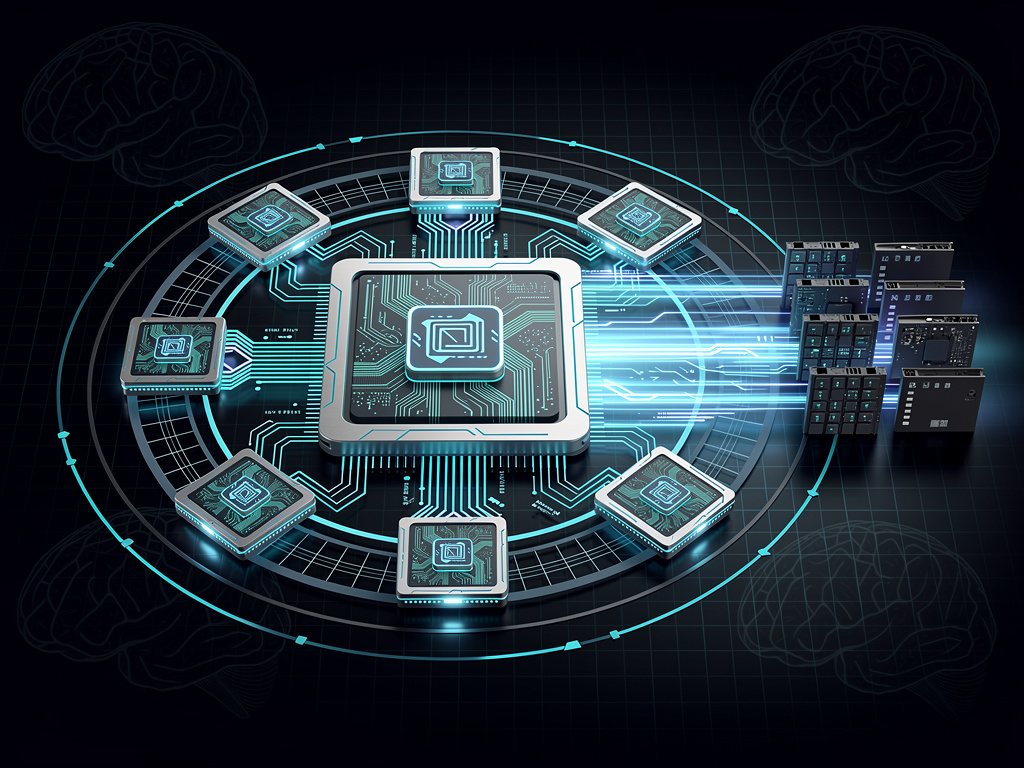
According to Arm’s official newsroom announcement, the AGI Compute Platform comprises three principal components: a new CPU core called Olympus, a dedicated AI-native instruction set extension called ASX (Arm Scalable Extensions for AI), and a chiplet-based system architecture called Arm Total Fabric that allows heterogeneous compute tiles to be composed into a single coherent system. The company says the platform is designed to scale from edge inference devices consuming single-digit watts to hyperscale data center processors consuming hundreds.
That’s a staggering span of ambition for a company that, until recently, was best known for powering smartphones.
Rene Haas, Arm’s CEO, framed the announcement in existential terms. “The compute requirements for AGI are unlike anything our industry has faced,” Haas said in the newsroom post. “We’ve spent three years building something that doesn’t just extend what we have — it reimagines the CPU for an AI-first world.” The three-year development timeline places the project’s inception around 2022, roughly coinciding with the explosion of large language models following OpenAI’s release of ChatGPT.
The Olympus core is the centerpiece. Arm describes it as a wide-issue, out-of-order CPU with native support for the new ASX instructions, which extend the existing Scalable Vector Extension (SVE2) architecture with operations specifically tailored for transformer inference, mixture-of-experts routing, and sparse matrix computation. The core reportedly supports FP8, FP4, and a new microscaling format that Arm developed in collaboration with Microsoft and other partners in the Open Compute Project’s Microscaling Formats working group. This matters because model quantization — the process of reducing numerical precision to shrink model size and accelerate inference — has become one of the most important practical techniques in deploying large AI systems affordably.
But the instruction set alone doesn’t explain why this announcement has sent ripples through the semiconductor industry. The real story is Arm Total Fabric.
For years, chipmakers have been moving toward chiplet-based designs — disaggregating monolithic processors into smaller silicon tiles connected by high-bandwidth interconnects. AMD pioneered this commercially with its Zen architecture. Intel has been pushing its Foveros and EMIB packaging technologies. Arm, as a licensor of IP rather than a manufacturer of chips, has historically stayed out of the system-level integration game, leaving that to its partners like Qualcomm, MediaTek, and the hyperscale cloud providers designing custom silicon.
No longer. Arm Total Fabric is a specification and reference architecture that defines how Olympus CPU tiles, GPU tiles, and third-party accelerator tiles (including NPUs and custom ASIC blocks) can be composed into a single coherent system using a standardized die-to-die interconnect. The company says the interconnect supports cache-coherent and non-coherent traffic, with bandwidth targets exceeding 1 terabyte per second between tiles. The specification is open enough that licensees can plug in their own custom accelerators alongside Arm’s CPU and GPU IP, but prescriptive enough that software written for one Arm Total Fabric system should be portable to another.
This is a direct challenge to Nvidia’s dominance in AI compute. Jensen Huang’s company controls the AI training and inference hardware market not just because its GPUs are fast, but because CUDA — its proprietary software platform — creates enormous switching costs. Developers write code in CUDA. Frameworks like PyTorch optimize for CUDA. The entire AI software stack, from research labs to production deployments, is saturated with CUDA dependencies. Arm is betting that a standardized, open system architecture can erode that lock-in over time, particularly as inference workloads — which are more diverse and cost-sensitive than training — become the dominant share of AI compute spending.
The timing is deliberate. Multiple industry analysts have projected that AI inference will account for more than 70% of total AI compute spending by 2027, up from roughly 40% in 2024. Training runs are massive but episodic. Inference is continuous, pervasive, and growing exponentially as AI models get embedded in everything from search engines to autonomous vehicles to industrial robots. And inference workloads, unlike training, don’t necessarily need the brute-force floating-point throughput of a high-end GPU. They need efficiency, low latency, and flexibility — precisely the attributes that Arm’s architecture has historically delivered in mobile and embedded markets.
The hyperscalers are paying attention. Arm’s announcement names Amazon Web Services, Google Cloud, Microsoft Azure, and Meta as early collaborators on the AGI Compute Platform. AWS has been designing Arm-based Graviton processors for years. Google uses Arm cores in its Axion processors. Microsoft has its Cobalt chips. Meta has been investing heavily in custom silicon for inference across its family of apps. These companies collectively represent the largest buyers of data center compute on the planet, and they’ve all been looking for ways to reduce their dependence on Nvidia.
None of them, however, have committed to specific products based on the new platform yet. The collaborations described in Arm’s announcement are framed as co-development partnerships, not product launches. This is important context. Arm is a design house. It doesn’t fabricate chips. The path from IP announcement to silicon in a server rack typically takes 18 to 24 months at minimum, and often longer when an entirely new architecture is involved. The first Olympus-based chips aren’t expected to ship until late 2026 or early 2027.
That’s an eternity in AI.
Consider what has happened in just the last six months. Nvidia launched its Blackwell Ultra GPUs. AMD shipped its MI350 accelerators. Google announced its seventh-generation TPU. Startups like Groq, Cerebras, and Etched have been shipping or demonstrating inference-optimized chips with radically different architectures. The competitive field is crowded, well-funded, and moving at a pace that makes 18-month product cycles feel glacial.
Arm’s counter-argument is that it isn’t competing with any single chip. It’s competing with the idea that AI compute must be built around a GPU-centric model. “We’re not trying to out-GPU Nvidia,” Haas said. “We’re building the CPU foundation that makes the entire system more efficient, more composable, and more open.” The pitch is that in a world where AI inference happens everywhere — in cloud data centers, in telecom edge nodes, in cars, in factories, in phones — a unified, scalable CPU architecture with native AI capabilities is more valuable than a collection of point solutions optimized for narrow workloads.
It’s a compelling argument. Whether it’s a winning one depends on execution.
The software challenge looms large. Arm says it is releasing a full software stack alongside the hardware IP, including compiler support for ASX instructions in LLVM, optimized AI framework integrations for PyTorch and JAX, and a new profiling and tuning toolkit. The company is also working with the open-source community on kernel-level support in Linux. But building a software platform that can rival CUDA’s depth and maturity is a multi-year, multi-billion-dollar undertaking. Arm has tried before — its Compute Library and NN SDK have been available for years — with limited traction in the data center. The company is betting that the scale of the inference opportunity, combined with growing frustration over Nvidia’s pricing and supply constraints, will motivate the industry to invest in alternatives this time.
There’s historical precedent for this kind of architectural transition, though it doesn’t always favor the challenger. Intel’s x86 architecture dominated servers for decades despite being technically inferior to alternatives in many respects, because the software inertia was simply too great. Arm itself spent more than a decade trying to break into the data center before AWS’s Graviton chips finally proved the model could work at scale. Even now, Arm-based servers represent a minority of total data center compute, though their share is growing rapidly.
The financial implications for Arm are significant. The company, which went public on Nasdaq in September 2023, derives the vast majority of its revenue from royalties on chips shipped by its licensees and from upfront licensing fees for its IP. A successful AGI Compute Platform could dramatically expand Arm’s addressable market in the data center, where average selling prices and royalty rates are far higher than in mobile. Arm’s stock has been volatile since its IPO, swinging on investor sentiment about AI exposure. This announcement gives the bull case a concrete product to point to.
But the bear case is equally concrete. Arm is entering a market where its largest potential customers — the hyperscalers — are also its most sophisticated competitors. AWS, Google, and Microsoft all have world-class chip design teams. They license Arm’s instruction set architecture, but they design their own cores, their own interconnects, and their own system architectures. If Arm Total Fabric is too prescriptive, the hyperscalers may ignore it in favor of their own proprietary approaches. If it’s too loose, it won’t deliver the software portability that’s supposed to be its key advantage.
There’s also the question of how Arm’s existing licensees in the mobile space will react. Companies like Qualcomm and MediaTek have built enormous businesses around Arm’s Cortex CPU cores and Mali/Immortalis GPU cores. The AGI Compute Platform represents a significant expansion of Arm’s architectural ambitions — and potentially a significant expansion of what Arm charges for its IP. Qualcomm, which has been in a protracted legal dispute with Arm over licensing terms related to its Nuvia acquisition, may view this as further evidence that Arm is overreaching. The relationship between Arm and its largest mobile licensees has been strained for years, and a move into data center system-level architecture could exacerbate those tensions.
Still, the strategic logic is hard to argue with. The world is building toward a future where AI inference is ubiquitous — running in every device, on every network edge, in every cloud region. The company that provides the common architectural foundation for that build-out will capture enormous value. Arm already has the broadest installed base of any processor architecture on Earth, with more than 280 billion chips shipped to date. If it can extend that reach into AI-native compute without fragmenting its existing partnerships, the upside is immense.
The announcement also signals something broader about the state of the semiconductor industry in 2025. The AI hardware market is entering a new phase. The initial land grab — dominated by Nvidia’s GPUs and the training workloads of frontier model developers — is giving way to a more distributed, more heterogeneous compute model where inference efficiency, total cost of ownership, and system-level integration matter as much as raw peak performance. This is the kind of market transition that creates openings for architectural challengers. It’s also the kind that generates enormous hype, followed by years of grinding execution before the winners emerge.
Arm is placing a massive bet that the CPU — long dismissed as a supporting player in AI workloads — can reclaim a central role. The Olympus core, the ASX instruction set, and the Total Fabric system architecture represent the most ambitious expansion of the Arm architecture since the company introduced its 64-bit instruction set in 2011. That transition took nearly a decade to fully play out. This one may move faster, driven by the sheer economic gravity of AI spending. Or it may stall, overwhelmed by the pace of competition and the depth of Nvidia’s software moat.
Either way, the industry just got a lot more interesting.


 WebProNews is an iEntry Publication