
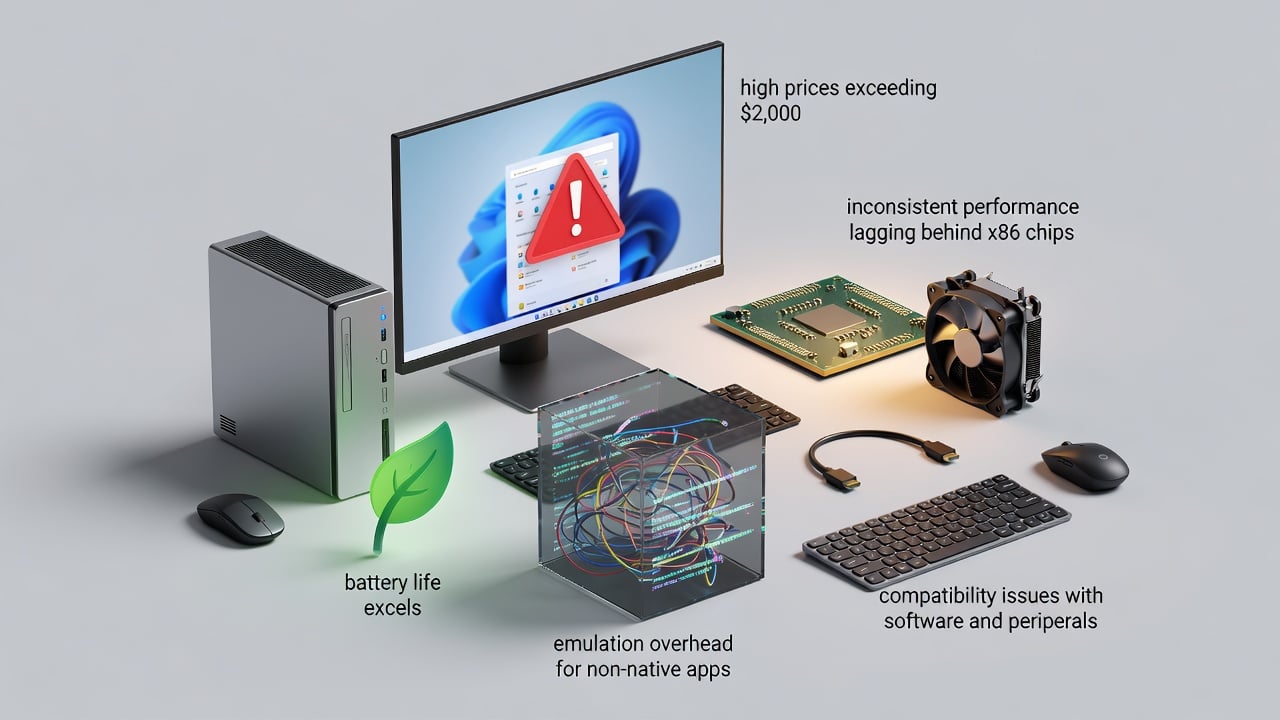
The shift toward Arm-based processors on desktop computers has gained noticeable momentum in recent years, yet a recent hands-on examination from The Register highlights persistent challenges that keep the platform from widespread adoption among everyday users. The article examines a high-end Arm64 Windows machine equipped with a Snapdragon X Elite processor, revealing a combination of elevated costs and underwhelming performance that together create a difficult case for switching away from traditional x86 systems.
At the center of the discussion stands a device priced well above comparable Intel or AMD alternatives, often exceeding two thousand dollars for configurations that still fall short in raw speed. This premium stems partly from the relative immaturity of the Arm desktop market, where component suppliers charge more due to lower production volumes and limited competition. Manufacturers must also account for additional engineering expenses associated with adapting motherboards, cooling systems, and firmware specifically for the Arm instruction set. The result is a product that feels positioned more as an experimental luxury item than a practical computing solution for most consumers.
Performance measurements conducted by the publication paint a mixed picture. In synthetic benchmarks, the Snapdragon X Elite chip frequently trails behind mid-range x86 processors from the previous generation. Tasks that involve heavy multi-threaded workloads, such as video encoding or 3D rendering, show the Arm system lagging by margins of twenty to forty percent in some cases. These gaps appear most pronounced in applications that have not received native Arm64 recompilation, forcing the operating system to rely on emulation layers that introduce noticeable overhead.
The emulation story deserves particular attention because it reveals both progress and remaining limitations. Microsoft has invested heavily in Prism, its translation technology that allows x86 applications to run on Arm hardware. For many everyday programs, including web browsers and office productivity tools, the translation works efficiently enough that users might not detect any difference during light use. However, the overhead becomes obvious when running demanding creative software or specialized engineering applications that have not yet been rebuilt for native execution. Developers have been slow to prioritize Arm64 versions, partly because the potential user base remains small compared with the massive installed base of x86 machines.
Battery life presents one area where Arm architecture demonstrates clear advantages. The tested system managed to deliver impressive runtime figures during video playback and web browsing sessions, often doubling the endurance offered by similarly priced Windows laptops using Intel processors. This efficiency stems from the fundamental design philosophy behind Arm chips, which prioritize lower power consumption through simpler instruction decoding and aggressive use of specialized processing units. For users who travel frequently and value all-day computing without plugging in, these gains could justify some performance trade-offs.
Compatibility issues extend beyond raw speed. The article documents several instances where peripheral devices refused to function correctly or required additional driver downloads that were not readily available through standard Windows Update channels. Printers, external storage arrays, and certain docking stations presented particular difficulties, forcing users to hunt through manufacturer websites for Arm-specific software. While the situation has improved since the initial launch of Windows on Arm devices, the fragmented support creates friction that many buyers would prefer to avoid.
Software availability continues to represent a significant barrier. Although major applications from Adobe, Google, and Microsoft now offer native Arm64 builds, numerous niche programs essential to specific professions still lack proper versions. Engineers working with older CAD packages, musicians relying on legacy digital audio workstations, and data analysts using specialized statistical tools frequently encounter warnings about compatibility or outright failure to launch. The situation creates a chicken-and-egg problem where software vendors hesitate to invest in Arm development until hardware sales increase, while potential buyers stay away until their required applications become available.
The hardware ecosystem surrounding Arm desktop machines also trails behind x86 offerings. Expansion options remain limited, with fewer choices for graphics cards, high-speed storage controllers, and specialized add-in cards. Gamers in particular face restricted selections because most modern game titles depend on graphics pipelines optimized for x86 architectures and DirectX implementations that still carry emulation penalties on Arm systems. While cloud gaming services can help bridge some gaps, local performance for demanding titles continues to disappoint compared with mid-range discrete GPUs available in traditional desktop builds.
Thermal management presents another consideration that affects both performance and user experience. The Snapdragon X Elite runs relatively cool under light loads, allowing fanless or low-noise designs that appeal to users sensitive to acoustic output. However, sustained heavy workloads cause the processor to throttle aggressively to maintain acceptable temperatures, resulting in inconsistent frame rates during extended gaming sessions or prolonged export tasks. This behavior contrasts with x86 systems that can maintain higher clocks for longer periods thanks to more sophisticated cooling solutions commonly available in desktop towers.
Pricing remains the most immediate obstacle for potential adopters. The reviewed configuration carried a suggested retail price that positioned it against workstations equipped with powerful discrete graphics and faster storage subsystems. For the same expenditure, buyers could acquire an Intel Core Ultra or AMD Ryzen system offering superior multi-core performance and broader software compatibility. The Arm machine would need to demonstrate clear benefits in areas beyond battery life to justify its cost, yet the tested unit struggled to establish those advantages in practical scenarios.
Microsoft continues pushing Windows on Arm through both software updates and partnerships with hardware makers. The company has committed to improving emulation performance and encouraging developers to create native applications. Recent builds of Windows 11 have shown measurable gains in translation efficiency, particularly for user interface elements and background services. Nevertheless, the fundamental architectural differences between Arm and x86 mean that certain low-level operations will likely always carry some penalty until applications are fully recompiled.
The broader market context helps explain why Arm desktop adoption has progressed more slowly than many analysts predicted. Consumer enthusiasm for thin and light laptops has driven strong sales of Arm-based systems from Apple, whose M-series chips have set high standards for performance and efficiency. Yet the Windows ecosystem operates under different constraints, with a much larger emphasis on backward compatibility and enterprise requirements that complicate the transition. Corporate IT departments remain cautious about certifying Arm hardware for widespread deployment, preferring the known stability of x86 platforms that have dominated business computing for decades.
Future prospects for Arm on the desktop depend largely on how quickly the remaining software gaps close and whether manufacturers can bring costs down to competitive levels. Qualcomm has announced successive generations of Snapdragon X chips that promise higher clock speeds and improved integrated graphics, while other silicon vendors explore their own Arm-based designs for Windows. If these next iterations can deliver performance parity with mainstream x86 processors while maintaining their efficiency advantages, the value proposition could strengthen considerably.
For now, the evidence presented in the examination suggests that Arm64 desktop computing occupies a specialized niche rather than serving as a direct replacement for conventional systems. Enthusiasts willing to tolerate compatibility quirks and performance inconsistencies in exchange for better battery life or unique form factors may find satisfaction with current offerings. Most users, however, will likely continue selecting x86 machines that provide familiar operation, lower prices, and access to the fullest range of available software.
The experience also underscores how architectural transitions in personal computing require coordination across multiple industries. Hardware designers, software developers, peripheral manufacturers, and operating system teams must align their efforts to create a compelling alternative to the established order. Until that alignment produces consistent real-world benefits that outweigh the switching costs, Arm on the desktop will remain an interesting experiment rather than a mainstream choice. The coming years will determine whether these platforms can overcome their current limitations or if they will stay confined to specific use cases where their efficiency characteristics provide decisive advantages.


 WebProNews is an iEntry Publication