
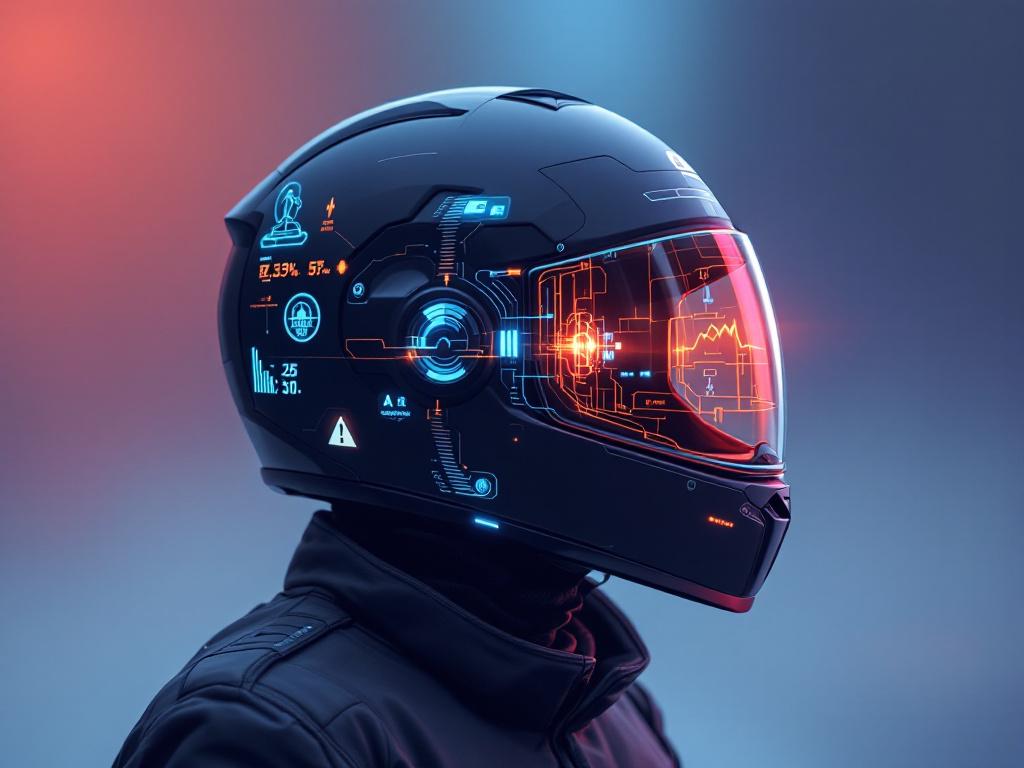
Revolutionizing Two-Wheeled Journeys: Helmets That Fuse Reality with Digital Overlays
In the fast-evolving world of motorcycle gear, a new breed of helmets is emerging that promises to transform the riding experience into something akin to piloting a fighter jet. These aren’t just protective shells; they’re sophisticated devices packed with augmented reality (AR), artificial intelligence (AI), and connectivity features that overlay digital information onto the real world, much like Apple’s Vision Pro headset does for everyday computing. Riders can now glance at navigation cues, speed readouts, and even blind-spot warnings without ever taking their eyes off the road. This shift represents a convergence of safety engineering and cutting-edge tech, driven by companies pushing the boundaries of what’s possible on two wheels.
At the forefront is Shoei’s latest innovation, a helmet that integrates a visor-mounted heads-up display (HUD) powered by AI. As detailed in a recent piece from New Atlas, this system projects essential data directly into the rider’s field of view, reducing distractions by eliminating the need to look down at handlebar-mounted screens or smartphones. The technology draws parallels to aviation helmets, where pilots receive real-time intel without averting their gaze. For motorcyclists, this means safer navigation through urban sprawl or winding highways, with AR overlays highlighting potential hazards like approaching vehicles or sharp turns.
But Shoei isn’t alone in this race. Cardo Systems has unveiled its Beyond series, a lineup that combines two decades of communication expertise with helmet design. According to Motorcycle.com, the Beyond GTS and GT models feature built-in speakers, microphones, and connectivity for seamless group chats, music streaming, and even voice-activated controls. What sets them apart is the fusion of safety and entertainment—crash detection sensors that alert emergency contacts, paired with immersive audio that doesn’t compromise awareness of ambient sounds. This holistic approach addresses a key pain point: riders often juggle multiple gadgets, from Bluetooth headsets to GPS units, which can clutter the experience and introduce risks.
Pioneering AR Integration in Rider Safety
The inspiration for these advancements often stems from broader tech trends, such as Apple’s Vision Pro, which has popularized spatial computing. A compelling example comes from an MSN article describing a helmet that mirrors the Vision Pro’s capabilities, offering a “bike-friendly” version with AR displays for real-time data. Unlike bulky VR headsets, these helmets prioritize lightweight materials and aerodynamics to ensure they don’t hinder performance at high speeds. Industry insiders note that the challenge lies in balancing tech integration with core safety standards, like those set by the Department of Transportation (DOT) or European ECE certifications.
Delving deeper, startups like Intelligent Cranium Helmets are taking this further with AI-driven features showcased at CES 2025. As reported by Tech Times, their helmet boasts a 240-degree field of view augmented by front-facing cameras, effectively eliminating blind spots—a perennial danger for riders. This system uses AI to process visual data in real time, alerting users to obstacles via haptic feedback or visual cues. The innovation extends to crash detection, similar to Apple’s fall detection on watches, which can automatically notify emergency services with location data, potentially saving lives in remote areas.
Posts on X (formerly Twitter) reflect growing excitement around these developments. Riders and tech enthusiasts are buzzing about how such helmets could integrate with smartwatches or even electric bikes, with one user highlighting Shoei’s AR display as a game-changer for reducing phone dependency. Another post drew comparisons to the Vision Pro’s modular design, suggesting future helmets might offer customizable AR modules for different riding styles, from touring to off-road adventures. This social sentiment underscores a demand for tech that enhances rather than complicates the ride.
Market Dynamics and Growth Projections
The global market for these advanced helmets is surging, fueled by heightened awareness of road safety and technological progress. A report from Accio projects the motorcycle helmet sector to grow at a compound annual rate of 4.8% to 6.7% through 2033, reaching between $6.05 billion and $9.57 billion. Smart tech and modular designs are key drivers, with modular helmets seeing a 99% spike in search interest in mid-2025, likely tied to high-profile launches. Full-face models dominate due to their superior protection, but the integration of smart features is shifting preferences toward hybrids that offer both safety and connectivity.
In regions like Asia Pacific, where two-wheeler usage is massive, these innovations are particularly impactful. Newstrail notes that full-face helmets account for over 53% of the market share, driven by regulations mandating helmet use in countries like India and China. Technological breakthroughs, such as AI-enhanced ventilation systems that adjust based on speed and weather, are making these helmets more appealing to everyday commuters. For industry players, this means opportunities in e-commerce, where consumers can customize helmets with add-ons like AR visors or integrated cameras.
However, challenges persist. Cost remains a barrier; high-end models like Cardo’s Beyond series can retail for upwards of $500, pricing out casual riders. Durability is another concern—exposing delicate electronics to vibrations, rain, and impacts requires robust engineering. Privacy issues also loom, as helmets with cameras and data-sharing capabilities raise questions about surveillance and data security, especially in connected ecosystems.
Engineering Challenges and Future Horizons
Engineers are tackling these hurdles with innovative materials and designs. For instance, Simpson Motorcycle Helmets has partnered with Twiceme for NFC-enabled emergency ID tech, as covered in Hot Bike Magazine. This allows first responders to access medical info via a simple tap, without needing to remove the helmet. Such features build on earlier innovations like airbag vests from Helite, which deploy in milliseconds during falls, as highlighted in older posts on X referencing WIRED coverage from CES 2019.
Looking ahead, the fusion of AR with other tech could lead to even more immersive experiences. Imagine helmets syncing with bike telematics for predictive maintenance alerts or integrating with 5G for real-time traffic updates. TechGenyz discusses how AI and HUDs are redefining safety, though adoption hinges on addressing regulations that vary by jurisdiction. In the U.S., for example, helmets must meet federal standards, but adding AR doesn’t yet have specific guidelines, leaving room for regulatory evolution.
Industry insiders speculate that collaborations between tech giants and helmet makers could accelerate progress. Apple’s ecosystem, with its emphasis on seamless integration, might inspire partnerships—think helmets that pair effortlessly with iPhones for AR navigation. Recent X posts echo this, with users envisioning Vision Pro-like spatial audio in helmets for directional sound cues, enhancing situational awareness.
Pushing Boundaries with Radical Designs
Not all innovations are digital; some rethink the helmet’s physical form. Roof Helmets’ DJagger model opens from the back, as described in a New Atlas piece (distinct from their Shoei coverage), offering easier access for glasses-wearers or those with beards. This mechanical ingenuity complements tech features, creating helmets that are as user-friendly as they are advanced.
Meanwhile, AGVSPORT outlines ten smart innovations transforming safety, from built-in air filters to biometric monitoring, in their blog. These include helmets with integrated health sensors that track heart rate or fatigue, alerting riders to pull over if needed. Such proactive measures could reduce accidents caused by rider impairment, a factor in many crashes.
As these technologies mature, the line between motorcycle helmet and wearable computer blurs. Riders in 2025 and beyond might find themselves in a augmented reality bubble, where the road ahead is annotated with data streams, all while maintaining the thrill of the open air. Yet, the true test will be in real-world application—will these helmets save lives, or remain niche gadgets for enthusiasts?
Sustaining Momentum in a Competitive Arena
Competition is heating up, with brands like Sena and others entering the fray. The Exactitude Consultancy report via OpenPR forecasts rapid growth in the smart helmet segment, propelled by IoT, AR, and 5G. This momentum is evident in market analyses predicting dominance in connected mobility.
Social platforms like X amplify this buzz, with posts praising helmets that project speed and GPS directly in view, reducing distractions. One viral thread compared it to fighter pilot gear, sparking discussions on affordability and accessibility.
Ultimately, these helmets embody a broader trend toward intelligent personal mobility. By blending protection with digital enhancement, they’re not just gear—they’re companions that could redefine riding for generations. As adoption grows, expect refinements that make high-tech safety a standard, not a luxury, on roads worldwide.


 WebProNews is an iEntry Publication