
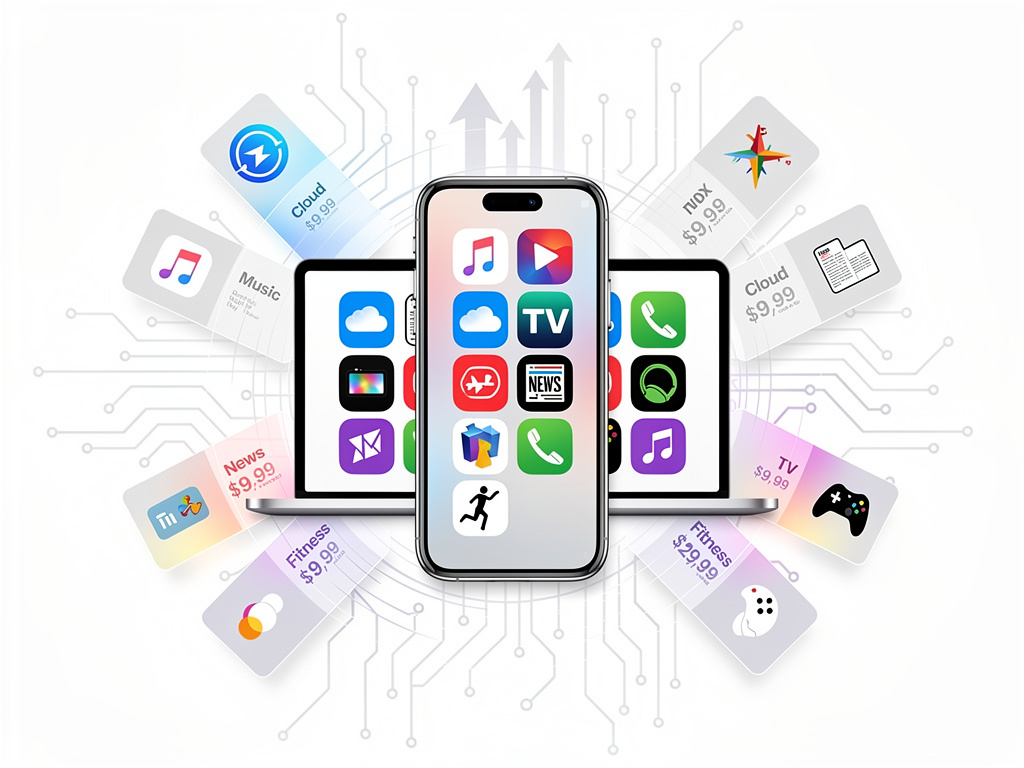
Apple Inc. is embarking on an ambitious expansion of its services strategy, introducing a wave of new subscription bundles and premium upgrade options that signal a fundamental shift in how the technology giant monetizes its ecosystem. According to 9to5Mac, the company is preparing to roll out multiple new bundling options and paid upgrade tiers across its services portfolio, representing one of the most significant restructurings of its revenue model since the introduction of Apple One in 2020.
The move comes as Apple faces mounting pressure to diversify revenue streams beyond hardware sales, which have shown signs of plateauing in mature markets. Industry analysts have long predicted that services would become increasingly critical to Apple’s financial performance, and the company’s latest initiatives suggest it is doubling down on this strategy. The new bundles are expected to combine existing services like Apple Music, Apple TV+, iCloud+, and Apple Arcade with newly introduced premium tiers that offer enhanced features and capabilities previously unavailable to consumers.
What distinguishes this expansion from previous efforts is the granularity and flexibility Apple appears to be building into its offerings. Rather than simply creating larger bundles with more services, the company is reportedly developing a tiered approach that allows customers to customize their subscriptions based on specific needs and usage patterns. This represents a departure from the relatively rigid structure of current Apple One plans, which offer three fixed tiers: Individual, Family, and Premier.
The Economics Behind Apple’s Services Push
The financial logic driving Apple’s services expansion is compelling. Services revenue has consistently demonstrated higher profit margins than hardware sales, with gross margins often exceeding 70 percent compared to the 35-40 percent typical of iPhone sales. For a company of Apple’s scale, even modest increases in services adoption can translate into billions of dollars in additional revenue. In its most recent fiscal year, Apple’s services segment generated over $85 billion in revenue, representing nearly 20 percent of total company revenue and growing at a faster rate than hardware categories.
The introduction of paid upgrades within existing services creates additional monetization opportunities without requiring the development of entirely new products. For instance, Apple Music could offer a premium tier with lossless audio quality or exclusive content, while iCloud+ might introduce advanced storage management features or enhanced privacy tools. These incremental improvements allow Apple to extract more value from its existing user base while providing genuine utility to customers willing to pay for enhanced experiences.
Moreover, the bundling strategy serves a defensive purpose in an increasingly competitive streaming and digital services market. Companies like Amazon, Google, and Microsoft have all invested heavily in subscription services, creating ecosystems that rival Apple’s in breadth if not always in integration. By offering more compelling bundle options, Apple can increase customer lifetime value and reduce churn by making it more difficult for users to leave the ecosystem without sacrificing multiple services simultaneously.
Competitive Dynamics in the Subscription Economy
Apple’s timing for this expansion reflects broader trends in the subscription economy, where companies across industries have discovered that bundling disparate services creates both customer value and competitive moats. Amazon Prime pioneered this approach in the consumer technology space, combining shipping benefits with streaming video, music, and other perks to create a service that now boasts over 200 million global subscribers. Apple’s challenge is to replicate this success while maintaining the premium positioning that defines its brand.
The competitive pressure extends beyond traditional technology companies. Media conglomerates like Disney have successfully bundled Disney+, Hulu, and ESPN+ to compete more effectively against Netflix and other streaming services. Spotify continues to expand beyond music into podcasts and audiobooks, while YouTube Premium combines ad-free viewing with music streaming. In this environment, standalone services face increasing difficulty attracting and retaining subscribers, making bundling not just an opportunity but a necessity for sustained growth.
Apple’s advantages in this competition are significant but not insurmountable. The company’s tight integration between hardware and software creates natural opportunities for service differentiation that competitors struggle to match. Features like Family Sharing, seamless device handoff, and deep system-level integration provide genuine value that extends beyond the services themselves. However, Apple’s premium pricing strategy means it must consistently deliver superior experiences to justify the cost premium over alternatives.
Implementation Challenges and Strategic Risks
Despite the strategic logic behind expanded bundling and premium tiers, Apple faces several implementation challenges. The company’s services portfolio spans diverse categories with different usage patterns and value propositions, making it difficult to create bundles that appeal to broad customer segments. A user who values iCloud storage may have no interest in Apple Arcade, while an Apple TV+ subscriber might already use Spotify instead of Apple Music. Creating flexible bundles that accommodate these varying preferences without becoming too complex requires careful product design and pricing strategy.
There is also the risk of cannibalization, where customers who currently pay for multiple services separately switch to cheaper bundle options, resulting in lower overall revenue despite higher adoption rates. Apple must price its bundles to maximize total revenue rather than simply maximizing subscriber counts. This calculation becomes more complex when considering the different margins and customer acquisition costs associated with each service in the portfolio.
The introduction of premium tiers within existing services presents its own challenges. Apple has built its reputation on delivering polished, complete experiences rather than artificially limiting features to create upsell opportunities. If customers perceive premium tiers as extracting additional payment for features that should be included in base subscriptions, it could damage brand perception and customer loyalty. The company must ensure that premium offerings represent genuine enhancements rather than withheld functionality.
Privacy and Platform Power Considerations
Apple’s services expansion occurs against a backdrop of increased regulatory scrutiny of platform power and data practices. The company has positioned privacy as a key differentiator, using end-to-end encryption and on-device processing to distinguish its services from advertising-supported alternatives. However, as Apple’s services business grows, regulators and competitors have raised questions about whether the company leverages its control of iOS and the App Store to unfairly advantage its own services over third-party alternatives.
The European Union’s Digital Markets Act and similar regulations in other jurisdictions impose new constraints on how platform operators can bundle services and preference their own offerings. Apple must navigate these regulatory requirements while still creating compelling bundles that drive services adoption. The company’s recent concessions on App Store policies in Europe, including allowing alternative payment systems and app marketplaces, demonstrate the real constraints regulation can impose on business strategy.
From a privacy perspective, expanded services create both opportunities and risks. Apple can leverage its privacy-focused approach to justify premium pricing and differentiate from competitors who rely on advertising and data monetization. However, more extensive service usage also means Apple collects more data about customer behavior, even if that data is processed with strong privacy protections. The company must maintain its privacy commitments while building the personalization and recommendation features that make modern digital services compelling.
The Path Forward for Apple’s Services Strategy
Looking ahead, Apple’s success with expanded bundles and premium tiers will depend on execution across multiple dimensions. The company must design offerings that provide clear value while maintaining pricing discipline, implement them across global markets with varying competitive dynamics and regulatory requirements, and communicate the changes effectively to avoid customer confusion or backlash. The technical infrastructure to support flexible bundling and seamless upgrades across services must work flawlessly, meeting the high standards Apple customers expect.
The broader strategic question is whether services can truly become the growth engine Apple needs as hardware sales mature. While services revenue has grown consistently, much of that growth has come from the expanding installed base of devices rather than increasing per-device monetization. As smartphone penetration reaches saturation in developed markets and replacement cycles lengthen, Apple needs services that can drive revenue growth independent of device sales. Premium tiers and sophisticated bundling represent one approach to achieving this goal, but success is far from guaranteed.
Ultimately, Apple’s services expansion reflects the company’s recognition that its future depends on deepening relationships with existing customers rather than simply selling them new hardware every few years. By offering more ways for customers to engage with the Apple ecosystem through services, the company aims to increase customer lifetime value and create more predictable, recurring revenue streams. Whether this strategy succeeds in driving meaningful growth while maintaining the brand premium that defines Apple will become clearer as these new offerings roll out in the coming months. For an industry watching closely, Apple’s approach to services bundling may well define the next chapter in the evolution of platform economics and digital service monetization.


 WebProNews is an iEntry Publication