
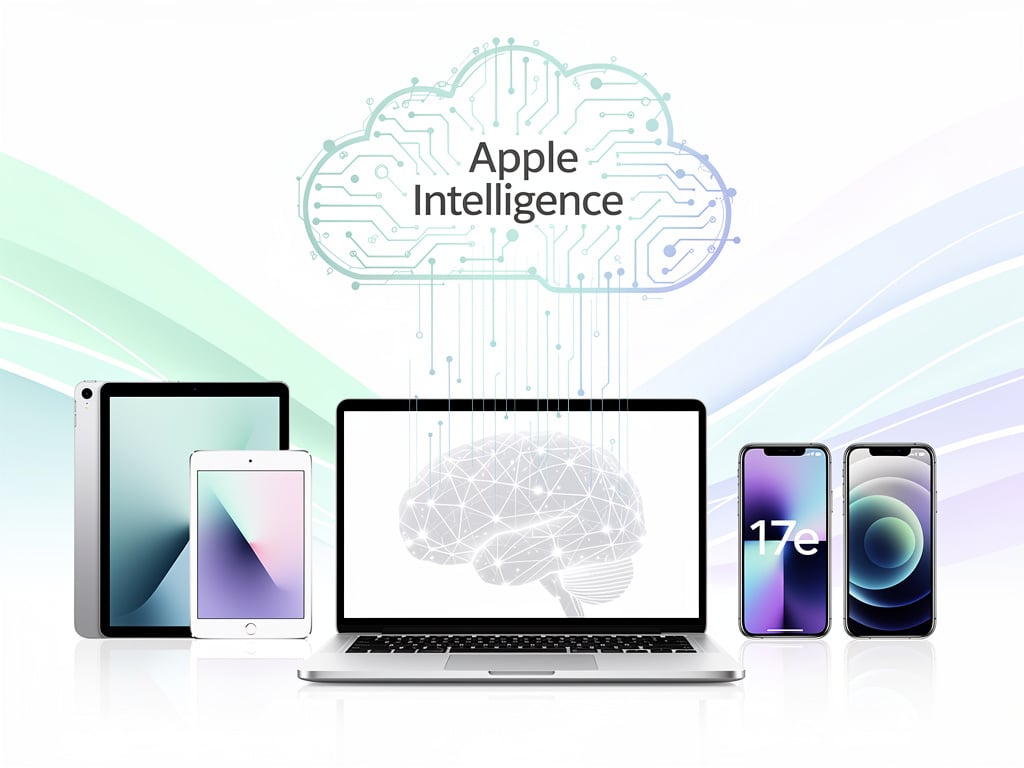
Apple Inc. is preparing to unleash a torrent of new hardware in the coming weeks, a move that signals the company’s aggressive posture heading into the second quarter of 2025. According to multiple reports from industry trackers and supply-chain analysts, the Cupertino giant is readying updates to its MacBook Pro lineup, several iPad models, and a new entry-level iPhone that could reshape the company’s product strategy for the year ahead. The breadth of the expected announcements suggests Apple is compressing what would normally be a spread-out release calendar into a concentrated burst of activity — a strategy that carries both opportunity and risk.
The reports, first aggregated in detail by Ars Technica, paint a picture of a company eager to refresh its hardware portfolio ahead of what is expected to be a pivotal year for Apple Intelligence, the company’s suite of on-device artificial intelligence features. Every product in the rumored pipeline appears designed, at least in part, to serve as a better vessel for AI workloads — more memory, faster processors, and updated neural engines are common threads across the lineup.
MacBook Pro: The M4 Generation Expands Its Reach
The MacBook Pro is expected to receive updated configurations featuring Apple’s latest M4-series chips. While the base MacBook Pro already transitioned to M4 silicon in late 2024, the higher-end models with M4 Pro and M4 Max chips are anticipated to see refreshed configurations, potentially with increased base memory and storage options. Industry analysts have noted that Apple’s push to make 16GB of unified memory the baseline across its Mac lineup — a shift that began in earnest last year — is likely to continue, with some models potentially jumping to 24GB or even 32GB as the standard configuration.
This memory expansion is not merely a spec-sheet exercise. Apple Intelligence features, including advanced on-device large language models, image generation tools, and context-aware Siri enhancements, are memory-hungry by nature. By raising the floor on available RAM, Apple ensures that every new Mac sold is capable of running the full suite of AI features without compromise. For enterprise buyers and creative professionals — segments where Apple has been steadily gaining market share — the move is particularly significant, as it reduces the need to custom-configure machines for professional workloads.
iPad Refresh: A Multi-Pronged Update Targeting Every Price Point
Perhaps the most sweeping set of changes is expected in the iPad lineup. Reports suggest that Apple is preparing updates to multiple iPad models simultaneously, including the iPad Air and the entry-level iPad. The iPad Air is widely expected to receive the M3 chip, bringing it closer in performance to the iPad Pro while maintaining its more accessible price point. The entry-level iPad, meanwhile, could see a jump to the A16 Bionic chip, which would finally bring Apple Intelligence compatibility to Apple’s most affordable tablet.
The strategic calculus here is clear. Apple has faced criticism for maintaining a fragmented iPad lineup where only the most expensive models could take advantage of the company’s flagship software features. By bringing AI capabilities down to the entry-level iPad, Apple would eliminate one of the most significant objections that education buyers and budget-conscious consumers have raised. It would also create a more unified software experience across the iPad range, simplifying app development for third-party developers who have had to account for widely varying hardware capabilities.
The iPhone 17e: Apple’s New Entry-Level Strategy Takes Shape
The most intriguing product in the rumored lineup is the iPhone 17e, which appears to be Apple’s successor to the iPhone SE line. The “e” designation is new for Apple and suggests a deliberate rebranding effort. Where the SE line carried connotations of recycled designs and compromise, the iPhone 17e name positions the device as a full member of the iPhone 17 family — just one that happens to be more affordable. This is a subtle but important shift in Apple’s marketing taxonomy.
According to supply-chain reports cited by multiple outlets, the iPhone 17e is expected to feature a 6.1-inch OLED display, a significant upgrade from the iPhone SE’s LCD screen. It will reportedly be powered by the A18 chip — the same silicon found in the standard iPhone 16 — which would make it fully compatible with Apple Intelligence. The device is also expected to include a single rear camera, Face ID, and a USB-C port, bringing it in line with Apple’s broader transition away from Lightning connectors mandated in part by European Union regulations.
Pricing and Competitive Positioning in a Shifting Market
The pricing of the iPhone 17e will be closely watched by Wall Street. The current iPhone SE starts at $429, but analysts have speculated that the dramatic hardware upgrades — OLED display, modern chip, Face ID — could push the starting price to $499 or even higher. Apple will need to balance the desire to maintain healthy margins with the competitive reality that Android manufacturers, particularly Samsung and Google, have been aggressively pricing their mid-range devices. Google’s Pixel 8a, for instance, has been widely praised as a capable AI-ready smartphone at a sub-$500 price point.
For Apple, the iPhone 17e serves a dual purpose. In developed markets like the United States and Western Europe, it provides an on-ramp for users who want Apple Intelligence features without paying $799 or more for a standard iPhone 17. In emerging markets — particularly India, Southeast Asia, and Latin America — it represents Apple’s best chance at capturing market share in price-sensitive segments where the company has historically underperformed relative to its overall brand strength.
The Apple Intelligence Imperative Driving Every Decision
What ties all of these product updates together is Apple Intelligence. Since announcing its AI strategy at WWDC 2024, Apple has been on a mission to ensure that as many devices as possible in its ecosystem can run on-device AI features. The company has drawn a hard line: Apple Intelligence requires at least an A17 Pro chip (or M1 and later for Macs and iPads) and a minimum of 8GB of memory. Every product in the rumored spring lineup meets or exceeds these requirements, which is almost certainly by design.
This approach stands in contrast to competitors like Google and Samsung, which have been more willing to offer cloud-based AI features on older or less powerful hardware. Apple’s insistence on on-device processing — driven by its long-standing emphasis on privacy — means that hardware refreshes carry an outsized importance. Each new device sold is not just a revenue event; it is an expansion of the installed base capable of running Apple’s most differentiated software features. As Ars Technica noted, the convergence of so many product updates at once underscores how central AI readiness has become to Apple’s hardware roadmap.
Supply Chain Signals and the Timing Question
The timing of these releases is also noteworthy. Apple has historically used its spring window for more modest updates — a new color here, a spec bump there — reserving its biggest announcements for the fall iPhone event and its annual developers conference in June. A spring hardware blitz of this magnitude would be unusual and could signal that Apple wants to establish a strong installed base of AI-capable devices before WWDC 2025, where the company is expected to announce significant new Apple Intelligence features for iOS 19, iPadOS 19, and macOS 16.
Supply-chain analysts in Asia have reported that production of the new devices has already begun ramping up, with display panels, chip packaging, and final assembly lines all showing increased activity consistent with imminent product launches. Apple’s suppliers, including TSMC for chip fabrication and Samsung Display and LG Display for OLED panels, have reportedly been operating at elevated capacity for several weeks. These signals, while not definitive, are consistent with a late February or early March announcement timeline, potentially through Apple’s preferred method of a press-release-based launch rather than a full keynote event.
What This Means for Apple’s Fiscal Year and Beyond
For investors, the spring hardware refresh represents a potential catalyst for Apple’s fiscal third quarter, which covers the April-to-June period. Apple’s revenue has been under pressure from slower iPhone upgrade cycles and a maturing tablet market, but a coordinated refresh across multiple product lines could stimulate demand, particularly if the iPhone 17e is priced aggressively enough to attract first-time iPhone buyers and Android switchers. Morgan Stanley analyst Erik Woodring has previously noted that Apple’s AI strategy could drive a “super cycle” of upgrades, and a spring lineup designed from the ground up for Apple Intelligence would be the first real test of that thesis.
The coming weeks will reveal whether Apple’s compressed release strategy pays off. What is already clear is that the company is treating 2025 as a year in which every product must pull its weight in the AI race. From the most affordable iPhone to the most powerful MacBook Pro, the message is the same: the future of Apple’s ecosystem runs on intelligence, and the hardware to support it is arriving all at once.


 WebProNews is an iEntry Publication