
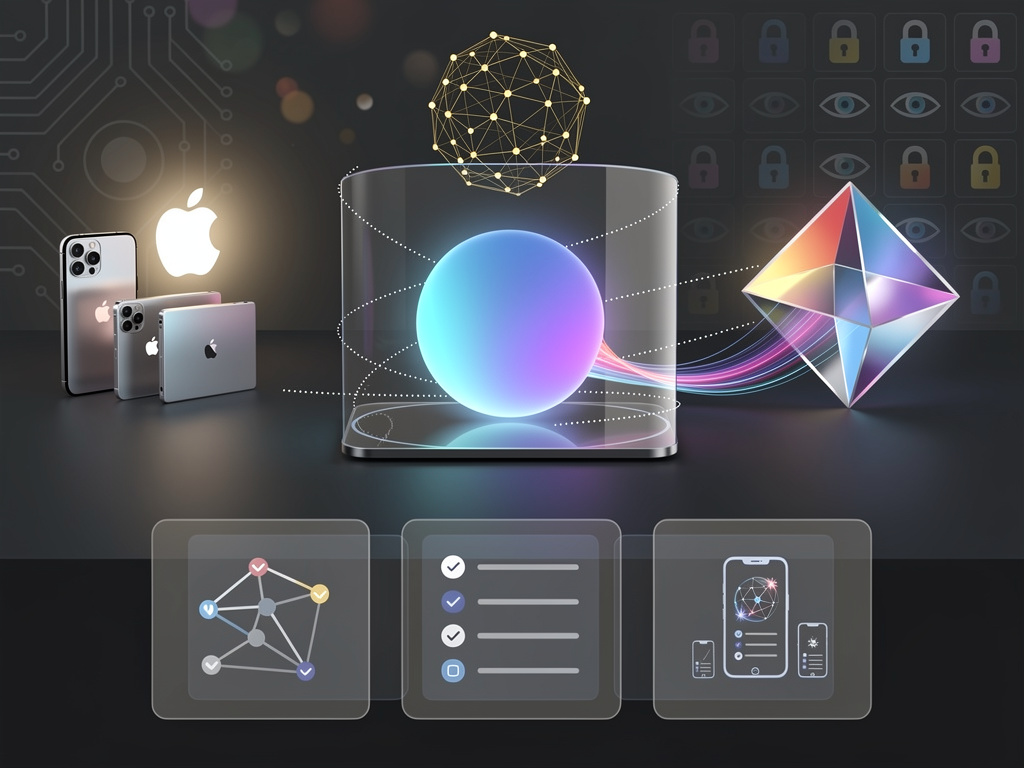
Apple finally delivered on years of promises at its Worldwide Developers Conference. The company unveiled a profoundly more capable version of Siri, now rebranded in parts as Siri AI. It operates as its own standalone application. Users can type or speak to it. They attach files. They reference past conversations. And it draws on personal data from across the device.
But here’s the twist. This new Siri doesn’t rely solely on Apple’s own models. Reports indicate the company pays Google roughly $1 billion annually for a custom version of its Gemini model. The partnership marks a pragmatic shift. Apple once positioned itself as the privacy-first alternative to Big Tech AI. Now it builds on foundations laid by others.
The changes go further. Siri can read what’s on your screen. It pulls context from emails, messages, photos and calendars. Ask it to create a calendar event from highlighted text in an email. Or point the camera at a food label and retrieve nutritional information. These actions feel closer to true assistance than simple query response. Finally.
Nilay Patel, editor-in-chief at The Verge, analyzed the announcement in detail. In a recent interview with Business Insider, he described how the update reveals Apple’s view of AI and its complicated ties to OpenAI. Patel noted the new Siri could serve as an effective replacement for ChatGPT for many users. It offers free access with tighter device integration. Yet questions around privacy linger.
Apple first introduced ChatGPT integration with Siri back in 2024. The setup routed complex questions to OpenAI’s chatbot while obscuring user IP addresses and preventing request storage. That approach carried forward. The latest version maintains similar safeguards. But the relationship has shown strain. OpenAI reportedly considered legal action earlier this year over unmet expectations from the partnership, according to a Bloomberg report from May.
So what changed by June 2026? Apple pushed ahead with its own vision. The new Siri AI appears in a dedicated app. It syncs conversations across iPhone, iPad and Mac. It handles multi-step tasks without jumping between programs. And it can still hand off to external models like ChatGPT or Claude when needed. The interface draws clear inspiration from existing chatbots. Clean. Conversational. Persistent.
Wired examined the personal nature of these updates in its coverage. The publication highlighted how Siri now accesses on-device information to deliver context-aware answers. It no longer feels static while competitors raced ahead with generative tools. Google’s Gemini, Anthropic’s Claude and OpenAI’s offerings had set a new standard. Apple spent the intervening time catching up. (Wired, June 2026).
TechCrunch reported on leaked renders months before the event. Those images previewed a redesigned Siri experience meant to compete directly with standalone AI apps. The standalone Siri app, Bloomberg first detailed in May, positions Apple to challenge ChatGPT on its home turf. Users gain one place for all interactions. No more invoking a voice command and hoping for the best.
Apple’s newsroom release emphasized the intelligence leap. “Siri AI is an entirely new version of Siri deeply integrated into iPhone, iPad, Mac, Apple Watch, and Apple Vision Pro,” the company stated in its June 8 announcement. The update arrives alongside broader Apple Intelligence improvements, new parental controls and performance tweaks across operating systems. iOS 27, macOS 27 and the rest roll out later this year. Some features start in beta.
Patel sounded surprised by the pace during post-event discussions. He expected Apple to hold back until it had a fully polished product ready to ship. The 2024 rollout drew criticism for delays and limited availability. This time the company showed more. But it also revealed dependencies. The reported deal with Google for Gemini underpins much of the new capability. That fact undercuts some of the on-device privacy narrative, even as Apple continues to process what it can locally.
Investors appeared less impressed. Shares dipped nearly 2% after the keynote. Wall Street wanted clearer differentiation or faster monetization paths. The AI race has grown crowded. Every major platform now offers smart assistants. Apple’s advantage lies in its installed base and control over the operating system. Yet that edge only matters if the experience exceeds what users get from downloading a free ChatGPT app.
Recent reactions on X reflect mixed feelings. Some users already prefer the new Siri for quick answers over opening ChatGPT. Others debate which external model should power it. One post captured the moment: users in 2026 arguing whether Siri should default to OpenAI, Anthropic or Gemini. The choice itself signals how far the market has shifted.
The European Union adds another complication. Initial reports suggest Siri AI won’t launch there right away. Regulatory hurdles around data handling and AI transparency slow deployment. Apple must balance its global ambitions against local rules. That delay gives competitors extra time to build loyalty in key markets.
Look closer at the technical claims. Siri now performs web searches like its rivals. It maintains conversation history. It acts on visual input from the camera or screen. These features close gaps that made earlier versions feel limited. But execution will decide success. Voice assistants have overpromised for more than a decade. Users remember the times Siri misunderstood basic requests or returned irrelevant results.
Apple’s approach differs from pure cloud-based chatbots. It prioritizes on-device processing where possible. Private Cloud Compute handles heavier tasks without full data exposure. The company bets users value that control. Whether the bet pays off depends on speed, accuracy and perceived intelligence.
Patel’s take cuts through the hype. He sees the new Siri as Apple’s attempt to offer a better-integrated alternative to free ChatGPT. The privacy story remains a work in progress. Integration with personal data raises new risks even with safeguards. And the reliance on Google or OpenAI models means Apple doesn’t fully own the underlying intelligence.
Still, the standalone app changes the dynamic. No longer just a system service, Siri becomes a destination. Users may form habits there the same way they do in ChatGPT or Claude. That habit formation could lock in Apple’s position. Or it could expose weaknesses if the experience falls short.
Tim Cook delivered what may have been his final keynote featuring these announcements. The transition at the top adds another variable. His successor will inherit an AI strategy still taking shape. Partnerships with Google and OpenAI provide speed. They also create dependencies that future leaders might want to reduce.
Developers will soon test the new tools. APIs for the enhanced Siri could open fresh opportunities. Apps that combine on-device context with generative responses might deliver the real breakthroughs. The operating system improvements matter. But third-party innovation often drives lasting change.
Apple has closed the gap. The new Siri looks and behaves more like modern AI interfaces. It promises practical help with everyday tasks. Yet the road to widespread adoption runs through real-world performance. Early reviews praise the context awareness. They note faster responses. The true test comes when millions of users start issuing complex, personal requests every day.
The partnership history with OpenAI adds intrigue. What began as a way to borrow expertise now looks like a stepping stone. Apple learned what users expect from conversational AI. It studied the interface patterns. Then it built its own competitor with deeper system access. OpenAI, in turn, gained massive distribution. The arrangement benefited both sides even as tensions grew.
Recent coverage from The New York Times Wirecutter summarized the upgrades. The overhauled assistant gains contextual awareness comparable to Gemini and ChatGPT. It searches the web. It remembers prior exchanges. The combination could make Siri the default choice for iPhone owners in the same way Gemini serves Android users.
One thing feels clear. The era of simple voice commands has ended. Assistants must understand context, act across apps and learn from user behavior. Apple spent years refining its hardware and software integration. That foundation now supports a more ambitious AI layer. Whether it proves distinctive enough to stand out remains the open question.
Users will decide. They compare response quality, privacy comfort and ease of use. They weigh the convenience of a built-in tool against dedicated apps. And they watch how quickly Apple iterates. The announcements at WWDC 2026 represent a starting line, not a finish. The real competition begins when the software reaches devices this fall.


 WebProNews is an iEntry Publication