
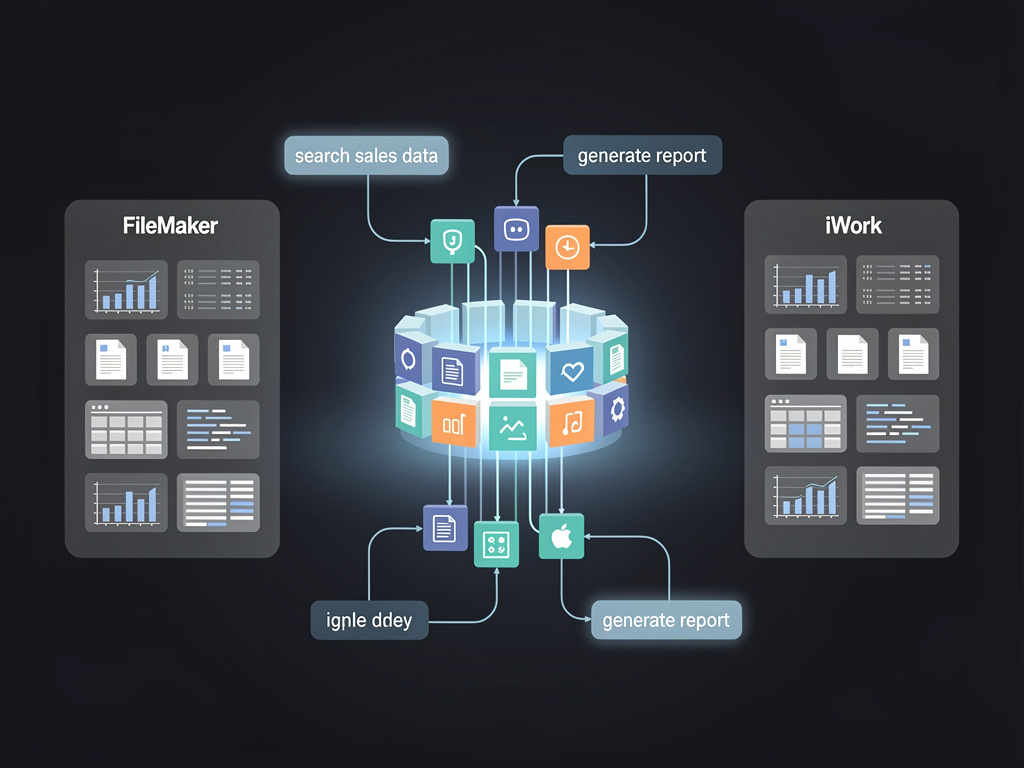
Apple has long been known for its consumer-facing polish — sleek hardware, intuitive software, and an ecosystem that prizes simplicity. But beneath that surface, the company has quietly maintained a serious interest in database technology, most notably through its Claris FileMaker platform. Now, a newly published patent application suggests Apple may be preparing a significant leap forward in how its software handles structured data, with implications that could ripple across both its productivity suite and its enterprise tools.
The patent, titled “Flexible Database,” was published by the United States Patent and Trademark Office and describes a system for creating and managing databases that are more adaptable, faster, and easier to use than traditional relational database models. As reported by AppleInsider, the filing envisions a database architecture that can dynamically adjust its schema — the underlying structure that defines how data is organized — without requiring the kind of rigid, upfront planning that has historically made database design a specialist’s domain.
A Patent That Signals More Than Incremental Improvement
At its core, the patent describes a database system capable of handling heterogeneous data types within a single table, allowing users to mix text, numbers, images, and other media without conforming to a strict columnar format. This is a meaningful departure from the relational database model that has dominated enterprise computing for decades, where every field in a table must adhere to a predefined data type and structure. The flexibility described in the patent would allow records to contain varying numbers and types of fields, making it far easier to adapt a database on the fly as needs evolve.
The filing also details performance optimizations, including indexing strategies and caching mechanisms designed to keep these flexible databases responsive even as they scale. According to AppleInsider, the patent specifically references techniques for maintaining query speed in environments where the schema is not fixed — a technical challenge that has historically been one of the primary arguments against schema-less or semi-structured database designs.
FileMaker: Apple’s Underappreciated Enterprise Asset
The most obvious application for this technology is Claris FileMaker, the low-code database platform that Apple has owned and developed for decades through its Claris International subsidiary. FileMaker occupies an unusual niche in the software world: it is a powerful, mature database tool with a loyal following among small and medium-sized businesses, yet it has never achieved the mainstream visibility of products like Microsoft Access or Salesforce. Its strength has always been in allowing non-programmers to build custom database applications with relative ease, but it has also been constrained by the limitations of its underlying data model.
A flexible database engine of the kind described in Apple’s patent could dramatically expand FileMaker’s capabilities. Users who currently struggle with rigid table structures — particularly in fields like healthcare, education, and creative industries where data is inherently messy and variable — would benefit enormously from the ability to store and query heterogeneous records without extensive schema redesign. For FileMaker’s existing user base, this could represent the most significant architectural upgrade in the platform’s history.
Could iWork Get a Database Brain?
But FileMaker may not be the only beneficiary. As AppleInsider noted, the patent’s language is broad enough to encompass Apple’s iWork productivity suite — Numbers, Pages, and Keynote. Numbers, Apple’s spreadsheet application, has long been seen as a lightweight alternative to Microsoft Excel, lacking the depth and power that professional users demand. Integrating a flexible database layer into Numbers could transform it from a simple spreadsheet tool into something closer to a hybrid spreadsheet-database application, capable of handling structured queries, relational lookups, and dynamic data manipulation in ways that go far beyond what a traditional spreadsheet can offer.
This would not be without precedent. Microsoft has been steadily blurring the line between spreadsheets and databases with products like Microsoft Lists and Dataverse, and Airtable has built an entire business around the concept of a spreadsheet-database hybrid. Apple entering this space with native, deeply integrated tools could pose a serious competitive challenge, particularly within its own ecosystem where tight integration with macOS, iOS, and iCloud already gives its productivity apps a distribution advantage.
The Technical Architecture: What the Patent Actually Describes
Diving deeper into the patent’s technical claims, the filing describes a multi-layered architecture. At the storage level, data is organized in a format that accommodates variable-length records and mixed data types without the padding and null-value overhead that plagues traditional relational databases when faced with sparse or irregular data. Above that, an indexing layer uses adaptive algorithms to build and maintain indexes that reflect the actual distribution and usage patterns of the data, rather than relying on static index definitions.
The patent also describes a query engine capable of interpreting user intent from natural-language or semi-structured queries — a feature that aligns with Apple’s broader investments in machine learning and natural language processing. This suggests that Apple envisions a database system where users can ask questions of their data in plain English, rather than writing SQL or using complex filter interfaces. Combined with Apple’s on-device intelligence capabilities and its growing suite of Apple Intelligence features, this could make database interaction accessible to a far wider audience than ever before.
Enterprise Ambitions and the Broader Competitive Picture
Apple’s interest in database technology also fits into a broader strategic narrative. The company has been making incremental but consistent moves to strengthen its position in enterprise computing. The expansion of Apple Business Manager, the growing adoption of Mac and iPad in corporate environments, and the deepening partnership with enterprise mobility management providers all point to a company that sees the business market as a significant growth vector. A more capable database platform — whether delivered through FileMaker, iWork, or an entirely new product — would give Apple a stronger story to tell enterprise buyers who currently rely on Microsoft, Google, or specialized SaaS platforms for their data management needs.
It is worth noting, however, that patents do not always translate into shipping products. Apple files thousands of patents each year, and many describe technologies that never see the light of day in a consumer or enterprise product. The “Flexible Database” patent could represent a long-term research direction rather than an imminent product launch. Still, the specificity of the filing — with its detailed descriptions of storage formats, indexing strategies, and query processing techniques — suggests that this is more than a speculative exercise.
What Industry Watchers Are Saying
The Claris and FileMaker community has responded to the patent news with cautious optimism. FileMaker developers, who have long advocated for more flexible data handling in the platform, see the patent as validation of a direction they have been requesting for years. Online forums and developer communities have been buzzing with speculation about whether the next major version of FileMaker — or a successor product — might incorporate some of the techniques described in the filing.
Meanwhile, industry analysts have pointed out that the timing of the patent aligns with a broader trend toward low-code and no-code development platforms, which are projected to account for a growing share of enterprise application development in the coming years. Gartner and other research firms have consistently forecast that low-code platforms will be used to build the majority of new business applications by the end of the decade. If Apple can deliver a flexible, high-performance database engine that integrates seamlessly with its existing tools and devices, it could position itself as a major player in this rapidly expanding market.
The Road Ahead for Apple’s Data Strategy
For now, the patent remains just that — a patent. But it offers a rare window into Apple’s thinking about data management, and it suggests that the company is not content to leave the database market to Oracle, Microsoft, and the constellation of cloud-native startups that have emerged in recent years. Whether the technology surfaces in FileMaker, iWork, or something entirely new, Apple’s investment in flexible database architecture signals a serious commitment to making structured data more accessible, more powerful, and more deeply integrated into the Apple ecosystem.
As enterprise buyers and developers watch for Apple’s next move, the “Flexible Database” patent stands as a reminder that some of the most consequential innovations in technology happen not in the flashy product keynotes, but in the quiet, methodical work of patent filings and engineering research. For those who build their businesses on Apple’s platforms, this is a development worth watching very closely.


 WebProNews is an iEntry Publication