
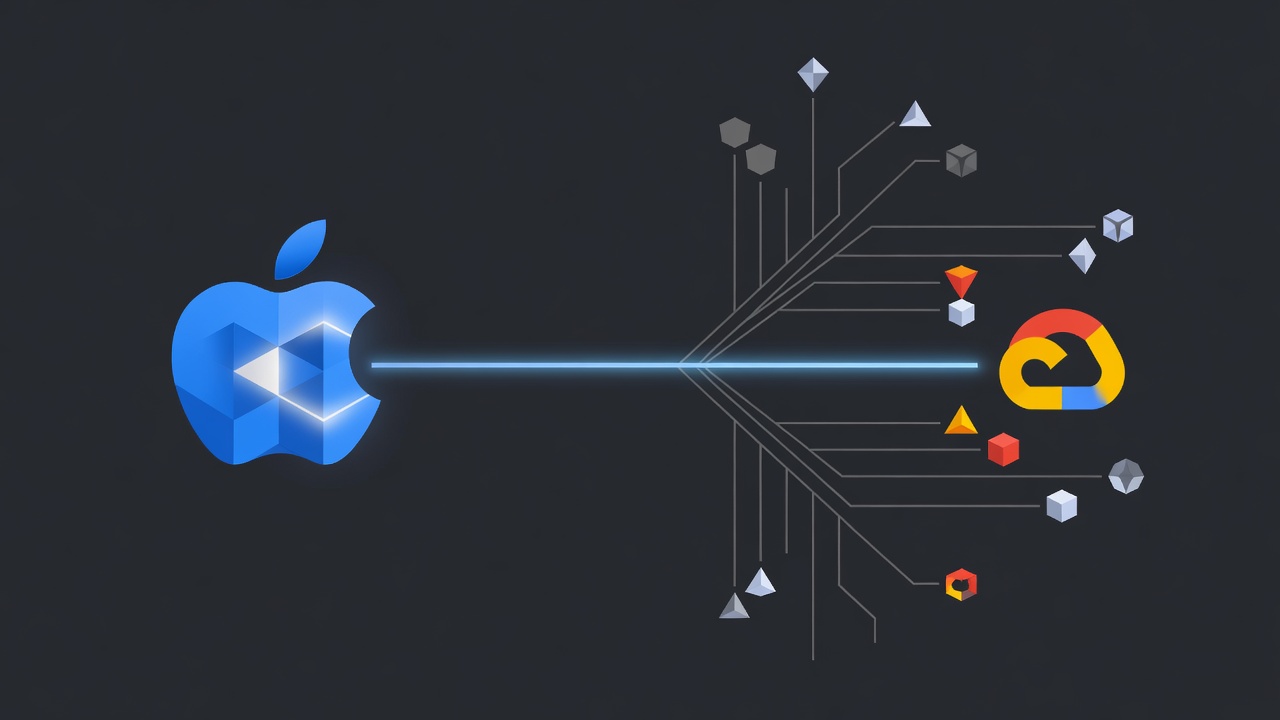
Apple has spent years telling the world that its devices keep user data safer than anyone else’s. The promise rests on silicon designed in-house, software locked down tight, and a refusal to let even Apple engineers peek at personal information. Now that approach faces a major test. The company has taken its Private Cloud Compute system, the backbone for advanced Apple Intelligence features, and moved parts of it onto Google Cloud infrastructure. A new SOC 3 audit report aims to reassure everyone that the privacy guarantees still hold.
But. The shift changes everything about the supply chain. And the stakes could not be higher.
Private Cloud Compute first appeared in detail in a June 2024 post from Apple Security Research. The system was built to handle complex AI tasks that on-device chips cannot manage alone. It runs on custom Apple silicon servers inside Apple’s own data centers. The design is stateless. User requests arrive encrypted. They get processed. The data disappears. No logs capture personal details. No administrator can reach in and read what a user asked.
“Personal user data sent to PCC isn’t accessible to anyone other than the user — not even to Apple,” the blog stated. The architecture rests on five pillars. Stateless computation. Enforceable guarantees. No privileged runtime access. Non-targetability. Verifiable transparency. Each one addresses a flaw in ordinary cloud AI setups.
Ordinary clouds log everything. They give engineers remote shells. They let load balancers touch decrypted traffic. Apple threw those tools out. The PCC node has no general-purpose logging. Only narrow, structured, audited metrics can leave the machine. The operating system is a stripped-down variant of iOS foundations. Code signing and sandboxing run everywhere. The Secure Enclave holds decryption keys that never leave the chip.
Researchers loved the ambition. Trail of Bits called it “a bold step forward” in a June 2024 analysis, while noting weaknesses on the machine-learning side. Matthew Green, the cryptographer, praised the transparency commitments on X. Apple promised to publish software images, offer a virtual research environment, and invite red teams to attack the system. It later put up to $1 million on the table for successful hacks, TechCrunch reported in October 2024.
Fast forward to 2026. Demand for more powerful models grew. Apple Intelligence features needed extra capacity. So the company struck deals with Google and NVIDIA. In June 2026, Help Net Security broke the news that Private Cloud Compute would run on Google Cloud using NVIDIA GPUs, Intel CPUs, and Google Titan security chips. Apple kept control of the software. It created a cryptographically verifiable, append-only ledger of every piece of third-party hardware added to the fleet.
“Together, these capabilities help ensure that even outside of Apple’s hardware and data centers, user data will continue to be protected by the full force of PCC’s extraordinary security and privacy properties,” Apple said in the announcement. The company reused the same stateless design, memory-erasure techniques, and dual-root trust requirements for any data-exfiltration path. Devices still verify the software stack before they send a request.
The move drew immediate questions. The Verge reported on June 9, 2026 that skeptics worry the longer supply chain adds attack surface that Apple cannot fully control. Google, Intel, and NVIDIA manage their own manufacturing. Apple can scan and log the hardware that joins its PCC fleet, but the chain is undeniably more complex than before.
Yet Apple doubled down on transparency. It publishes binary images of every production build. It offers the Virtual Research Environment so anyone with a Mac and Apple silicon can boot a simulated PCC node. Later builds even ship the sepOS firmware and iBoot bootloader in plaintext. That level of openness has no real precedent for a production cloud AI service.
Now comes the SOC 3 audit. The report, hosted on Apple’s certification support page at support.apple.com, provides independent validation of the controls around Private Cloud Compute. SOC 3 reports focus on security, availability, and confidentiality for a broad audience. They lack the detailed controls testing found in a SOC 2, but they carry weight with enterprise buyers and privacy-conscious consumers.
The audit covers the original Apple-silicon PCC environment. Apple has said it is working with researchers on the Google Cloud version and plans further public reports. Release notes on the company’s security documentation site indicate that PCC on Google Cloud is gradually gaining the complete set of original protections. Independent verification will be key. Without it, the privacy claims remain just that — claims.
Enterprise customers have taken notice. The Wall Street Journal noted in September 2024 that companies see potential for Apple Intelligence inside corporate workflows but still have questions about data handling. Apple’s pitch is simple. Your data never sits on our disks. It never trains our models. It vanishes the moment the answer goes back to your device.
That story only works if the technical controls match the marketing. The SOC 3 report is one piece of evidence. The bug bounty program is another. The published binaries and research tools form a third. Taken together they represent an unusual level of openness from a company famous for secrecy.
Still, challenges remain. Adoption of Apple Intelligence features has been slower than hoped. The Verge reported in March 2026 that only about 10 percent of Private Cloud Compute capacity was in active use on average. Some users simply do not need the advanced features. Others remain wary of sending any data to the cloud, no matter the safeguards.
Apple has responded by making foundation models available to smaller developers at no cloud API cost when they run inside PCC, TechCrunch wrote in June 2026. The goal is to seed the platform with useful experiences that drive more traffic through the secure cloud path.
Security researchers continue to probe. The Trail of Bits review from 2024 flagged that machine-learning models themselves can leak information through side channels or training data regurgitation. Apple has committed to releasing model implementations for audit. How thoroughly those audits happen will determine whether PCC truly sets a new standard or simply raises the bar for a industry still figuring out private AI.
One fact stands out. No major breach of Private Cloud Compute has surfaced. The $1 million bounty remains unclaimed for the highest-severity flaws. That track record buys time. But as the system grows to include third-party clouds and more powerful models, the margin for error shrinks.
Apple’s bet is clear. Build the most private cloud AI system possible. Prove it with code, with audits, with researcher access. Then let the market decide whether privacy sells. The SOC 3 report is the latest data point in that experiment. It will not be the last.


 WebProNews is an iEntry Publication