
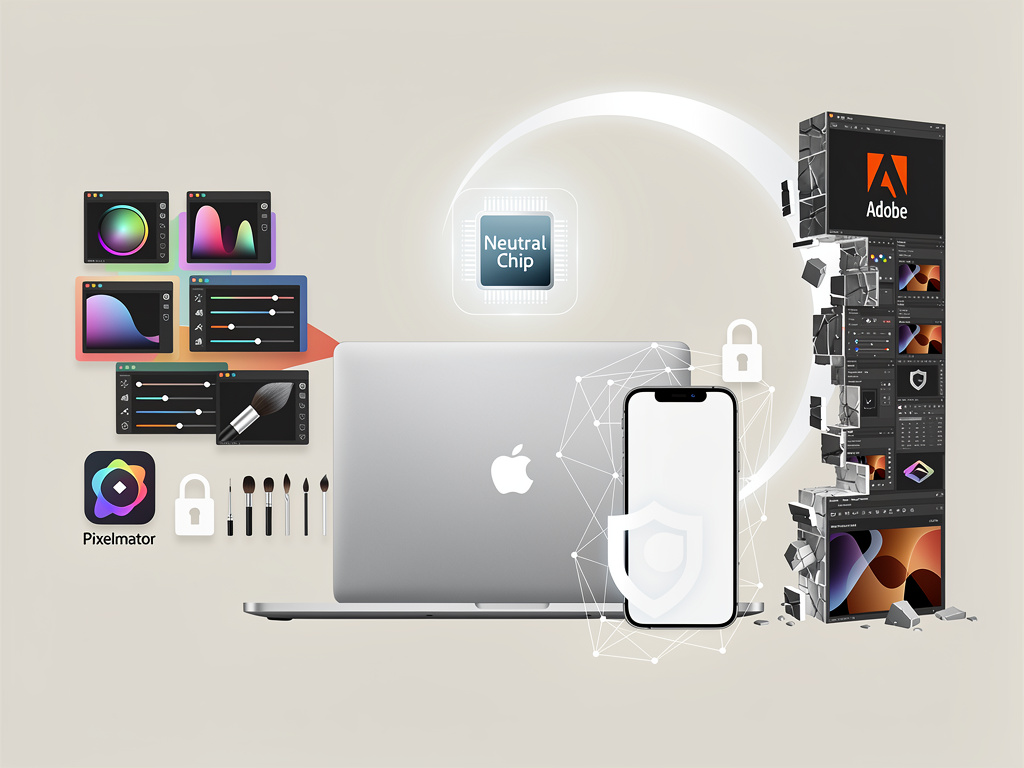
Apple’s recent acquisition of Pixelmator, the Lithuanian company behind popular image editing applications, represents more than just another addition to its software portfolio. The deal, which closed in late 2024 and is now being integrated into Apple’s operations in 2025, signals a calculated move to address persistent shortcomings in the company’s artificial intelligence capabilities while simultaneously challenging Adobe’s decades-long dominance in professional creative software.
The acquisition comes at a critical juncture as Apple races to catch up with competitors in the generative AI space. While companies like Microsoft, Google, and Adobe have aggressively deployed AI features across their product lines, Apple’s approach has been notably more cautious, leaving gaps in functionality that have frustrated professional users and casual creators alike. According to 9to5Mac, this deal could directly address one of the most significant pain points: the lack of sophisticated, locally-processed AI image editing capabilities that respect user privacy while delivering professional-grade results.
Pixelmator’s suite of applications—including Pixelmator Pro, Photomator, and the iPad-focused Pixelmator for iOS—has earned a devoted following among creative professionals who appreciate the software’s intuitive interface, powerful features, and relatively affordable pricing compared to Adobe’s subscription model. The company’s machine learning-powered tools for image enhancement, object removal, and intelligent selection have demonstrated that sophisticated AI features can run efficiently on Apple Silicon without requiring cloud processing, a crucial consideration given Apple’s longstanding commitment to on-device privacy.
The Strategic Imperative Behind Creative Software Control
Apple’s move into professional image editing through acquisition rather than internal development reflects a pragmatic acknowledgment of the time required to build competitive creative tools from scratch. Adobe spent decades refining Photoshop into the industry standard, and even well-funded competitors have struggled to dislodge it from professional workflows. By acquiring Pixelmator, Apple gains immediate access to mature codebases, established user interfaces, and—perhaps most importantly—a team with deep expertise in building native macOS and iOS applications that leverage Apple’s hardware capabilities.
The timing proves particularly significant as the creative software market undergoes its most dramatic transformation in years. Generative AI features have rapidly evolved from novelties to essential tools, with capabilities like text-to-image generation, intelligent object removal, and AI-powered enhancement becoming baseline expectations rather than premium features. Adobe has responded by integrating its Firefly AI engine across Creative Cloud applications, while startups like Midjourney and Stability AI have captured mindshare with powerful generative models. Apple’s own AI initiatives, branded as “Apple Intelligence,” have thus far focused primarily on text processing, voice assistance, and system-level features, leaving a conspicuous gap in visual content creation.
Privacy-First AI Processing as Competitive Advantage
What distinguishes Pixelmator’s approach—and by extension, Apple’s likely strategy—is the emphasis on on-device processing that preserves user privacy while delivering professional results. While cloud-based AI services from competitors can leverage massive computing resources and continuously updated models, they require uploading user content to external servers, raising privacy concerns that resonate particularly strongly with Apple’s customer base. Pixelmator’s existing ML-powered features, including Super Resolution upscaling and ML Denoise, already run entirely on-device using Apple’s Core ML framework, demonstrating that sophisticated image processing can occur locally on modern Apple Silicon chips.
This architectural philosophy aligns perfectly with Apple’s broader “Apple Intelligence” strategy, which emphasizes private cloud compute and on-device processing wherever possible. The M-series chips, with their unified memory architecture and dedicated Neural Engine cores, provide substantial computational resources for running complex machine learning models without cloud dependencies. By integrating Pixelmator’s technology, Apple could offer professional creators AI-powered tools that match or exceed cloud-based competitors in capability while maintaining the privacy guarantees that have become a key brand differentiator.
Challenging Adobe’s Creative Suite Monopoly
The acquisition also positions Apple to mount a more credible challenge to Adobe’s near-monopoly in professional creative software. While Apple’s existing Photos app serves casual users adequately, and Final Cut Pro maintains a foothold in video editing, the company has lacked a professional-grade image editing solution since discontinuing Aperture in 2015. Professional photographers and designers have had little choice but to subscribe to Adobe’s Creative Cloud, even as subscription fatigue and price increases have generated growing dissatisfaction among users.
Pixelmator Pro, while not yet matching Photoshop’s exhaustive feature set, has steadily closed the gap in capabilities while maintaining a one-time purchase model that appeals to users weary of subscription fees. The application supports professional workflows including layer-based editing, non-destructive adjustments, RAW processing, and extensive format compatibility. With Apple’s resources behind continued development, Pixelmator’s technology could evolve into a genuine Photoshop alternative for many professional use cases, particularly those centered on photography and digital illustration rather than complex compositing or print production.
Integration Challenges and Ecosystem Opportunities
The path from acquisition to seamless integration presents substantial challenges. Apple must decide whether to maintain Pixelmator as a standalone product line, merge its technology into existing applications like Photos and Preview, or develop an entirely new professional creative suite. Each approach carries distinct advantages and risks. Maintaining separate applications preserves the existing Pixelmator user base and allows for continued independent development, but potentially fragments Apple’s creative software strategy. Deep integration into system applications could bring advanced editing capabilities to all users but might alienate professionals seeking dedicated tools.
The most likely scenario involves a hybrid approach: enhancing Photos with selected Pixelmator technologies for consumer users while developing a professional-tier application for creative professionals, possibly branded under the “Pro” designation that Apple uses for Final Cut Pro and Logic Pro. This would allow Apple to address both casual and professional markets while creating natural upgrade paths within its ecosystem. The company’s track record with Final Cut Pro X—which underwent radical redesign that initially alienated professionals before gradually winning them back through sustained development—offers both cautionary lessons and proof that Apple can successfully serve demanding creative users.
Broader Implications for Apple’s AI Strategy
Beyond immediate product implications, the Pixelmator acquisition reveals important aspects of Apple’s broader artificial intelligence strategy. Rather than competing directly with large language models or attempting to match the viral appeal of tools like ChatGPT, Apple appears focused on embedding AI capabilities into specific, high-value use cases where privacy, performance, and integration with existing workflows provide meaningful advantages. Image editing represents an ideal domain for this approach: users generate sensitive personal and professional content, demand real-time performance, and benefit substantially from tight integration with device cameras and photo libraries.
This targeted strategy allows Apple to leverage its unique strengths—hardware-software integration, on-device processing capabilities, and established user trust around privacy—rather than competing purely on model size or cloud infrastructure scale. As generative AI capabilities become increasingly commoditized through open-source models and API services, differentiation will increasingly depend on integration quality, privacy protections, and seamless user experiences rather than raw model capabilities. Apple’s acquisition of Pixelmator suggests the company understands this dynamic and is positioning accordingly.
Market Impact and Competitive Response
The creative software market will likely respond to Apple’s move with both concern and adaptation. Adobe, while dominant, cannot ignore a well-resourced competitor with direct access to the platforms on which its applications run. The company has already faced pressure from AI-native startups and open-source alternatives; a serious Apple entry into professional image editing would represent a more existential threat, particularly if Apple leverages its platform control to provide superior performance or tighter system integration.
Smaller creative software companies may face increased pressure as Apple expands its first-party offerings. However, the move could also validate the broader market for professional creative tools on Apple platforms, potentially attracting increased investment and development. Apple’s ecosystem has historically supported thriving third-party software markets even in categories where the company offers competing products, though the balance between platform provider and competitor remains perpetually contentious.
For creative professionals, the acquisition promises expanded options and potentially more competitive pricing in a market long dominated by subscription models. Whether Apple can deliver tools that genuinely compete with established professional workflows remains to be seen, but the company’s commitment to the creative market—long a core constituency—appears stronger than at any point since the Aperture discontinuation. As AI capabilities reshape creative work, having a major platform vendor seriously invested in privacy-respecting, professionally-capable creative tools could prove significant for the entire industry’s evolution.


 WebProNews is an iEntry Publication