
Apple’s stylus lineup has long frustrated owners who watch the battery fade after a few years. The devices work beautifully until they don’t. Then the only real option is buying another one. But that pattern may soon change.
Two refreshed Apple Pencil models are in development for release in the first half of 2027. They will arrive alongside updated iPad Pro tablets. One carries the internal code name B582 and targets the entry-level USB-C charging version. The other, B632, updates the more advanced Apple Pencil Pro that debuted with squeeze gestures and haptic feedback.
Bloomberg reporter Mark Gurman first detailed the plans in his Power On newsletter. His reporting carries weight because of his history of accurate Apple supply chain scoops. The timing aligns with Apple’s habit of refreshing accessories when it updates flagship iPads.
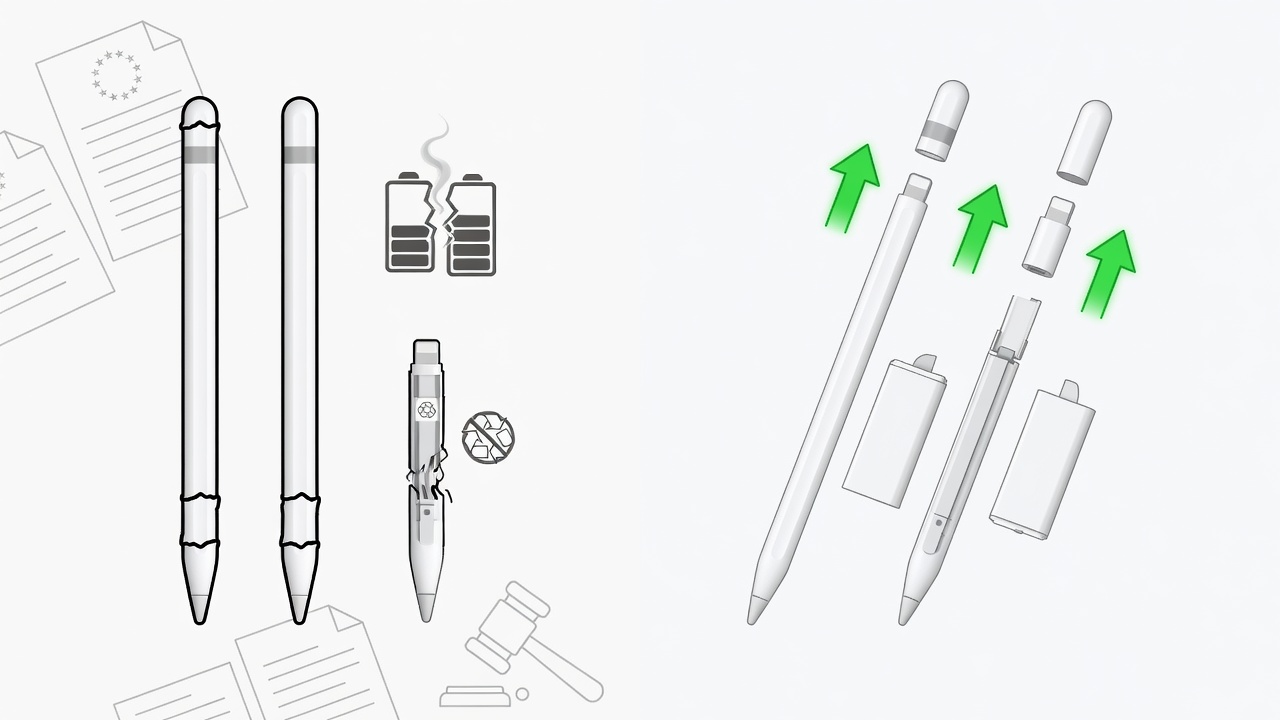
Yet the real story lies less in new features and more in forced redesigns. Upcoming European Union rules require consumer electronics to feature batteries that users or technicians can replace with basic tools. The mandate takes effect in February 2027. Apple’s current styluses receive no exemption like some iPhone models might enjoy due to their longer battery life projections.
Current Apple Pencils earn failing grades from repair experts. iFixit has repeatedly torn them down and labeled them repairability disasters. The slim aluminum or plastic bodies glue the lithium-ion cells in place. Once the battery swells or loses capacity, owners face a stark choice. Pay for an expensive replacement or toss the accessory.
Discussions on Apple support forums reflect the pain. Users report dead Pencils after 18 to 36 months of regular use. Apple Stores often suggest full unit replacement rather than battery service. One recent thread on the company’s community site noted a £25 battery swap option in the UK, but availability appears limited and inconsistent across regions.
The engineering challenge is considerable. The Pencil’s narrow diameter leaves little room for screws, pull tabs or modular connectors. Past teardowns by iFixit showed folded logic boards, tiny antennas and tightly packed components. Any move toward replaceability will demand fresh approaches to assembly, perhaps snap-fit designs or accessible battery doors that maintain the sleek profile artists and note-takers expect.
PhoneArena highlighted the contrast in a report published today. Current models rank among Apple’s most glued-together accessories. A redesigned battery system could change that equation. The article points out that Samsung styluses already offer some replaceable parts, setting a precedent Apple has avoided until now.
Engadget covered the same Gurman report hours ago. It noted that the entry-level update focuses on the USB-C model while the Pro version may carry over existing gestures with the added repair focus. Jackson Chen’s piece connects the shift to earlier EU-driven changes such as the iPhone’s move to USB-C ports.
The Verge took a more direct tone. It described existing Pencils as a nightmare to fix and suggested the new EU rules could make the next generation less painful. The publication linked back to iFixit’s long-running criticism of the accessory’s throwaway nature.
9to5Mac also reported on the developments this morning. It confirmed the spring 2027 target and emphasized that the new battery systems aim for easier user replacement to meet the regulations. The story underscores that today’s Pencils simply are not user-replaceable in any practical sense.
Apple has shown willingness to adapt when regulation demands it. The USB-C transition on iPhones followed years of resistance. Similar pressure now targets batteries across product categories. For a device as personal and frequently used as the Pencil, the stakes feel higher. Artists rely on consistent pressure sensitivity and low latency. Any repair-friendly redesign must preserve those qualities without adding weight or bulk.
Industry watchers expect modest feature updates alongside the repairability gains. The Pro model already supports Find My tracking, barrel roll gestures and squeeze actions. The base model gained USB-C charging in 2023 to simplify the lineup after years of Lightning and wireless variants. Future versions may refine haptics or improve pairing speed, but sources indicate the primary internal effort centers on battery accessibility.
Environmental goals factor in too. The EU rules form part of broader right-to-repair and circular economy initiatives. Reducing electronic waste matters when millions of Pencils ship annually. A replaceable battery could extend device life from two or three years to five or more. That shift would cut replacement purchases and ease pressure on raw material supplies.
Still, questions remain. Will Apple make batteries user-replaceable or simply technician-friendly? The regulations allow both but reward designs that need no special tools. Past Apple repair programs have expanded slowly, often requiring authorized service providers. Independent shops may gain new opportunities if parts become available.
Supply chain sources contacted by multiple outlets suggest development is well underway. Prototypes likely already exist in Apple’s labs. The 2027 launch window gives engineers time to test durability under repeated battery swaps. Maintaining IP67-level water resistance or the smooth matte finish could prove tricky with new seams or access points.
Consumers face a practical decision today. Those shopping for a new iPad and Pencil might consider waiting if their current stylus still functions. The improvements won’t transform the writing or drawing experience overnight. But they could make the accessory feel less like a consumable and more like durable professional gear.
Apple itself has stayed silent on the reports. The company rarely comments on future products. Its environmental reports tout progress on recycled materials and carbon reduction, yet the Pencil has lagged in repairability compared with the modular approach seen in some MacBook components.
Repair advocates applaud the coming changes even if regulation provided the push. iFixit has long argued that glued batteries contradict claims of sustainability. A more serviceable Pencil would align the product with those broader corporate messages.
And the impact may stretch beyond one accessory. Success here could inform designs for other slim devices such as future AirPods or even compact peripherals. The Pencil serves as a test case for balancing form, function and longevity under new legal constraints.
So the accessory many creatives consider essential may soon become more sustainable. Not because Apple suddenly embraced repair culture on its own. But because regulators in Europe drew a firm line on battery waste. The result could be Pencils that last longer, cost less over time and generate less electronic scrap.
That counts as progress, however it arrives.


 WebProNews is an iEntry Publication