
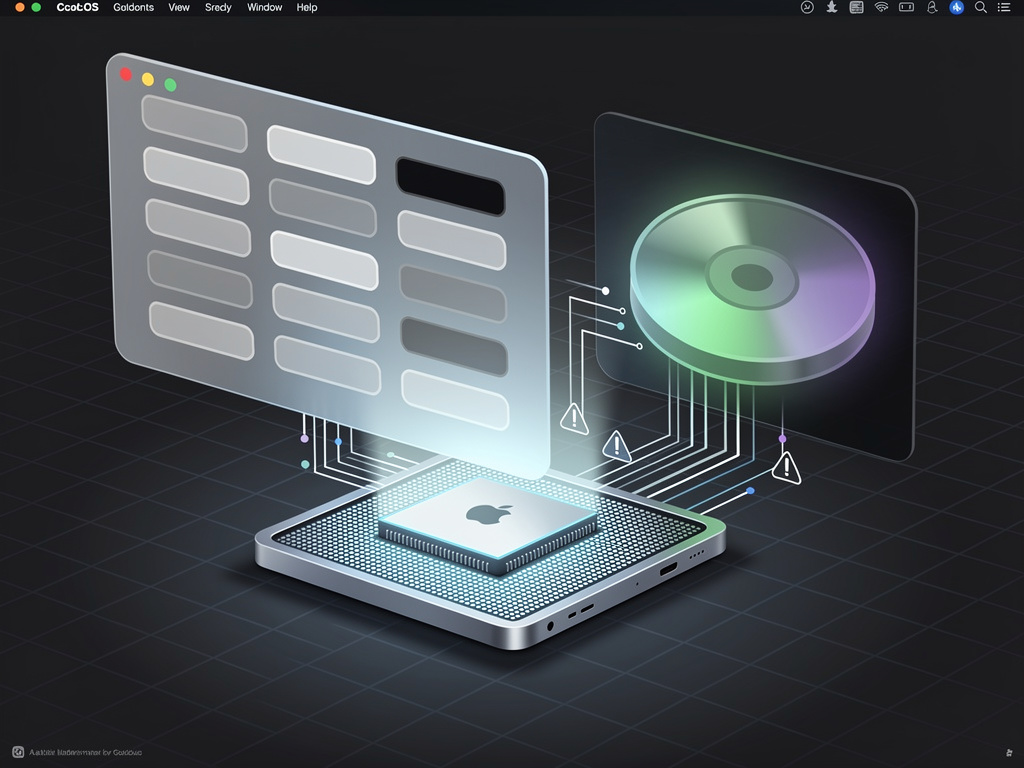
Apple dropped the first beta of macOS 27, codenamed Golden Gate, this week. The update brings refinements to Siri and other system tweaks. For users running Asahi Linux on Apple Silicon hardware, it delivered an immediate headache.
The Linux partitions simply vanished from the boot picker. No error messages. No warnings during the upgrade. Just silence where the Asahi option once appeared. The data remains intact on disk. Yet the system no longer sees it. Boot access disappears.
Developers at Asahi Linux moved fast. They posted a clear advisory on their Mastodon account. “PSA for #AsahiLinux users: Do not install macOS 27 beta,” it read. The message explained that both the macOS boot picker and the Startup Disk control panel in the new beta hide any Asahi Linux partitions. Phoronix first reported the issue hours after the beta landed.
Whether this stems from an oversight or a deliberate shift in how Apple manages boot options remains unclear. The project team filed feedback report FB22994760 with Apple. They await a response. In the interim they urge patience. “We believe this to be a bug,” the advisory stated.
This episode fits a familiar pattern. macOS updates have tripped up Asahi installations before. Past betas altered boot policies or firmware handoffs in ways that left Linux unbootable. Each time the small team of reverse engineers patched m1n1, the first-stage bootloader, or updated kernel drivers. Recovery usually involved booting back into macOS and rerunning the Asahi installer to refresh the bootloader. Simple in theory. Frustrating in practice when the only macOS install sits behind the broken boot menu.
Users who already pulled the trigger on the beta face limited options. A secondary macOS 26 installation offers one route back to the Linux side. Without it, the machine stays stuck until Apple ships a fix or Asahi releases updated tooling. The partition itself stays safe. No corruption. No deletion. Just hidden from the standard selection mechanisms.
And here’s the tension. Asahi Linux has matured considerably since its early days on M1 hardware. Recent progress reports show expanding support for newer chips. Linux 7.2, for instance, adds boot capability for M3 devices. Functionality stays limited. GPU acceleration and full peripheral support lag. Still, the project delivers a genuine alternative for developers who prefer Linux on powerful Apple hardware.
That alternative now collides with Apple’s rapid beta cycle. Golden Gate arrives with expectations of broader AI features and interface polish. Enterprise users and consumers test it eagerly. Linux enthusiasts on the same machines must sit this one out. The conflict highlights how tightly coupled the bootloader, firmware and OS policy remain even on hardware that Apple officially permits to run third-party kernels.
Apple designed Apple Silicon Macs with the ability to boot unsigned code. The company documented aspects of the boot architecture. It never promised to keep every internal behavior stable for projects like Asahi. Yet the project’s success depends on those behaviors staying predictable enough to support. When they change without notice, the entire user base feels it.
So the Asahi team finds itself in a dual role. They build drivers, fix audio quirks, improve display handling. They also file bug reports that sometimes reveal flaws in macOS itself. Past work uncovered issues that affected even stock macOS users on ProMotion displays. Their contributions extend beyond Linux.
Industry watchers note the pattern. Each major macOS release risks breaking the delicate chain that lets m1n1 hand off to a mainline Linux kernel. The current problem centers on visibility in the boot environment. Future betas could alter memory maps, device tree contents or security policies in ways that demand deeper changes. The team has adapted before. They will likely adapt again.
For now the advice stays blunt. Hold off on macOS 27 if Asahi Linux matters to you. Watch for updates from the project. Keep a recovery partition or secondary macOS install ready. And recognize that this friction comes with the territory when you run an independent OS on tightly integrated hardware.
The situation also raises questions about long-term coexistence. Apple continues to evolve its platform security and boot process. Asahi continues to chase parity with features like hardware acceleration and power management. Both move forward. Occasionally their paths cross awkwardly.
Recent coverage from MacRumors details the new OS features without mentioning the Linux impact. That silence reflects the small size of the Asahi user base relative to Apple’s total installed base. Yet for those affected, the breakage feels total.
Developers recommend checking the Asahi installer after any macOS update. A quick rerun can refresh the m1n1 stage and restore boot visibility in normal circumstances. This time the change lives deeper in Apple’s updated picker code. A simple reinstall may not suffice until the bug resolves.
Patience becomes the default strategy. Apple betas evolve quickly. The first public beta arrives in July. The final release targets September. Plenty of time exists for dialogue between the companies. In the meantime Asahi Linux users stick to stable macOS 26 and enjoy the Linux environment they already have.
The project has come far from its initial M1 bring-up. Support now spans multiple generations of Apple silicon. Community editions like Fedora Asahi Remix bring polished desktop experiences. Hardware support tables grow less red with each kernel release. These gains make the occasional regression sting more.
But the work continues. New kernel versions land with improved Apple SMC drivers, better trackpad handling and expanded peripheral compatibility. The team balances upstreaming code with maintaining a usable distribution. That balance gets tested every time Apple ships a beta.
This latest incident serves as a reminder. Running Linux on Apple Silicon delivers real power and efficiency. It also requires vigilance. Users must track both Linux kernel developments and Apple’s OS betas. They must maintain fallback boot options. They must accept that full independence from macOS remains a work in progress.
Still, the alternative appeals to many. Some seek escape from what they view as increasing software complexity on the Mac side. Others simply want a first-class Linux laptop with exceptional battery life and performance. Asahi delivers that today on supported hardware, provided the macOS version stays compatible.
The ball sits in Apple’s court. A fix to the boot visibility issue could arrive in beta two. Or the company might clarify its intentions around third-party OS visibility. Either outcome would help. Until then, the advisory stands. Skip the beta. Protect your Linux install. Wait for clarity.
That clarity matters. The Asahi project represents one of the most impressive community-driven hardware ports in recent years. Its continued health depends on reasonable interoperability with the host platform’s bootloader. Today’s breakage tests that interoperability once again.


 WebProNews is an iEntry Publication