
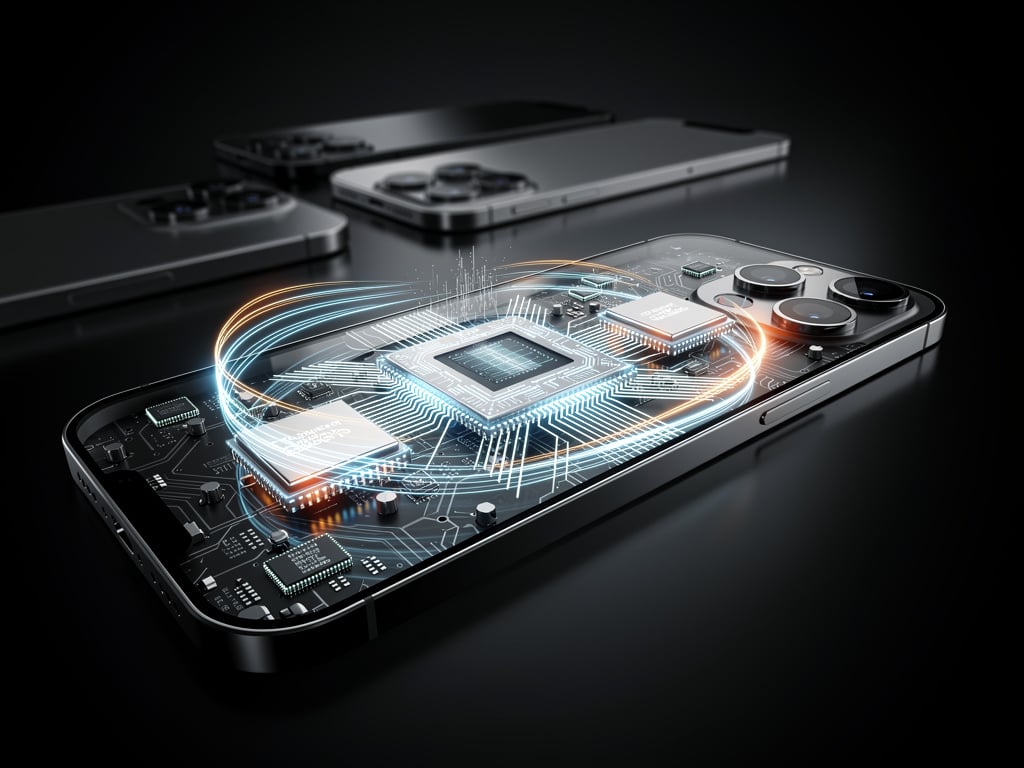
Apple’s thinnest iPhone ever arrived last September with a bold promise. At 5.6 millimeters thick and weighing just 165 grams, the iPhone Air traded some familiar features for an unprecedented form factor. Yet months later it stands out for a different reason. Its hardware choices position it to receive the most advanced software features alongside the iPhone 17 Pro models. And that match comes from decisions made deep inside Apple’s chip design labs.
The TechRadar article from June 18, 2026 captured the shift. Only the iPhone Air, iPhone 17 Pro and iPhone 17 Pro Max gain access to the best version of the new Siri AI in iOS 27. Voice customization that adjusts expressiveness and pace. More advanced systemwide dictation that turns speech into accurate text with greater precision. These capabilities require Apple’s AFM Core Advanced model. That model in turn demands the A19 Pro chip paired with 12 gigabytes of RAM. The base iPhone 17 and other models fall short.
Apple’s press release spelled it out. “The all-new iPhone Air is so powerful, yet impossibly thin and light that it nearly disappears in your hand,” said John Ternus, Apple’s hardware engineering chief, in the September 2025 announcement. The device packs the A19 Pro, an N1 networking chip and the C1X modem. Three custom pieces of silicon working together. The combination delivers performance that surprised even longtime observers.
But the real story lies in the modem. Apple’s C1X chip powers the iPhone Air with speeds up to twice as fast as its predecessor while consuming 30 percent less energy. It outperforms the Qualcomm modem from the iPhone 16 Pro on the same cellular technologies, according to Apple. Real-world tests from Ookla in March 2026 confirmed much of that claim. The C1X achieved download and latency parity with the Qualcomm X80 found in the iPhone 17 Pro Max across many networks. Not a perfect match in every scenario. Still a generational leap from Apple’s earlier efforts.
MacRumors has tracked the details closely. The C1X supports sub-6GHz 5G but skips mmWave, the ultra-fast short-range variant suited to stadiums and dense cities. That limitation applies to the Air alone among the premium lineup. The iPhone 17 Pro models stick with Qualcomm’s X80, which handles both. Yet the efficiency gains from C1X help offset the Air’s smaller battery. Apple claims all-day life despite the slim chassis. Independent tests show up to 27 hours of video playback. Respectable. Not class-leading.
The N1 chip adds another layer. It brings Wi-Fi 7, Bluetooth 6 and Thread support. These elements make the Air feel responsive in ways users notice over time. Faster file transfers. More stable connections. Lower power draw during background tasks. Such advantages compound. They matter more after the first year when battery health begins to fade and software updates demand efficiency.
Durability received equal attention. The iPhone Air uses a polished titanium frame. Ceramic Shield 2 on the front delivers three times better scratch resistance. The back offers four times more crack resistance than prior models. Apple positioned the device as more durable than any previous iPhone. Early owners report it holds up well to daily use despite the thin profile. No widespread bending complaints have surfaced. A notable achievement given past lessons with slim designs.
Cameras tell a different tale. A single 48-megapixel Fusion main sensor handles most tasks. It simulates multiple focal lengths through computational tricks. An 18-megapixel front camera with Center Stage support rounds out the package. The iPhone 17 Pro adds a dedicated telephoto lens and superior processing. Buyers who prioritize photography often choose the Pro. Those who value the Air’s lightweight feel accept the tradeoff. Sales figures reflect the split. Reports suggest the Air moved roughly 700,000 units in its first months. Far below Apple’s overall iPhone volume. A slow start that pushed the next version to spring 2027.
Yet the AI angle changes the equation. At WWDC 2026 Apple unveiled a profoundly more capable Siri. The advanced model runs exclusively on devices with sufficient neural engine power and memory. The Air qualifies. So do the Pro models. Future updates seem likely to widen this gap. The TechRadar piece noted the small print in Apple’s documentation. It uses the word “like” when listing current exclusive features. That wording leaves room for more capabilities tied to the same hardware requirements. Owners of the Air gain protection against software obsolescence that other non-Pro models may face.
Privacy adds a quiet benefit. A setting called Limit Precise Location works only on devices with Apple’s own modems. The C1X enables it. Qualcomm-equipped iPhones lack the option for now. As Apple rolls custom modems across more products, this capability could expand. It represents one more way the Air pulls ahead in areas that matter long after purchase.
Analysts watch the modem transition with interest. The C1X marks Apple’s arrival at tier-one status for radio frequency silicon. Future C2 versions expected in iPhone 18 models promise even greater capabilities, including potential satellite enhancements. For the current Air, the foundation feels solid. It handles everyday connectivity with aplomb. Users in rural areas or those who travel report reliable performance. The efficiency helps preserve battery during weak-signal conditions where older modems might struggle.
So the iPhone Air occupies an unusual spot. Not the best camera phone. Not the longest-lasting. Yet equipped to receive the richest software experience Apple offers. That combination didn’t exist in prior slim designs. Previous attempts at thin iPhones often sacrificed too much. This one protects the user from rapid feature exclusion.
Buyers face a clear choice. Spend more for the iPhone 17 Pro and gain superior cameras, thermal management and mmWave support. Or choose the Air for its remarkable feel in the hand and matching access to upcoming AI tools. The latter appeals to those who keep devices three or four years. They bet that software updates will deliver more value than marginal hardware edges.
Apple’s strategy appears deliberate. The company invested years developing these custom chips. The Air serves as both a showcase and a test bed. Its modest sales haven’t slowed the momentum. Work continues on a redesigned successor with potentially two rear cameras. In the meantime the current model delivers on the promise of pro performance in a package that feels unlike anything else.
Industry watchers point to the broader shift. Apple no longer relies solely on Qualcomm for modems in every device. The C1X proves the in-house approach can compete. Efficiency gains translate directly to better user experience. Longer battery life. Cooler operation. These factors influence satisfaction scores over time. They matter to carriers and enterprise buyers who manage fleets of phones.
The Air also hints at future foldables. Its internal architecture solved complex thermal and structural challenges in an ultra-thin body. Lessons learned here will apply to bendable devices expected later. For now the phone stands on its own. A premium option that prioritizes design and longevity in software support.
Recent coverage reinforces the point. A MacRumors report from May 2026 highlighted how the custom modem enables unique privacy controls not available on Qualcomm versions. That advantage persists. As iOS updates roll out through 2027 and beyond, the Air’s hardware foundation looks increasingly wise. Not every buyer needs the absolute best camera. Many simply want a phone that stays current longer.
In the end the decision rests on priorities. The iPhone Air delivers a distinctive experience today. Its custom silicon ensures it can match the Pro lineup in the features that will define tomorrow’s iPhones. A calculated bet that appears to be paying off for those who took the plunge.


 WebProNews is an iEntry Publication