
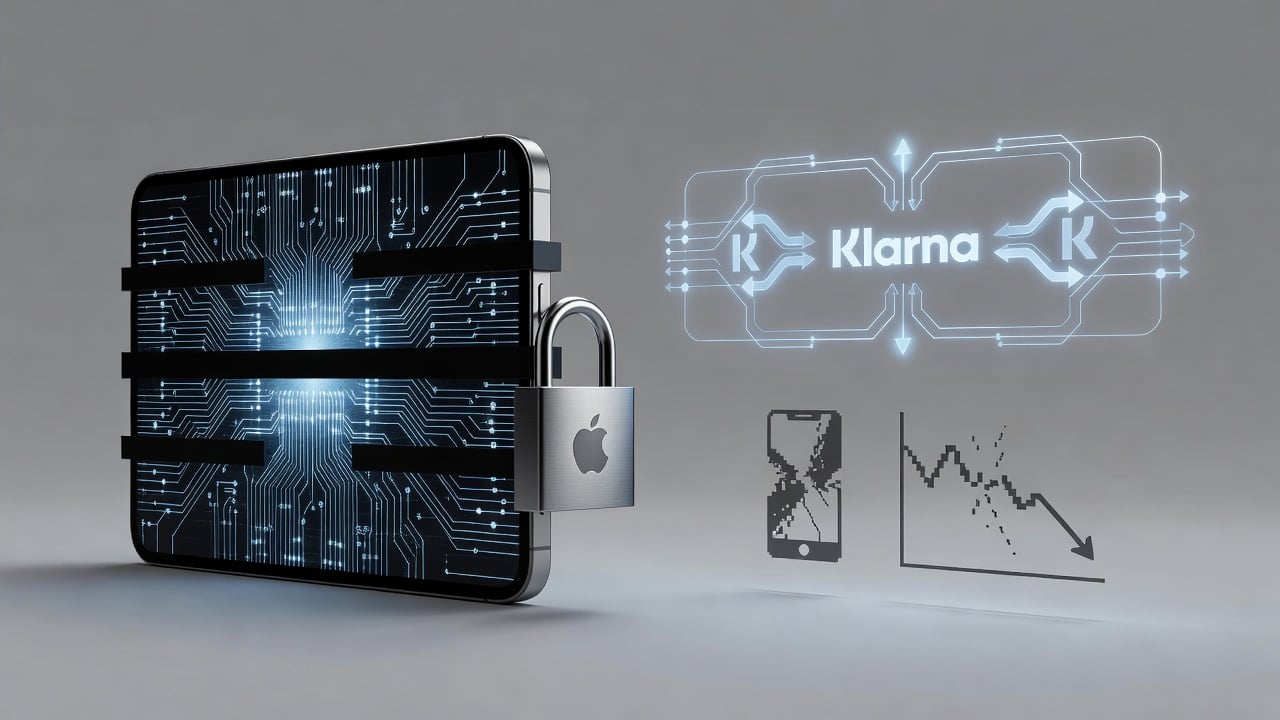
Apple appears ready to clamp down on customers who fall behind on payments for leased devices. Code discovered in the iOS 27 beta points to a system that could lock down an iPhone, limiting its functions until the account gets back in good standing. The change aligns with the company’s planned expansion into device financing partnerships.
But the details raise questions. How far will Apple go to protect its revenue? And what does this mean for consumers already stretched thin on monthly tech bills?
According to a report from 9to5Mac, strings in the latest beta build reference features called App Managed Features. An authorized financing partner could enroll a device. It would then perform periodic status checks. Miss a payment. Fall out of compliance. The phone enters Restricted Mode.
That mode blocks most apps. Only a short list remains usable. Accessibility Reader. App Store. Health. Magnifier. Phone. Clock. Settings. Wallet. Passwords. And the Restricted Mode screen itself. Some other functions like Messages or Home might stay active. It depends on what the financing provider allows. Safety-related medical apps could get a pass too.
The system does not cancel ongoing App Store subscriptions. Those bills keep coming. No set number of missed payments triggers the lock. The partner sets its own policies.
Another new element stands out. Partner Finance Lock. This activation-style lock prevents users from erasing the device, selling it, or stripping its parts. It ties into Find My. Yet the financing partner gains no location data access. The mechanism aims to stop fraud and protect the hardware’s value.
These technical controls arrive as Apple shifts its financing strategy.
Bloomberg first outlined the Apple Upgrade program. Apple will partner with Klarna to offer leases on iPhones, Macs, iPads and Apple Watches in the U.S. Terms run 24 months for phones and watches. Thirty-six months for computers and tablets. Customers can pay off early, upgrade before the end, or simply return the product when the lease expires.
The program seeks lower monthly payments than traditional carrier deals. It also gives Apple more direct control over the customer relationship. Carriers have long financed phones. Their locks often linger even after payoff. Recent moves show Apple closing loopholes that let buyers walk away with unlocked devices too soon.
Discussions on X reflect immediate interest. Multiple accounts shared the 9to5Mac story within hours of its publication Tuesday. One post from @9to5mac gathered thousands of views. Users speculated about impacts on resale markets and credit scores.
Apple’s move follows its decision to wind down the standalone Apple Pay Later service. That product allowed interest-free installment purchases through Apple Pay. The company now directs users toward third-party providers for similar buy-now-pay-later options. A June report from CNET detailed the shutdown. Existing loans remain active. New monthly payment tools will roll out inside the Wallet app later this year.
Consumer advocates have voiced concerns. Easy financing can encourage purchases beyond means. Debt piles up. Defaults rise. Apple’s restrictions could serve as both collection tool and deterrent.
The code surfaced in iOS 27 betas. It was absent from the iOS 26.6 release candidate. That timing suggests Apple might activate the features in a future update or hold them for the full iOS 27 launch. Changes remain possible before public release.
From a business view the logic holds. Hardware margins face pressure. Services and financing grow in importance. By controlling the software experience Apple reduces risk for its lending partners. Klarna gains enforcement power without building its own device management system. Apple keeps customers inside its universe longer.
Yet the approach carries risks. Overly aggressive locks could spark backlash. Customers might hesitate to lease if they fear sudden loss of core phone functions. Resellers and trade-in markets could see uncertainty. A bricked device holds little value.
Apple has not commented publicly on the code. The company rarely discusses unreleased software. Spokespeople declined to address the matter when contacted.
Industry watchers note parallels with carrier practices. Verizon, AT&T and T-Mobile have tightened device locks on financed phones. A July post on Facebook referenced new carrier policies that keep iPhones locked until fully paid. Apple’s version adds software-level restrictions that go beyond simple network locks.
The Restricted Mode allowlist reveals priorities. Communication and health features survive. Entertainment and productivity apps do not. The choices reflect what Apple considers essential. They also limit the pain point for users who simply need to make calls or check medical data.
Longer term this could reshape how people acquire premium devices. Leasing with strict enforcement might feel closer to renting than owning. For some that offers flexibility. Upgrade every year without large upfront cost. For others the loss of control creates hesitation.
Apple’s history shows caution with financial services. Apple Card launched with Goldman Sachs. The partnership later faced scrutiny over credit decisions. Apple Pay Later never gained wide traction. Now the company leans on established players like Klarna.
Code references suggest the financing enrollment happens through a dedicated app. The partner manages status checks. Apple provides the technical framework. This division of labor keeps Apple out of direct lending while still exerting influence through iOS.
Security matters too. The Partner Finance Lock integrates with existing activation systems. It builds on years of anti-theft work. Turning that infrastructure toward payment enforcement marks a notable expansion.
Analysts expect the program to launch soon. Bloomberg’s reporting pointed to an announcement as early as this week. The absence of code in the current release candidate clouds the exact schedule. Apple often seeds features quietly then expands them.
Consumers should watch their financing terms closely. Understand the consequences of late payments. The convenience of low monthly figures comes with strings attached. Those strings now include potential software lockdowns.
The development highlights broader trends. Technology companies act more like financial institutions. Software enforces contracts. Hardware becomes a service. Data and control flow to the platform owner.
Whether the features survive to final release remains unclear. Beta code often changes. User testing could prompt adjustments to the allowlist or lock behavior. Still, the direction seems set. Apple intends to make missed payments more painful.
That stance protects its balance sheet. It also tests customer tolerance. In a market where many stretch to afford flagship phones the balance matters. Too strict and sales suffer. Too lenient and defaults climb.
Watch for updates in coming betas. The next few weeks could reveal more about how Apple plans to roll out these controls. For now the message sits in the code. Pay on time. Or watch your iPhone shrink to a handful of basic functions.


 WebProNews is an iEntry Publication