
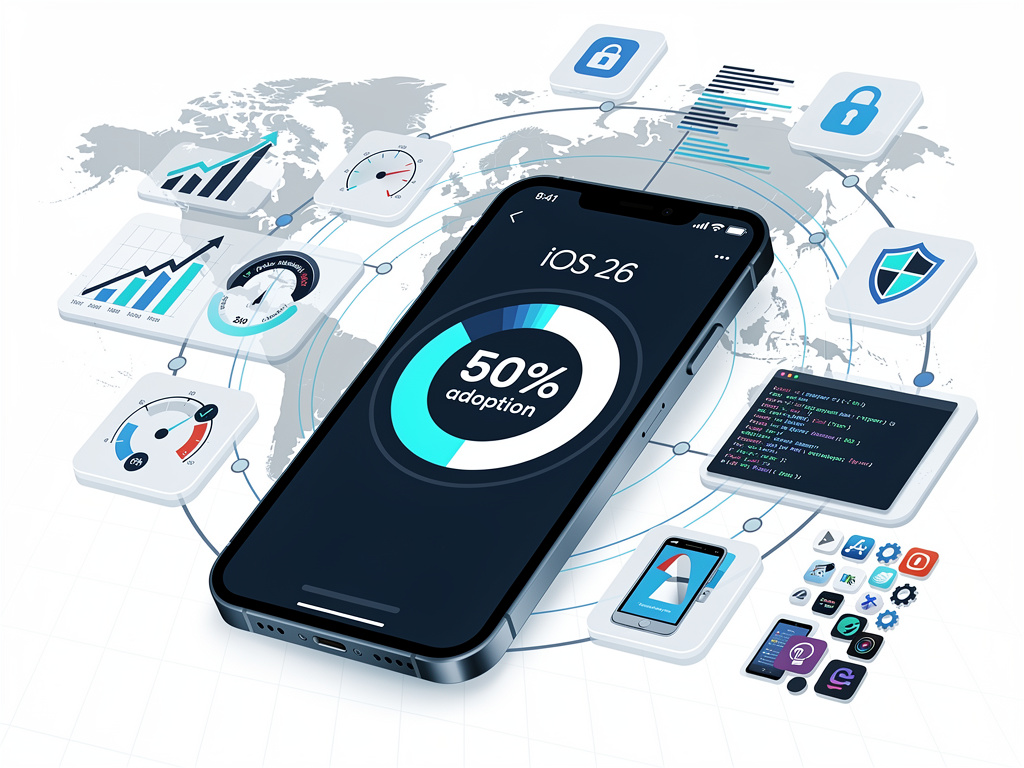
Apple’s latest mobile operating system, iOS 26, has achieved a remarkable milestone by reaching 50% adoption among compatible devices within just weeks of its release, according to data published by MacRumors. This accelerated uptake represents one of the fastest adoption rates in the company’s history and signals a fundamental shift in how enterprise and consumer users approach mobile software updates in an increasingly security-conscious digital environment.
The rapid deployment of iOS 26 stands in stark contrast to the fragmented update patterns that plague competing mobile platforms, particularly Android, where the latest operating system versions typically struggle to reach even 20% market penetration within the first six months. This disparity has significant implications for enterprise IT departments, application developers, and cybersecurity professionals who must navigate an increasingly complex mobile ecosystem while balancing innovation with security requirements.
Industry analysts attribute the swift adoption to several converging factors, including Apple’s streamlined update delivery system, compelling new features that address both consumer and enterprise needs, and growing awareness of cybersecurity threats that make running outdated operating systems increasingly untenable. The company’s vertical integration strategy, controlling both hardware and software development, enables a level of optimization and compatibility testing that remains unmatched in the broader mobile industry.
Enterprise Adoption Drives Unprecedented Update Velocity
Corporate IT departments have emerged as unexpected accelerators of iOS 26 adoption, with many organizations fast-tracking deployment schedules to take advantage of enhanced security features and improved mobile device management capabilities. The operating system introduces advanced threat detection mechanisms, refined data loss prevention tools, and more granular administrative controls that address longstanding enterprise security concerns. These improvements have proven particularly attractive to organizations in heavily regulated industries such as finance, healthcare, and government contracting, where mobile security compliance requirements continue to intensify.
The business case for rapid iOS updates has strengthened considerably as mobile devices become primary computing platforms for knowledge workers. Research from enterprise mobility management vendors indicates that organizations running current operating systems experience 40% fewer security incidents and demonstrate significantly improved productivity metrics compared to those maintaining legacy systems. This quantifiable return on investment has shifted the conversation around operating system updates from a reactive maintenance task to a proactive strategic initiative that directly impacts business outcomes.
Developer Community Responds to Shifting Platform Demographics
Software developers have taken notice of iOS 26’s rapid penetration, with many accelerating timelines to deprecate support for older operating system versions. This represents a significant departure from traditional development practices, where maintaining backward compatibility across multiple OS versions was considered essential for maximizing addressable market size. The new calculus reflects changing market dynamics where the costs of supporting legacy platforms—including increased development complexity, testing overhead, and security vulnerability exposure—increasingly outweigh the benefits of reaching users who resist updating their devices.
Major application publishers have begun announcing plans to require iOS 26 as a minimum platform requirement for new feature releases, with some setting cutoff dates as early as the second quarter of this year. This aggressive timeline would have been unthinkable just a few years ago, when developers typically maintained support for operating systems released three to four years prior. The shift demonstrates growing confidence in Apple’s ability to drive user adoption and reflects broader industry recognition that platform fragmentation imposes real costs on innovation velocity and security posture.
The developer response extends beyond simple compatibility requirements to encompass fundamental architectural decisions about how applications are designed and deployed. iOS 26 introduces new frameworks and APIs that enable capabilities previously impossible or impractical on older platforms, including advanced machine learning features, enhanced privacy controls, and improved integration with Apple’s expanding ecosystem of devices and services. Developers who commit to iOS 26 as a baseline can leverage these capabilities without the compromises and workarounds required to maintain backward compatibility.
Security Imperatives Reshape User Behavior Patterns
The cybersecurity dimension of operating system adoption has assumed unprecedented importance as mobile devices increasingly serve as repositories for sensitive personal and professional information. High-profile security breaches and sophisticated phishing campaigns targeting mobile users have elevated awareness of digital security risks among both consumers and enterprise decision-makers. iOS 26 incorporates multiple security enhancements designed to address emerging threat vectors, including improved authentication mechanisms, enhanced encryption protocols, and more sophisticated malware detection capabilities.
Security researchers have documented a measurable correlation between operating system currency and successful attack prevention, with devices running outdated software demonstrating vulnerability rates orders of magnitude higher than those on current platforms. This reality has prompted organizations to reconsider their approach to mobile device lifecycle management, with many implementing policies that mandate operating system updates within specified timeframes or automatically push updates to managed devices. The shift from optional to mandatory update policies reflects a maturing understanding of mobile security risks and the recognition that individual user preferences cannot override organizational security requirements.
Competitive Implications for the Broader Mobile Ecosystem
Apple’s ability to drive rapid operating system adoption creates significant competitive advantages that extend well beyond the immediate user experience improvements. The company’s ecosystem cohesion enables it to deprecate legacy technologies and security protocols more aggressively than competitors, reducing technical debt and freeing engineering resources to focus on innovation rather than maintenance. This virtuous cycle of rapid adoption enabling aggressive platform evolution, which in turn drives further adoption, represents a formidable competitive moat that competitors struggle to replicate.
The contrast with Android’s fragmented update ecosystem has never been more pronounced, with implications that extend throughout the mobile value chain. Device manufacturers, wireless carriers, and application developers all face additional complexity and cost when supporting the Android platform’s heterogeneous mix of operating system versions, hardware configurations, and customization layers. These structural disadvantages compound over time, potentially influencing enterprise procurement decisions, developer platform prioritization, and ultimately consumer purchasing behavior as security consciousness continues to grow.
Industry observers note that iOS 26’s rapid adoption reinforces Apple’s position as the preferred platform for applications requiring high security assurance, regulatory compliance, or access to cutting-edge platform capabilities. This positioning carries particular weight in enterprise markets, where total cost of ownership calculations increasingly favor platforms that minimize security risks and simplify management overhead. The network effects associated with developer attention and enterprise standardization create self-reinforcing dynamics that may prove difficult for competitors to disrupt.
Future Implications for Mobile Platform Evolution
The iOS 26 adoption trajectory suggests that the mobile industry may be entering a new phase characterized by accelerated platform evolution and shortened support windows for legacy operating systems. This shift has profound implications for how organizations plan technology investments, how developers allocate resources across platform versions, and how users think about device lifecycle and upgrade decisions. The trend toward faster obsolescence of older software platforms may ultimately influence hardware replacement cycles as well, as users recognize that devices unable to run current operating systems face increasing functional and security limitations.
Looking ahead, Apple’s demonstrated ability to drive rapid operating system adoption may embolden the company to introduce more ambitious platform changes that require breaking backward compatibility or deprecating legacy technologies. This could accelerate innovation in areas such as privacy-preserving computation, on-device artificial intelligence, and seamless multi-device experiences that require coordinated updates across entire product ecosystems. The company’s track record suggests it will continue pushing the boundaries of what’s possible when hardware, software, and services evolution can be tightly coordinated across a user base that rapidly adopts new platform capabilities.
The broader mobile industry faces strategic questions about whether and how to respond to Apple’s execution advantages in platform management and user adoption. Some Android device manufacturers have made progress in streamlining their update processes and extending support windows, but structural challenges inherent in the Android ecosystem’s fragmented nature make matching Apple’s adoption velocity extremely difficult. The competitive dynamics suggest that platform cohesion and update velocity may become increasingly important differentiators in mobile computing, potentially influencing market share trends and ecosystem vitality in the years ahead.


 WebProNews is an iEntry Publication