
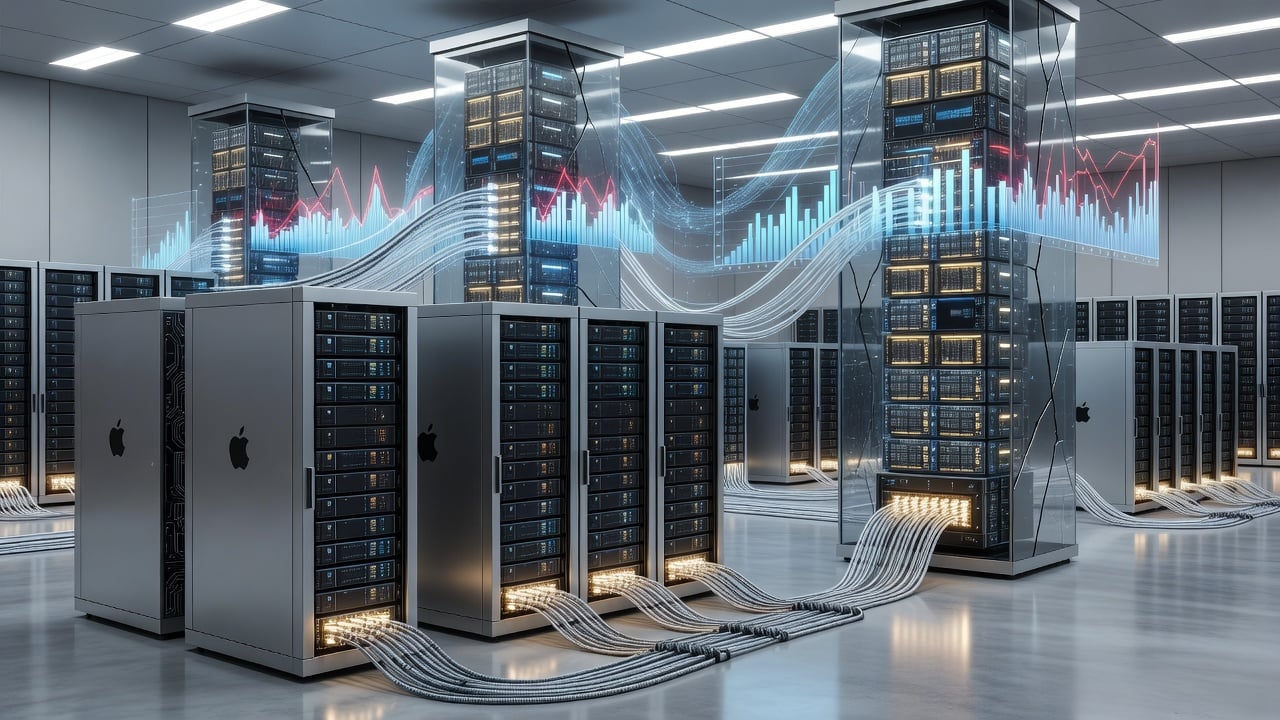
Apple stands out among technology giants due to its strategic preparations for what analysts describe as an impending memory shock in the semiconductor industry. The company has positioned itself through careful supply chain management, design innovations, and long-term supplier agreements that could shield it from the volatility expected to affect competitors. According to a recent analysis published on Seeking Alpha, these moves reinforce the case for maintaining a buy recommendation on the stock.
The memory market, encompassing DRAM and NAND flash components essential to smartphones, computers, and data centers, has long experienced boom-and-bust cycles. Suppliers like Samsung, SK Hynix, and Micron periodically overbuild capacity during periods of strong demand, only to face sharp price declines when supply exceeds needs. Industry observers anticipate another such downturn as new fabrication facilities come online and AI-related demand, while strong, may not fully absorb the added output. This dynamic creates what some call a memory shock, where prices could drop significantly over the next several quarters.
Apple has taken steps to insulate its operations from these swings. The company designs its own systems-on-chip, including the A-series and M-series processors that integrate memory controllers directly onto the silicon. This approach allows Apple to optimize memory usage more efficiently than competitors who rely on off-the-shelf components. By reducing the total amount of discrete memory needed in devices like iPhones and MacBooks, Apple can maintain performance while potentially lowering its bill of materials during price spikes.
Beyond chip architecture, Apple has secured multi-year supply agreements with key memory manufacturers. These contracts often include fixed pricing elements or volume commitments that provide visibility into costs. During previous memory price surges, such as the 2017-2018 period when NAND prices doubled, Apple’s forward planning helped stabilize its gross margins compared to other device makers who absorbed sudden cost increases. The Seeking Alpha report highlights how these agreements, combined with Apple’s massive cash reserves, allow the company to make advance purchases when prices dip, creating a buffer against future volatility.
The shift toward in-house silicon has accelerated this advantage. Apple’s transition from Intel processors to its own M-series chips in Macs demonstrated the company’s ability to control more of the memory hierarchy. Unified memory architecture, where RAM is shared between CPU, GPU, and other processing units, dramatically improves efficiency. A MacBook with 16 gigabytes of unified memory can often outperform systems with 32 gigabytes of traditional DRAM because data movement between components is minimized. This efficiency translates directly into lower memory requirements per device, reducing exposure to market price fluctuations.
Industry analysts point to Apple’s scale as another protective factor. The company ships roughly 200 million iPhones annually along with tens of millions of other devices. This purchasing volume gives Apple significant negotiating power with suppliers. When memory prices collapsed in 2019, Apple reportedly increased its orders to lock in favorable terms, a pattern that could repeat if the anticipated shock materializes. Suppliers, eager to secure such large contracts, often offer preferential pricing or priority access during tight markets.
Competition in the premium smartphone segment adds another layer to this picture. Samsung, which both competes with Apple and supplies it with memory, faces its own challenges in maintaining profitability during price downturns. While Samsung benefits from vertical integration, producing both memory and finished devices, its smartphone margins have historically suffered during memory gluts. Apple, by contrast, has consistently maintained gross margins above 40 percent for its hardware business through a combination of premium pricing, efficient design, and supply chain discipline.
The artificial intelligence boom introduces new variables into the memory equation. Data centers require vast amounts of high-bandwidth memory for training and inference workloads. This demand has tightened supply for certain premium memory types, supporting prices in the near term. However, as more chipmakers ramp up production of HBM and other advanced memory solutions, the market could see oversupply by late 2025 or 2026. Apple’s exposure here remains relatively limited since its consumer devices use different memory specifications than AI servers. The company has begun incorporating more AI capabilities into its devices with on-device processing, which relies more on efficient architecture than massive memory pools.
Services growth provides Apple with additional resilience. While hardware sales fluctuate with memory costs and consumer spending, the company’s expanding services segment delivers high-margin recurring revenue. Apple Music, iCloud, App Store, and AppleCare now contribute substantially to overall profits. This diversification means that even if hardware margins face temporary pressure from memory price swings, the broader business maintains stability. The Seeking Alpha analysis suggests this balance strengthens the investment thesis during periods of semiconductor industry turbulence.
Looking at valuation, Apple’s shares trade at a forward price-to-earnings ratio that appears reasonable given the company’s consistent execution and capital return program. Share buybacks have reduced the outstanding float significantly over the past decade, supporting earnings per share growth even during periods of modest revenue expansion. The dividend yield, while not the highest in technology, comes from a company with enormous free cash flow generation.
Risks certainly exist. Geopolitical tensions between the United States and China could disrupt supply chains, particularly if restrictions tighten on advanced semiconductor technology. Apple derives a substantial portion of its manufacturing from facilities in China, though the company has diversified some production to India and Vietnam. Memory suppliers maintain fabs in multiple countries, but concentrated production in South Korea and Taiwan creates potential vulnerabilities to regional disruptions.
Consumer demand represents another variable. If economic conditions weaken significantly, premium device sales could soften. However, Apple’s installed base of over two billion active devices creates a strong upgrade cycle. Many users replace their iPhones every three to four years, providing a predictable revenue stream. The introduction of new features, particularly in artificial intelligence and computational photography, encourages these upgrades.
The memory shock scenario could create opportunities for Apple to gain market share. If competitors struggle with higher component costs or supply shortages, Apple’s planning might allow it to maintain steady production and pricing. During the 2021 chip shortage, Apple navigated constraints better than many rivals, actually growing its market share in personal computers as businesses and consumers sought reliable devices.
Supplier relationships extend beyond memory to encompass the entire component ecosystem. Apple works closely with manufacturers on process technology roadmaps, sometimes funding development of next-generation production techniques. This collaboration ensures Apple gains early access to improved memory products, whether faster LPDDR specifications for mobile devices or more power-efficient solutions for wearables.
The company’s approach to inventory management also merits attention. Unlike some competitors that maintain lean inventories to reduce carrying costs, Apple strategically builds reserves of critical components during favorable market conditions. This practice requires sophisticated demand forecasting and substantial working capital but has repeatedly proven advantageous during supply disruptions or price spikes.
Analysts who follow the semiconductor industry closely generally agree that memory pricing will face downward pressure over the coming years as capacity expansions take effect. The timing and severity remain subjects of debate, but the consensus points to challenging conditions for memory pure-play companies. Apple, with its diversified business model and integrated design philosophy, appears better equipped to weather this environment than many other technology firms.
Investment decisions should consider individual circumstances and risk tolerance. The technology sector carries inherent volatility, and past performance does not guarantee future results. Apple faces competition from Android manufacturers, potential regulatory challenges in multiple jurisdictions, and the constant pressure to innovate across its product lines. Yet the combination of strong brand loyalty, efficient operations, and forward-looking supply chain strategies has served the company well through multiple economic cycles.
The memory market will likely experience periods of both abundance and scarcity in the years ahead. Companies that have prepared through architectural innovation, contractual safeguards, and operational discipline stand to maintain more consistent performance. Apple’s track record suggests it has implemented these measures effectively, creating a foundation that supports continued confidence in its prospects. As memory dynamics unfold, the company’s ability to adapt while delivering desirable products to consumers will determine whether it maintains its position as a market leader.


 WebProNews is an iEntry Publication