
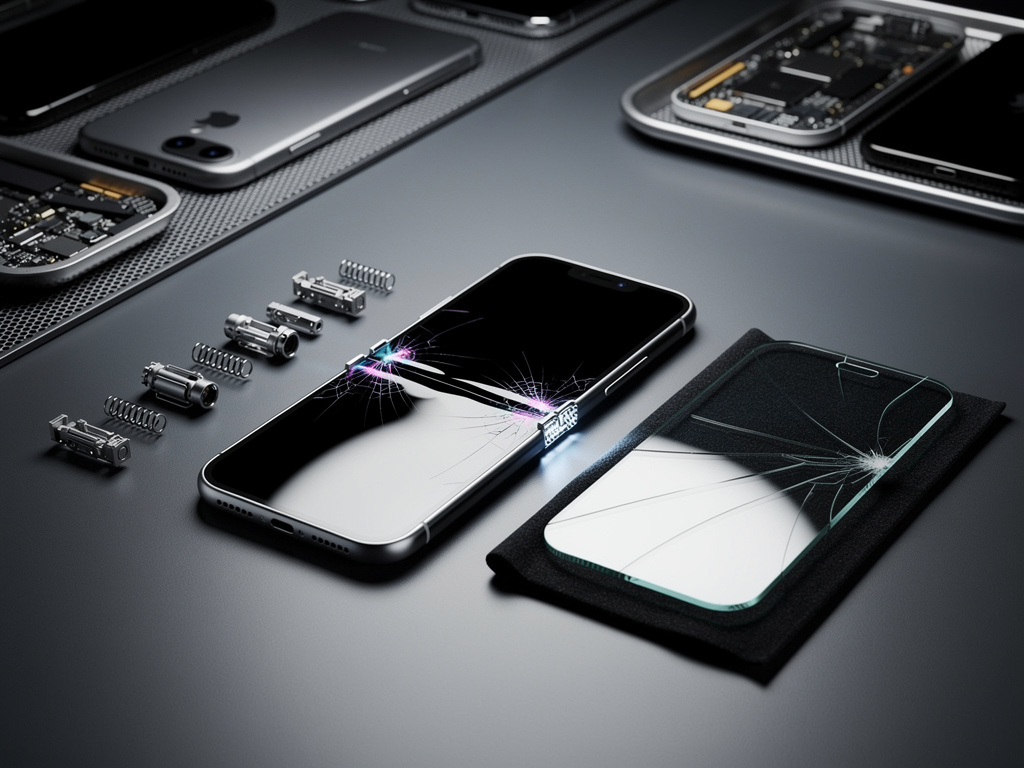
Apple Inc. has spent the better part of a decade watching Samsung, Huawei, and Google sell foldable phones while it sat on the sidelines. Now, as the company pushes toward what would be its most ambitious hardware launch in years — a foldable iPhone — early prototype testing is reportedly hitting problems serious enough to cast doubt on the device’s timeline.
The snags aren’t minor cosmetic issues. They’re fundamental engineering challenges involving the display crease, hinge durability, and the ultra-thin glass that Apple has insisted on using instead of the plastic film covers found on most competing foldables. According to AppleInsider, internal testing of early prototypes has surfaced reliability concerns significant enough that some within Apple’s supply chain now consider a delay from the anticipated launch window — widely expected to be sometime in 2026 — a real possibility.
This is not the narrative Apple wanted.
For years, the company’s strategy on foldables has been deliberate patience. Apple executives have privately maintained that they wouldn’t ship a foldable device until it met the same build quality and user experience standards as a conventional iPhone. That posture looked wise when early Samsung Galaxy Fold units broke in reviewers’ hands back in 2019. But the competitive calculus has shifted. Samsung is now on its sixth generation of foldables. Google’s Pixel Fold has matured. Even Huawei’s Mate X series has found a devoted following in China. Apple’s patience is starting to look less like discipline and more like a company struggling to solve problems its competitors addressed years ago.
The Crease Problem That Won’t Flatten Out
At the core of the reported difficulties is something deceptively simple: the crease. Every foldable phone on the market has one — that visible line running down the center of the display where it bends. Samsung has reduced it over successive generations. Google’s approach with the Pixel Fold used a wider aspect ratio that somewhat minimized its visual impact. But none have eliminated it entirely.
Apple, characteristically, doesn’t want to ship a product with a compromise that visible. The company has been working with suppliers, reportedly including Samsung Display and LG Display, on ultra-thin glass (UTG) solutions that would allow a tighter bend radius with a less perceptible crease. The challenge is that thinner glass is more fragile. And more fragile glass, subjected to tens of thousands of fold cycles, tends to develop micro-fractures that can propagate into full cracks.
This is the tension Apple’s engineers are wrestling with. Make the glass thin enough to fold cleanly, and it risks breaking. Make it thick enough to be durable, and the crease becomes unacceptable by Apple’s standards. Reports from supply chain sources, cited by multiple outlets tracking Apple’s development efforts, suggest that the current prototypes haven’t yet found the sweet spot.
The hinge mechanism presents its own headaches. Apple has filed dozens of patents related to foldable device hinges over the past several years, describing everything from gear-based systems to flexible link designs. A hinge needs to do several things simultaneously: hold the device open at multiple angles, distribute stress evenly across the display, keep debris out, and do all of this hundreds of thousands of times without degrading. Samsung’s waterdrop hinge design, now in its most refined form, took multiple hardware generations to get right. Apple is trying to nail it on the first attempt.
That ambition is admirable. It’s also a recipe for delays.
According to the AppleInsider report, the hinge prototypes have shown inconsistent performance in durability testing. Some units reportedly met Apple’s internal benchmarks for fold cycles, while others fell short — the kind of variance that signals the manufacturing process isn’t yet mature enough for mass production. Apple’s supply chain partners are said to be working on refinements, but the clock is ticking.
There’s also the question of thickness. Or rather, thinness. Apple recently shipped the iPad Pro with the M4 chip and made its slimness a central selling point. The company is reportedly applying the same philosophy to the foldable iPhone, aiming for a device that, when closed, isn’t dramatically thicker than a standard iPhone. That’s an extraordinarily difficult engineering target. Every foldable on the market today is noticeably thicker than its slab-style counterpart when folded. Batteries, cameras, circuit boards — they all need to fit in a chassis that’s essentially been cut in half and stacked on itself.
What a Delay Would Mean for Apple’s Product Roadmap
If Apple does push the foldable iPhone beyond its rumored 2026 window, the consequences extend beyond a single product launch. The company has reportedly been planning a broader foldable strategy that could eventually include a foldable iPad or a hybrid device that blurs the line between phone and tablet. A delay on the iPhone version would almost certainly push back those subsequent products.
There are financial implications too, though perhaps not as dire as one might expect. Apple’s iPhone business, while mature, still generates the bulk of the company’s revenue. A foldable model would likely be positioned at the ultra-premium end of the lineup — think $1,800 or more — targeting the same buyers who currently opt for the iPhone Pro Max. It would be additive revenue, not replacement revenue. So a delay wouldn’t crater Apple’s top line. But it would hand competitors another year of owning the foldable category unopposed.
Samsung, in particular, stands to benefit. The Korean electronics giant has been aggressively marketing its Galaxy Z Fold and Z Flip lines, and each generation has brought meaningful improvements in durability, camera quality, and software optimization. A 2026 without an Apple foldable means Samsung gets yet another holiday season as the default choice for consumers curious about the form factor.
And then there’s the China factor. Huawei, Oppo, Vivo, and Honor have all shipped foldable devices, some of them remarkably thin and well-engineered. Apple’s share in the Chinese market has been under pressure, and a foldable iPhone was seen internally as a product that could reignite excitement among Chinese consumers who have been gravitating toward domestic brands. Every quarter of delay is a quarter where those brands solidify their position.
Wall Street analysts have generally been cautious in their foldable iPhone projections, with most not modeling significant unit volumes until 2027 at the earliest. But investor expectations around innovation cycles matter. Apple’s stock has historically responded to the perception of a strong product pipeline as much as to actual sales figures. If credible reports of delays gain traction, it could weigh on sentiment — even if the financial impact is minimal in the near term.
Apple, as is its custom, has said nothing publicly about a foldable device. The company doesn’t comment on unannounced products, and no executive has acknowledged the project’s existence on the record. But the supply chain tells its own story. Orders for specialized components — UTG panels, custom hinge assemblies, redesigned battery cells — have been tracked by analysts at firms like TF International Securities and counterparts in the Asian supply chain press. Those orders are real. The project is real. The question is when it ships, not whether it ships.
Some context is useful here. Apple has delayed major products before. The original iPhone was famously reworked late in development when Steve Jobs decided the initial design wasn’t good enough. AirPower, the multi-device wireless charging mat, was announced in 2017 and canceled in 2019 after Apple couldn’t solve its thermal management issues. The Apple Vision Pro took years longer to reach market than originally planned internally. Apple’s willingness to delay — or even kill — products that don’t meet its bar is well documented. It’s a feature of the company’s culture, not a bug.
But the foldable category is different from AirPower or Vision Pro in one critical respect: it’s not a new product category that Apple would be defining. It’s an existing one where competitors have years of head start. The longer Apple waits, the higher the bar gets. Samsung’s next Galaxy Z Fold will be better than the current one. Google will keep refining the Pixel Fold. Chinese manufacturers will keep pushing the boundaries of thinness and display quality. Apple isn’t chasing a stationary target.
The Supplier Squeeze
Behind the scenes, Apple’s supply chain dynamics add another layer of complexity. The company typically works with a small number of display suppliers for its most advanced panels. Samsung Display and LG Display are the primary candidates for the foldable iPhone’s screen. Both companies also supply panels to Apple’s competitors, creating an unusual situation where Apple’s rivals have more experience with the specific manufacturing processes required for foldable displays.
Samsung Display, in particular, has been making foldable OLED panels for Samsung Electronics’ own devices since 2019. That’s six years of production learning, yield improvement, and process refinement that Apple’s own supply chain relationships can’t shortcut. Apple can specify what it wants — and it reportedly has exacting specifications — but the physics of manufacturing don’t bend to corporate timelines.
Yield rates are a persistent concern. Foldable displays are harder to manufacture than flat ones, with more potential failure points. Early yield rates for any new display technology tend to be low, which drives up per-unit costs and limits production volumes. Apple, which ships iPhones in the tens of millions per quarter, needs yields high enough to support meaningful volume. If the display suppliers can’t hit those numbers, Apple faces an unpleasant choice: launch with constrained supply, or wait.
Apple has historically chosen to wait. The company doesn’t do limited launches well — or rather, it doesn’t like to. When a new iPhone ships, Apple wants it available broadly and immediately. Anything less feels like a concession, and concessions aren’t really Apple’s style.
So where does this leave the foldable iPhone? In a state of advanced development with unresolved engineering challenges. Not canceled. Not imminent. Somewhere in between, with the outcome depending on whether Apple’s engineers and suppliers can solve the crease, the hinge, and the thickness problems in the coming months.
If they do, a late 2026 launch remains plausible. If they don’t, 2027 becomes the more realistic target. Either way, when Apple finally ships a foldable iPhone, it will arrive into a market that’s had years to set consumer expectations. The device won’t just need to work. It’ll need to be demonstrably better than everything that came before it.
That’s always been Apple’s playbook. Whether they can execute it this time — with glass that bends without breaking and a hinge that holds up to real-world abuse — is the multibillion-dollar question the company’s hardware engineering teams are trying to answer right now.


 WebProNews is an iEntry Publication