
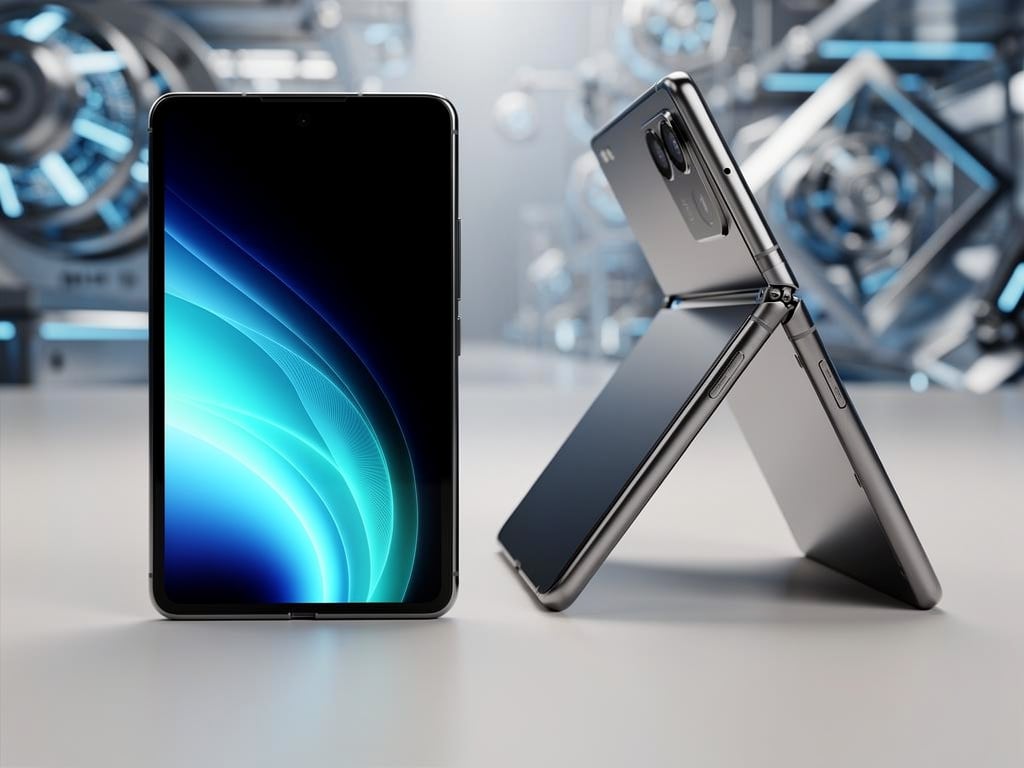
Apple stands on the verge of its biggest iPhone redesign in years. After years of watching Samsung and others sell folding phones, the company appears ready to enter the category. Recent clues from software betas, analyst forecasts and factory updates point to a device arriving this fall. But questions remain about production readiness, final pricing and whether consumers will pay a steep premium for what Apple delivers.
TechCrunch reported Tuesday that hidden files in the iOS 27 developer beta contain references to “foldState,” “mechanicalAngleDegrees,” “angleDegrees” and “MGGetLogicalDeviceDisplayCount.” Researcher @M1Astra spotted the strings. https://techcrunch.com/2026/06/09/apples-foldable-iphone-could-be-just-around-the-corner/. They suggest the operating system already knows how to track a device’s fold position, opening angle and number of active displays. The discovery landed one day after WWDC where iOS 27 was shown. And it aligns with other hints in the beta that support resizable apps and iPad-style multitasking.
Production timelines have tightened. Bloomberg reported in April that the foldable remains on track for a September debut alongside the iPhone 18 Pro and Pro Max. People familiar with the plans said Apple intends to introduce the model then and ship it shortly after. The report pushed back against earlier worries of major manufacturing snags. https://www.bloomberg.com/news/articles/2026-04-07/apple-s-foldable-iphone-remains-on-track-for-september-debut. Yet supply chain reports tell a more complicated story.
Mass production, once slated for June, slipped to August. Hinge components have struggled in quality testing under repeated use. Ming-Chi Kuo, the analyst known for accurate Apple predictions, has warned of possible shortages extending into 2027 even if the first units reach stores this year. MacRumors has tracked these shifts closely, noting that while test-phase delays occurred the company may recover time during ramp-up. https://www.macrumors.com/roundup/iphone-fold/.
Design details have grown clearer. The device will open like a book to reveal an inner screen near 7.8 inches with a 4:3 aspect ratio reminiscent of an iPad mini. When closed it offers a 5.5-inch outer display. Crease visibility stays below 0.15 millimeters and the folding angle under 2.5 degrees. A liquid metal hinge from a supplier exclusive to Apple should improve durability and reduce bulk. The frame mixes titanium and aluminum. Thickness when folded lands around 9 to 9.5 millimeters. That beats most current foldables from Samsung.
One leaker shared dummy molds in early June showing a wide, squat shape similar to Google’s original Pixel Fold. Another indicated the device may launch in limited colors, possibly white only. Cameras skip the telephoto lens to save space. Instead two 48-megapixel sensors handle wide and ultrawide duties. An under-display 24-megapixel front camera marks a first for Apple. Battery capacity reaches between 5,400 and 5,800 milliamp-hours, the largest in any iPhone so far. No Face ID. A Touch ID button embedded in the power key takes its place because the slim chassis leaves no room for the usual array.
Software adjustments already appear in iOS 27. The beta lets developers create apps that resize and adapt to larger canvases. Sidebars and split-screen multitasking mirror iPad behaviors. When opened the foldable should feel closer to a small tablet than a phone. Apple has spent years refining the user interface for this moment. Yet the company has stayed silent. Executives never comment on unreleased products.
Price predictions start above $2,000. Kuo has floated a range of $2,000 to $2,500. Other analysts from UBS and Fubon Research have offered figures between $1,800 and $2,400 depending on configuration. Storage options likely begin at 256 gigabytes. At those levels the foldable would cost more than the iPhone 16 Pro Max and sit well above rival book-style devices. Apple seems to target customers who already own multiple premium products and want one device that replaces both phone and small tablet.
Challenges persist. Crease elimination requires special adhesives and ultra-thin glass. Early engineering tests hit snags that Nikkei Asia detailed in April. Some reports suggested shipments could slip into 2027 in a worst-case scenario. CNET noted that while a truly invisible fold would represent a breakthrough, repeated real-world stress could still expose weaknesses. https://www.cnet.com/tech/mobile/iphone-fold-what-we-know-so-far-about-apples-2026-foldable/. Suppliers including Lens Technology and Corning have worked on the display stack for months.
Market reaction remains uncertain. Surveys cited by CNET show roughly 64 percent of smartphone owners express little interest in foldables. Still, IDC analysts project the overall foldable segment could grow 19 percent globally in the year after Apple enters. The brand’s loyal base might drive initial sales even at high prices. Samsung has sold millions of Galaxy Z Fold and Flip models despite visible creases and durability complaints. Apple’s version, if it matches the promised thinness and software polish, could expand the audience.
Recent X discussions reflect the excitement. On Tuesday users reacted to the iOS 27 findings by linking the resizability features directly to foldable support. One post from a verified analyst account gained thousands of likes within hours. Others speculated the device might carry the Ultra name instead of Fold to avoid direct comparison with Samsung’s branding. The conversation has intensified since WWDC.
Apple has taken its time. The company prototyped foldables internally as far back as 2016 according to past reports but repeatedly delayed to meet its standards for reliability and thinness. That patience produced the iPhone Air at just 5.6 millimeters thick last year. Two of those panels stacked would still measure thinner than most competitor foldables. The bet is that consumers will notice the difference.
Whether the first model ships in September, October or later depends on the next few months of testing. Hinge durability, display yield rates and thermal management with a vapor chamber in such a compact body will decide the schedule. For now the signals point to a 2026 arrival. The iPhone as consumers know it is about to change. Not everyone will buy the new form factor immediately. But its presence could force the entire industry to raise its expectations for what a premium phone must do.
Competitors already feel the pressure. Samsung continues to refine its own crease reduction and hinge mechanisms. Google and Motorola have carved niches with distinct approaches. Apple’s entry, backed by its software control and marketing reach, could accelerate adoption or expose the category’s remaining flaws. Industry insiders watch the supply chain data most closely. Any further slip in the August production target would fuel new delay speculation.
One thing looks clear. The foldable iPhone has moved beyond rumor. Code, components and calendar all converge on the same window. Apple rarely misses its fall launch cadence once internal targets are set. This time the target appears close enough to touch.


 WebProNews is an iEntry Publication