
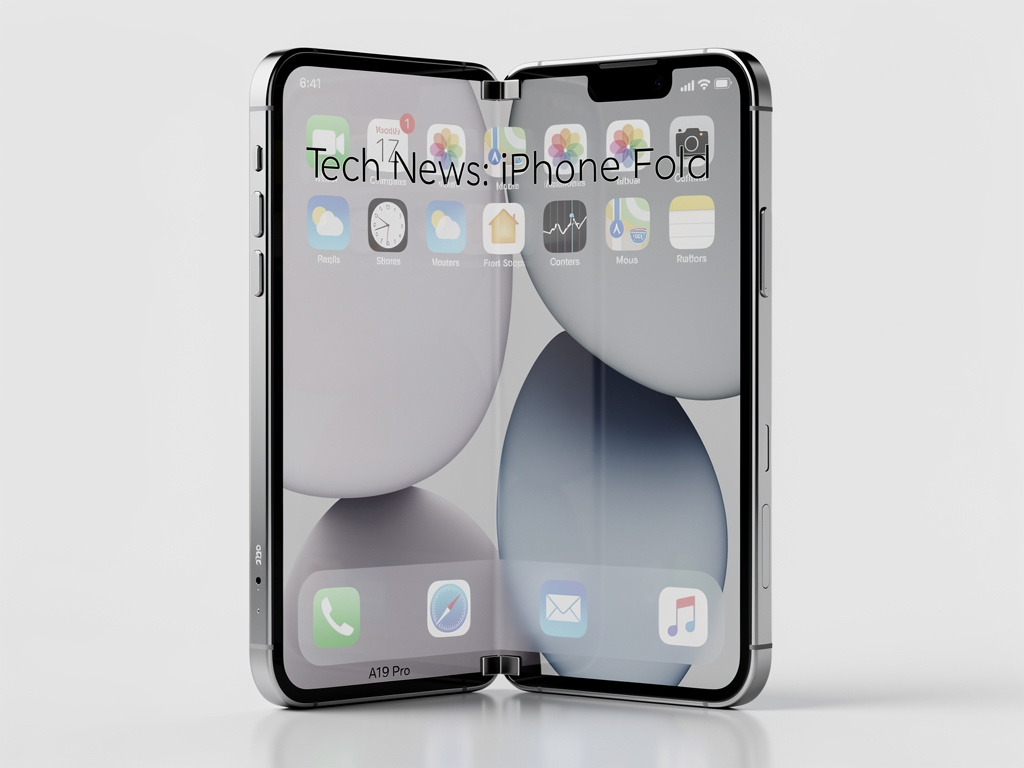
Apple’s long-anticipated entry into the foldable smartphone market appears closer than ever, with comprehensive technical specifications emerging that reveal the company’s ambitious vision for reimagining the iPhone. According to detailed leaks reported by AppleInsider, the device—internally referred to as the iPhone Fold—represents a significant departure from Apple’s traditional design philosophy while maintaining the premium positioning that has defined the brand for nearly two decades.
The leaked specifications paint a picture of a device that combines cutting-edge display technology with the processing power expected from Apple’s silicon division. The iPhone Fold is expected to feature an 8.3-inch internal OLED display when fully opened, manufactured by Samsung Display, with a resolution of 2208 x 2480 pixels. This would deliver a pixel density of approximately 360 pixels per inch, maintaining the visual fidelity Apple users have come to expect. The external cover display measures 6.5 inches with a resolution of 2176 x 1080 pixels, ensuring full functionality even when the device remains folded.
What distinguishes Apple’s approach from existing foldable devices in the market is the reported integration of advanced hinge technology that promises to eliminate the visible crease that has plagued competitors’ offerings. The engineering challenge of creating a seamless folding experience has been a primary concern for Apple’s industrial design team, according to sources familiar with the development process. The hinge mechanism reportedly utilizes a multi-axis design with over 150 individual components, each precision-engineered to withstand more than 200,000 folding cycles—significantly exceeding the industry standard.
The device is expected to be powered by Apple’s A19 Pro chip, built on a 2-nanometer process technology that promises substantial improvements in both performance and energy efficiency. Early benchmark leaks suggest the processor will deliver a 30% increase in CPU performance and a 40% improvement in GPU capabilities compared to the current generation. This processing power becomes particularly relevant when considering the demands of running applications across dual displays and managing the complex software optimizations required for seamless transitions between folded and unfolded states.
Display Innovation Meets Practical Engineering
The display technology represents perhaps the most significant technical achievement in the iPhone Fold’s development. According to industry analysts, Apple has partnered with Samsung Display to develop a custom ultra-thin glass (UTG) layer that measures just 30 microns in thickness—approximately half the width of a human hair. This material provides the durability of traditional glass while maintaining the flexibility required for repeated folding. The display also incorporates Apple’s ProMotion technology with an adaptive refresh rate ranging from 1Hz to 120Hz, optimizing battery life while ensuring smooth animations and responsive touch input.
The implementation of an under-display Face ID system marks another technical milestone. Rather than relying on a notch or punch-hole camera, Apple has reportedly developed technology that allows the TrueDepth camera array to function beneath the display pixels. This achievement required significant advances in display transparency and sensor sensitivity, as the camera must capture accurate depth information through the OLED panel. The system maintains the same security standards as current Face ID implementations while providing an uninterrupted viewing experience.
Battery technology has been optimized specifically for the foldable form factor, with a dual-cell design that distributes power across both halves of the device. The combined capacity reportedly reaches 4,800mAh, providing all-day battery life despite the power demands of dual displays. The battery management system intelligently allocates power based on usage patterns, with the ability to power down the internal display entirely when only the cover screen is needed. Wireless charging capabilities include support for 30W MagSafe charging and reverse wireless charging for accessories.
Camera specifications align with Apple’s flagship iPhone lineup, featuring a triple-lens rear camera system with a 48-megapixel main sensor, a 12-megapixel ultra-wide lens, and a 12-megapixel telephoto lens offering 5x optical zoom. The unique foldable form factor enables novel photography modes, including the ability to use the main camera system for selfies while viewing the composition on the external display. This configuration provides significantly higher image quality for self-portraits compared to traditional front-facing cameras.
Software Optimization and User Experience Design
The software experience represents a critical component of Apple’s foldable strategy, with iOS 19 expected to include extensive optimizations for the dual-display format. Apple’s software engineering teams have reportedly developed new APIs that allow developers to create applications that seamlessly adapt to different screen configurations. The operating system includes intelligent window management that can display multiple applications simultaneously on the expanded screen, with support for drag-and-drop functionality between apps and persistent multitasking states.
The continuity features extend beyond traditional iOS capabilities, with the ability to start tasks on the cover display and seamlessly transition to the larger internal screen without interruption. Applications can be configured to automatically adjust their layouts based on the device’s current state, with developers having granular control over how their apps respond to folding and unfolding actions. The system also includes advanced gesture controls specifically designed for the foldable form factor, allowing users to navigate efficiently across both displays.
Durability testing has been a paramount concern throughout the development process. The device features an IPX8 water resistance rating, a significant achievement for a foldable device given the complexity of sealing a hinge mechanism. The frame construction utilizes aerospace-grade titanium, providing structural rigidity while minimizing weight. The entire device reportedly weighs 280 grams, making it competitive with existing foldable offerings despite Apple’s typically premium build materials.
The pricing strategy for the iPhone Fold remains a subject of intense speculation within the industry. Premium foldable devices from competitors typically command prices exceeding $1,800, and Apple’s entry is expected to be positioned at the upper end of this range. The company’s approach to pricing will need to balance the premium positioning of the iPhone brand with the reality of a market that has shown price sensitivity for foldable devices. Industry analysts suggest a starting price of approximately $1,999 for the base configuration with 256GB of storage.
Market Implications and Competitive Positioning
Apple’s entry into the foldable market carries significant implications for the broader smartphone industry. The company’s historical pattern of entering product categories later than competitors but defining the market with refined implementations suggests the iPhone Fold could catalyze mainstream adoption of foldable devices. Samsung, currently the dominant player in foldable smartphones, will face its most formidable competitor yet, potentially accelerating innovation cycles and driving down prices across the category.
The supply chain implications extend beyond display manufacturers to include specialized hinge suppliers, ultra-thin glass producers, and battery manufacturers capable of producing the dual-cell configurations required for foldable devices. Apple’s entrance into this market represents a validation of foldable technology and could encourage increased investment in manufacturing capacity and component innovation. The ripple effects through the supply chain could benefit the entire industry by driving economies of scale and technological advancement.
Developer adoption will be crucial to the iPhone Fold’s success. Apple’s ecosystem advantage, with millions of developers already familiar with iOS development tools, provides a significant head start compared to competitors. The company is reportedly working closely with major application developers to ensure popular apps are optimized for the foldable format at launch. This ecosystem readiness could prove to be Apple’s most significant competitive advantage, as the value of a foldable device is directly tied to the quality of applications that take advantage of the expanded screen real estate.
The timing of the iPhone Fold’s release aligns with broader trends in the smartphone market. As traditional smartphone sales have plateaued, manufacturers are seeking new form factors and features to drive upgrade cycles. Foldable devices represent one of the few truly novel innovations in smartphone design in recent years, offering tangible benefits in terms of screen size and portability. Apple’s entry validates this direction and could mark an inflection point where foldable devices transition from niche products to mainstream offerings.
Manufacturing Challenges and Production Timeline
The production timeline for the iPhone Fold reflects the complexity of manufacturing a device with these specifications at scale. Initial production runs are expected to be limited, with Apple likely adopting a staged rollout strategy similar to previous product launches. The yield rates for foldable displays remain lower than traditional smartphone screens, and the precision required for hinge assembly adds additional manufacturing complexity. Industry sources suggest initial production capacity may be limited to 2-3 million units in the first quarter following launch.
Quality control processes for foldable devices require more extensive testing protocols than traditional smartphones. Each device must undergo repeated folding tests to ensure the hinge mechanism operates smoothly throughout its expected lifespan. Display uniformity testing becomes more critical given the mechanical stress placed on the flexible OLED panel. Apple’s reputation for quality control suggests the company will maintain stringent standards even if it means constraining initial supply. The balance between meeting demand and maintaining quality standards will be a key challenge in the product’s early lifecycle.
The iPhone Fold represents more than a new product category for Apple—it signals the company’s vision for the future of mobile computing. As smartphones have evolved from communication devices to primary computing platforms for billions of users, the form factor has remained relatively static. Foldable devices offer a glimpse of how mobile hardware might continue to evolve, providing increased functionality without sacrificing portability. Apple’s implementation of this technology, backed by its ecosystem of services and applications, could define the category for years to come and establish new standards for what consumers expect from premium mobile devices.


 WebProNews is an iEntry Publication